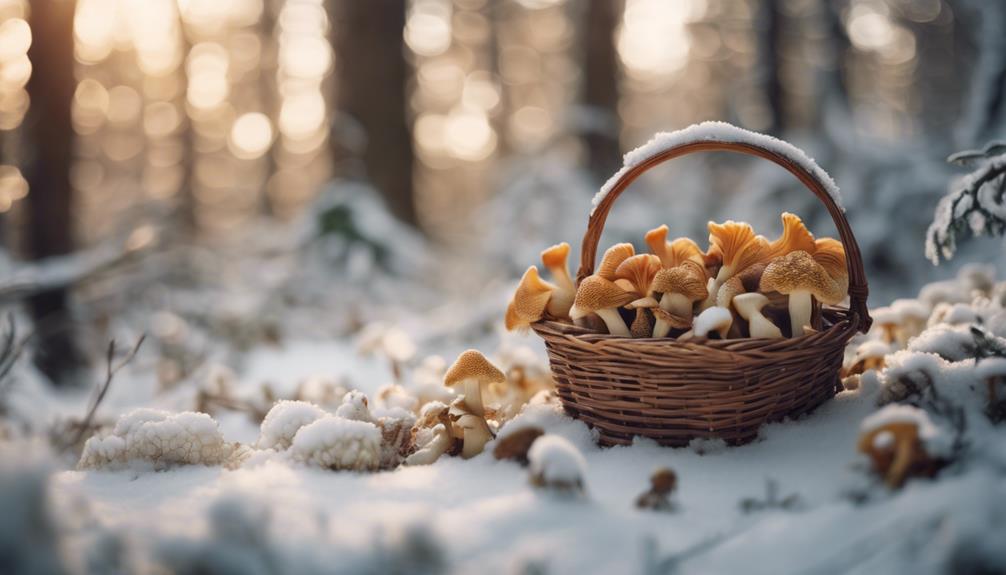
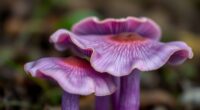
When identifying wild reishi mushrooms, look for their distinctive reddish-brown, glossy, fan-shaped caps growing on hardwood trees like oaks or maples. They have tiny pores underneath and a woody, firm texture without prominent stems. Be sure to harvest responsibly by only taking what you need, leaving others to thrive, and verify your find with guides or experts. Continuing ahead will help you understand how to do so safely and ethically.

Get garden gear delivered free with Prime
- Fast, free delivery on millions of items
- Prime Video, Amazon Music and more included
- Member-only deals all year
Key Takeaways
- Reishi mushrooms grow on hardwood trees like oaks and maples, often on stumps, logs, or at tree bases in shaded, humid forests.
- Look for reddish-brown, varnished, fan-shaped fungi with a woody texture and tiny, white pore surfaces underneath.
- Confirm identification by habitat, shape, color, and pore surface, avoiding bright colors or gills which are not characteristic of Reishi.
- Harvest responsibly by collecting only what is needed, leaving the rest to support local ecosystems and prevent overharvesting.
- Consult guides or experts before foraging to prevent misidentification and ensure ethical, sustainable harvesting practices.

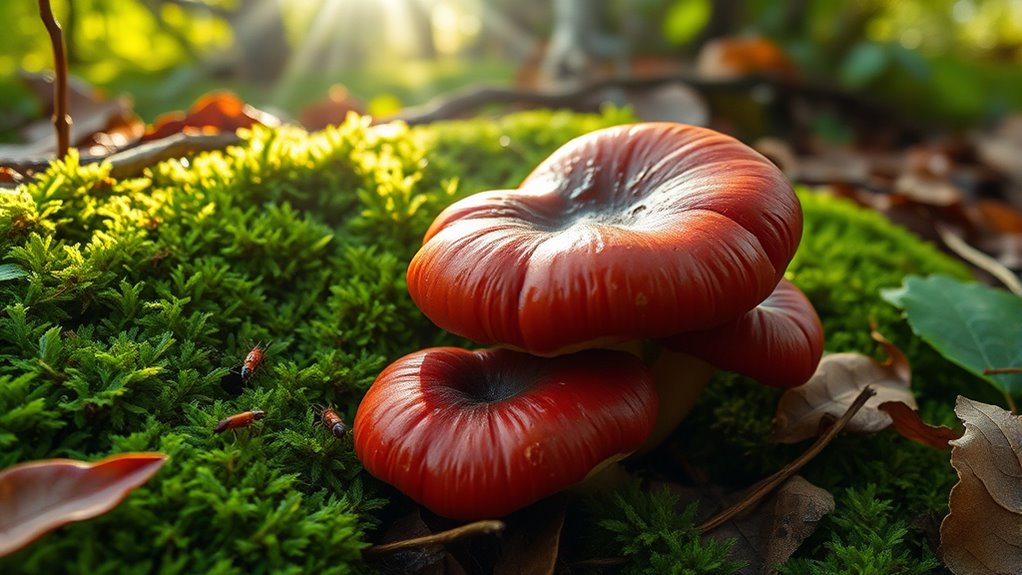
Have you ever wondered where reishi mushrooms grow naturally in the wild? If so, understanding their wild habitat is vital. Reishi, also known as Ganoderma lucidum, typically thrives on hardwood trees, especially oaks, maples, and other deciduous species. You’ll usually find them growing on the stumps, fallen logs, or the base of living trees. They prefer areas with high humidity and stable moisture levels, often in forested regions or shaded woodland environments. Reishi mushrooms tend to favor temperate climates, but they can also appear in subtropical zones. When exploring the wild, look for their distinctive reddish-brown to shiny, varnished appearance, which helps them stand out against the bark. They grow in a fan or kidney shape, with a woody texture that’s quite firm to the touch. Recognizing the specific habitat conditions where reishi thrives can greatly improve your chances of successful identification.
To identify reishi mushrooms accurately, you’ll want to pay attention to specific identification tips. First, examine the cap’s color and surface; it should be smooth, glossy, and vary in shades of deep red, reddish-brown, or mahogany. The edges are often slightly curved or rolled inward, and the surface might appear varnished or lacquered. The underside of the mushroom features tiny, white to cream-colored pores rather than gills, which is a key characteristic distinguishing reishi from other polypore fungi. These pores are small and round, and the spore release occurs through them. The stem, if present, is usually short or absent, as reishi tends to grow directly on the wood substrate.
When you’re out in the wild trying to spot reishi, keep in mind that proper identification is essential, especially because many look-alikes exist. Avoid mushrooms with bright colors, gills underneath, or those growing on different substrates like conifers or non-woody plants. Always cross-reference multiple identification tips, including habitat, shape, color, and pore surface, to verify you’re correctly identifying reishi. Remember, harvesting wild fungi without proper knowledge can be dangerous, so it’s best to consult field guides or experts before collecting any wild mushroom. Respect the environment by harvesting sustainably if you do decide to gather reishi, taking only what you need and leaving the rest to continue growing and maintaining their natural habitat. By paying close attention to their wild habitat and specific identification tips, you can appreciate the beauty of reishi mushrooms while practicing responsible foraging.
Frequently Asked Questions
Can Reishi Mushrooms Be Safely Cultivated at Home?
Yes, you can safely cultivate reishi mushrooms at home if you follow proper home cultivation techniques. Make sure to use sterile equipment, maintain clean growing conditions, and choose the right substrate. Always follow safety precautions like wearing gloves and masks to avoid contamination and mold. Proper knowledge guarantees a healthy reishi crop and minimizes risks. With patience and care, home cultivation can be a rewarding and safe way to grow reishi mushrooms.
What Are Legal Considerations for Foraging Reishi in Protected Areas?
You should check local laws before foraging reishi in protected areas, as legal restrictions often prohibit collection to preserve wild populations. Conservation considerations are vital; removing mushrooms can harm local ecosystems and threaten reishi’s natural growth. Always obtain necessary permits if allowed, respect posted signs, and avoid overharvesting. By following these guidelines, you help protect the species and guarantee sustainable foraging practices.
How Do Environmental Factors Affect Reishi Mushroom Potency?
Environmental variability greatly influences reishi mushroom potency by affecting mushroom chemistry. Changes in temperature, humidity, and air quality can alter the levels of beneficial compounds like polysaccharides and triterpenoids. You’ll notice that reishi growing in different environments may have varying strengths, so it’s essential to take these factors into account when harvesting. By understanding how environmental factors impact reishi, you can better assess its quality and potential health benefits.
Are There Any Risks of Misidentifying Reishi in the Wild?
Yes, there are risks of mushroom misidentification when foraging for reishi in the wild. Misidentifying reishi can lead you to dangerous look-alikes, which could cause poisoning or adverse health effects. To guarantee foraging safety, always double-check identification markers, consult expert guides, and avoid collecting mushrooms that you’re not 100% sure about. Proper knowledge minimizes risks and helps protect both you and the environment.
How Can I Ethically Harvest Reishi Without Damaging the Ecosystem?
Did you know that overharvesting wild reishi can harm forest ecosystems? To harvest ethically, practice sustainable harvesting by only removing a small portion of the fungus, leaving enough behind for reproduction. Avoid damaging the host trees and never strip entire patches. This minimizes ecological impact, guarantees reishi remains available for future generations, and helps preserve the forest’s health. Your careful approach supports both your needs and nature’s balance.
Conclusion
As you walk through the dense forest, the reishi mushrooms stand like silent guardians on ancient trees, their glossy red caps glowing softly in the dappled sunlight. Remember, while these fungi seem inviting, ethical foraging sustains the forest alive and thriving. By respecting their natural habitat, you guarantee future explorers can marvel at their beauty too. Preserve this delicate balance, and let your journey with reishi be one of wonder, respect, and harmony with nature’s quiet, enduring magic.
Fall yard work Picks
leaf blowers
As an affiliate, we earn on qualifying purchases.