
Miner’s lettuce is a great option for cool-season foraging because it grows in shaded, moist areas like forest floors and stream banks, thriving in spring and fall. You can harvest its tender, bright green leaves early in the season for a nutritious, mild, slightly sweet green packed with vitamins. It’s easy to identify and safe with no common look-alikes nearby. Keep exploring to discover more tips and ways to enjoy this wild, edible plant.
Key Takeaways
- Miner’s lettuce is a nutritious, tender green that thrives in shady, moist areas during cool seasons like spring and fall.
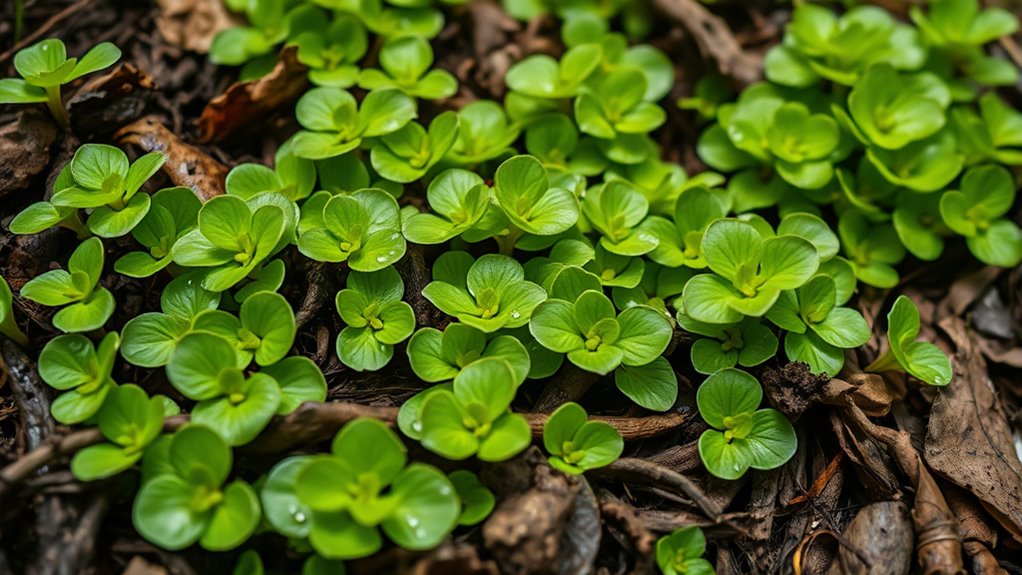
- It grows in low, dense mats with bright green, rounded leaves, making it easy to identify and harvest.
- Best harvested young for optimal flavor and nutrition, ensuring thorough washing before consumption.
- It offers a reliable, wild source of vitamin C, antioxidants, iron, and calcium during cooler months.
- Suitable for foraging in forest floors, stream banks, and garden beds, promoting sustainable and responsible harvesting.
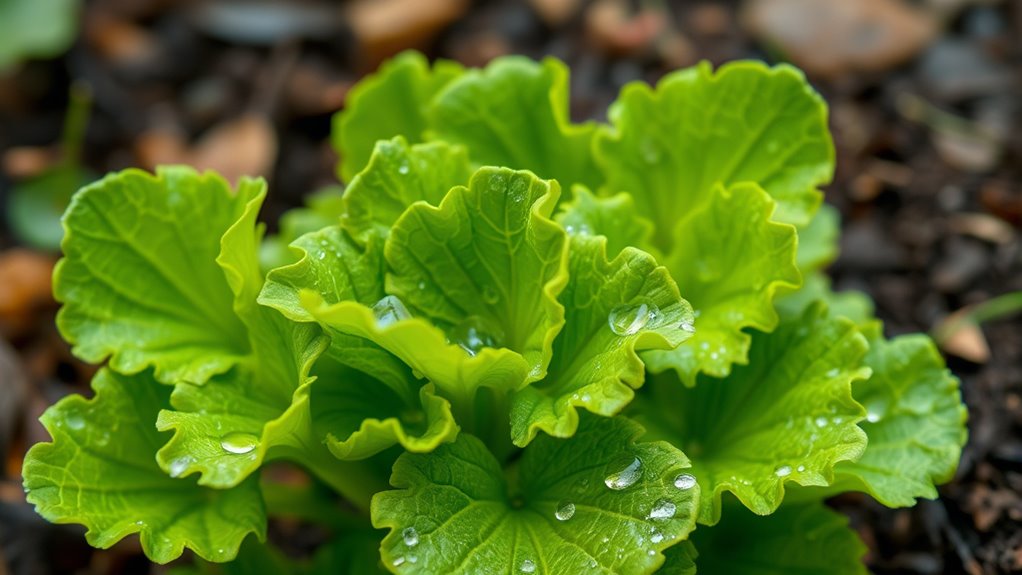
Miner’s lettuce is a wild edible plant that’s prized for its tender leaves and nutritional value. If you’re into wild foraging, this plant offers a rewarding experience, especially during the cooler months. As an accessible edible green, miner’s lettuce thrives in shady, moist areas like forest floors, garden beds, and along stream banks. You’ll find it sprouting early in spring and persisting through fall, making it a reliable choice for cool-season foraging. Its delicate, bright green leaves look similar to lettuce, but you can identify miner’s lettuce by its small, rounded shape and its tendency to grow in low, dense mats. Foraging for wild greens like this can be both satisfying and beneficial, providing fresh, nutrient-rich food straight from nature.
Miner’s lettuce is a nutritious, tender green that grows in shady, moist areas throughout the cool seasons.
When you gather miner’s lettuce, it’s essential to be confident in your identification. Unlike some look-alikes, miner’s lettuce doesn’t have any toxic counterparts that frequently grow in the same habitat. The plant’s leaves are tender and slightly succulent, with a mild, slightly sweet flavor that makes it a perfect addition to salads, sandwiches, or smoothies. Its high vitamin C content has historically made it a valuable resource for miners and settlers who needed quick, nutritious sustenance during the gold rush era, hence the name. As an edible green, miner’s lettuce packs a punch of nutrients—antioxidants, iron, and calcium—making it a superfood in the wild.
To harvest it properly, pick the young, tender leaves, avoiding any areas that might be contaminated by pollution or chemicals. Because miner’s lettuce prefers shady, damp environments, avoid gathering from roadside ditches or areas exposed to runoff. Wash your foraged greens thoroughly to remove dirt and insects before eating. Incorporating miner’s lettuce into your wild foraging repertoire is simple—add it fresh to salads or blend it into smoothies for a nutritious boost. Its mild flavor pairs well with stronger greens like arugula or bitter herbs, balancing flavors and textures.
Additionally, understanding the features and functionality of smart toilets can inspire innovative ways to maintain hygiene and water efficiency in your home, just as careful foraging promotes health and sustainability in your diet.
For those new to foraging, miner’s lettuce offers a low-risk, high-reward experience. It’s abundant, easy to identify, and versatile in culinary use. As a nourishing edible green, it helps you connect with nature while expanding your wild food pantry. Just remember to forage responsibly: respect the environment, avoid overharvesting, and only pick plants from areas free of pollution. With a little knowledge and care, miner’s lettuce can become a staple in your cool-season wild food collection, offering fresh greens whenever you’re out exploring nature’s bounty.
Frequently Asked Questions
Is Miner’s Lettuce Safe for Pets to Eat?
Miner’s lettuce is generally safe for pets to eat in small amounts, but you should prioritize plant identification to guarantee proper safety. Keep an eye on your pet while they nibble, as some animals might have sensitivities. If you’re unsure about the plant’s identification or your pet shows any adverse reactions, contact your veterinarian promptly. Always consult a professional before allowing pets to consume wild plants.
How Does Miner’s Lettuce Compare Nutritionally to Other Greens?
You might be surprised, but miner’s lettuce packs a nutritional punch comparable to other greens. Its nutritional content includes vitamins A, C, and calcium, making it a healthy choice. Plus, its antioxidant properties help combat free radicals. While it’s not as high in calories, it offers a fresh, crisp flavor that rivals spinach or lettuce, making it a valuable addition to your diet, especially during the cooler months.
Can Miner’s Lettuce Be Cultivated Indoors Year-Round?
Yes, you can cultivate miner’s lettuce indoors year-round. With proper indoor cultivation, you provide the right light, moisture, and temperature, allowing for consistent year-round growing. Place it in a bright spot or under grow lights, keep the soil moist, and maintain cool temperatures. This way, you enjoy fresh miner’s lettuce anytime, regardless of the season, making it a convenient addition to your indoor garden.
Are There Any Look-Alike Plants to Avoid Confusing With Miner’s Lettuce?
When foraging for miner’s lettuce, you should be aware of look-alike plants to guarantee proper plant identification and avoid risking your safety. Avoid confusing it with false or toxic plants like certain spurge or poison ivy, which can resemble its leaves. Always double-check with reliable foraging guides or experts to confirm your plant identification. Prioritizing foraging safety helps you enjoy wild greens without accidentally ingesting harmful species.
What Are the Best Preserving Methods for Miner’s Lettuce?
Imagine capturing the fresh, spring breeze of miner’s lettuce to enjoy year-round. You can preserve it through pickling techniques, which add a tangy crunch, or freeze it using proper methods to lock in its vibrant flavor. Blanch the leaves briefly before freezing for best results, or create flavorful pickles. Both methods keep the delicate greens lively, letting you savor their fleeting beauty long after the season fades.
Conclusion
So, next time you’re out foraging for wild greens, don’t overlook miner’s lettuce. It’s the perfect little hero—harmless, tasty, and thriving in cool seasons. Ironically, what once fed early prospectors now quietly sustains modern foragers like you. Who knew that such a humble, unassuming plant could pack such a punch? So go ahead, pick some, and enjoy the irony of discovering a wilderness treasure that’s right under your nose all along.