Exposing herbs to direct light during drying or storage causes pigments like chlorophyll to break down, leading to dull, faded colors. To keep your herbs vibrant, dry them in a dark, well-ventilated space away from sunlight, and store them in airtight, dark containers in a cool location. Avoiding light exposure preserves their fresh appearance and flavor. If you want to discover more simple tricks to maintain herb color, keep exploring these tips further.
Key Takeaways
- Avoid exposing herbs to direct sunlight during drying to prevent pigment degradation and preserve vibrant color.
- Use shaded, well-ventilated indoor spaces for drying herbs to maintain their natural hue.
- Store dried herbs in airtight, dark containers to prevent light-induced dulling over time.
- Use controlled low-temperature dehydration (around 95°F) to preserve color and prevent fading.
- Minimize light exposure during storage to sustain the herb’s vibrant appearance and flavor integrity.
Have you ever wondered how to preserve the vibrant color of herbs while drying? The key lies in understanding the significance of effective drying techniques that focus on color preservation. When herbs lose their vivid hue, it’s often due to improper drying methods, especially exposure to light. Bright sunlight, while great for some plants, can quickly fade the pigments in herbs, turning lush greens into dull, muted shades. To keep those lively colors intact, you need to adopt drying techniques that shield your herbs from harsh light and slow down the color loss process.
One common mistake people make is drying herbs in direct sunlight. It might seem natural to hang herbs outdoors on a sunny day, but the ultraviolet rays accelerate pigment breakdown, dulling the herb’s natural vibrancy. Instead, opt for indirect light or a shaded, well-ventilated space. You want to use drying environments that avoid intense light but still allow air to circulate freely. This approach helps maintain the herbs’ original color and flavor, ensuring your dried herbs look as appealing as fresh ones.
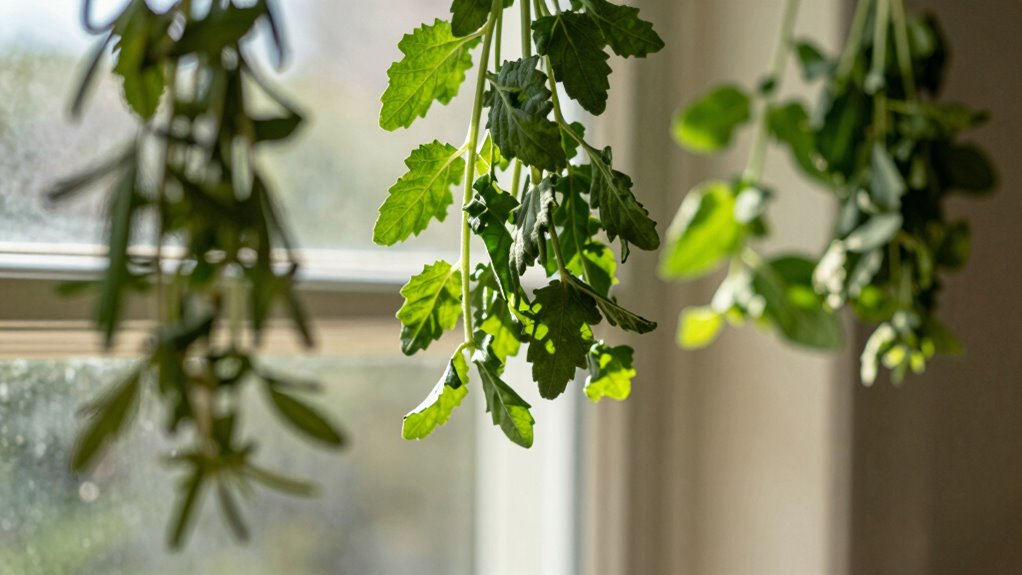
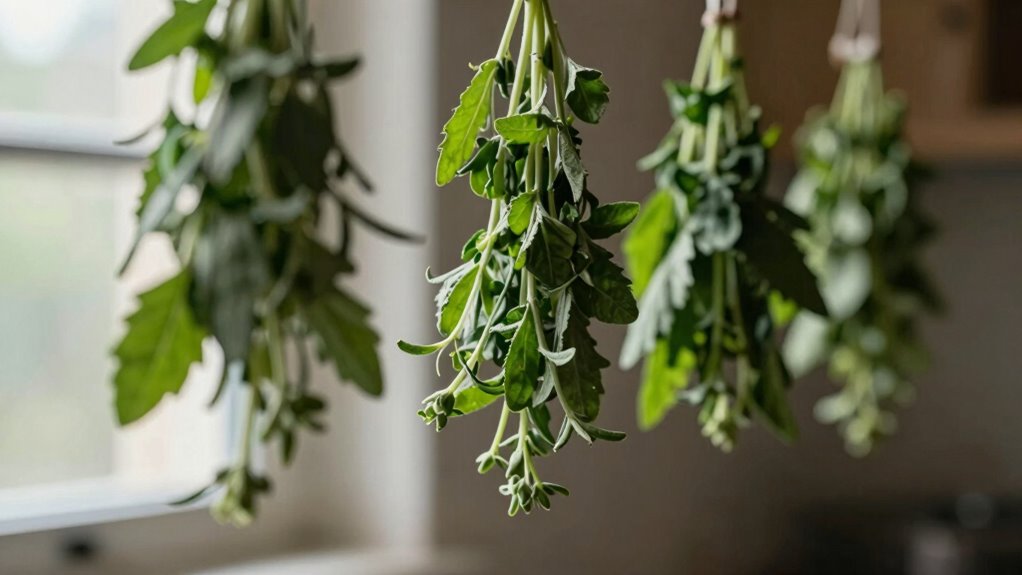
Another vital aspect of drying techniques is the method you choose. Air drying in a dark, warm spot is one of the simplest, most effective ways to preserve color. Tie herbs into small bundles and hang them upside down in a place that’s protected from direct sunlight—think inside a pantry or a shaded corner of your home. Keeping the herbs away from light prevents pigments like chlorophyll from degrading, which is what causes the dulling effect. Make sure the space has good airflow to prevent mold and encourage even drying, which also helps retain color.
If you’re short on space or want a faster method, consider using a dehydrator set at a low temperature, ideally around 95°F (35°C). Dehydrators provide a controlled environment that minimizes light exposure and preserves color better than traditional air drying. When using a dehydrator, avoid opening the door frequently, as fluctuations in temperature and exposure to outside air can affect the herbs’ appearance. Utilizing proper drying environments is crucial for maintaining vibrant hues in your herbs.
Lastly, remember that even after drying, storing your herbs in airtight containers away from light is essential. Light exposure during storage can continue to dull their color over time. Keep your dried herbs in a cool, dark place to sustain their vibrant hues and flavors. By paying attention to your drying techniques and avoiding light exposure, you ensure your herbs retain their beautiful color, making your culinary creations not just flavorful but visually appealing as well.
Frequently Asked Questions
How Long Should Herbs Be Dried for Optimal Color Retention?
You should dry herbs for about 1 to 2 weeks to retain their vibrant color. Keep herb moisture low by choosing a proper drying environment with good airflow and low humidity. Avoid direct sunlight, as it dulls the color. Check herbs regularly; they’re ready when they feel crispy and no longer bend easily. Proper drying preserves their appearance, flavor, and aroma for future use.
Can Artificial Light Be Used Safely for Herb Drying?
Artificial lighting can be safely used for herb drying if you choose the right type, but it’s no magic wand for color preservation. You should use low-intensity, cool-spectrum lights to avoid dulling herbs’ vibrant hues. Keep the light exposure minimal and consistent, because too much artificial lighting can strip away color and flavor, dulling your herbs faster than you’d expect. Proper setup guarantees safe, effective drying without sacrificing vibrancy.
Does the Herb Type Affect the Color Retention During Drying?
Yes, the herb type affects color retention during drying because different herbs have varying pigmentation that reacts uniquely to drying techniques. For instance, delicate herbs like basil may lose vibrant color if exposed to too much light or heat, while sturdier herbs like rosemary retain their hue better. To preserve herb pigmentation, choose drying techniques suited to each herb’s properties, avoiding excessive light exposure and using gentle air drying whenever possible.
Are There Specific Lighting Conditions to Avoid for Herb Drying?
Avoid direct sunlight and harsh artificial light, as they can ruin your herb’s vibrant color by altering the light spectrum. You want a gentle, shaded drying environment with indirect light—think of it as giving your herbs a spa day, not a tanning session. Bright, unfiltered light forces color loss, so keep your drying space cool, dark, and cozy, ensuring your herbs stay as lively as you intended.
What Are the Best Storage Methods to Preserve Dried Herb Color?
To preserve dried herb color, you should focus on proper herb preservation and use the right storage containers. Store your herbs in airtight, opaque containers to block light and prevent color fading. Keep them in a cool, dark place away from heat and humidity. Proper storage helps maintain their vibrant color, flavor, and potency over time, ensuring your dried herbs stay fresh and visually appealing for longer periods.
Conclusion
Don’t let light exposure dull your herbs’ vibrant colors. While some might think drying in bright sunlight speeds up the process, it actually fades their natural beauty. Instead, opt for a shaded, well-ventilated spot to preserve those vivid hues. It may take a bit longer, but your herbs will look fresher and more appealing when stored. Trust me, a little patience now guarantees a stunning, colorful harvest that’s worth the wait.