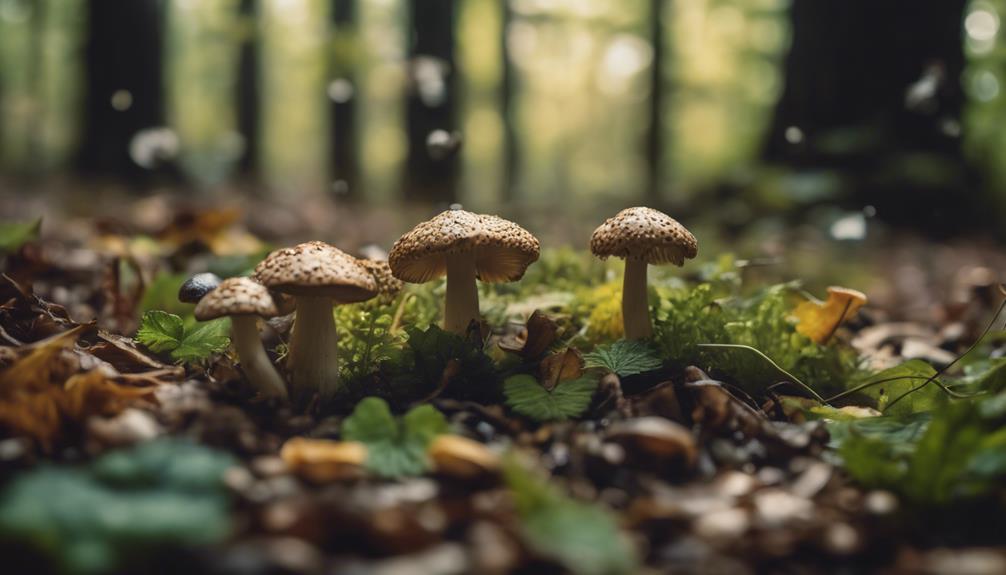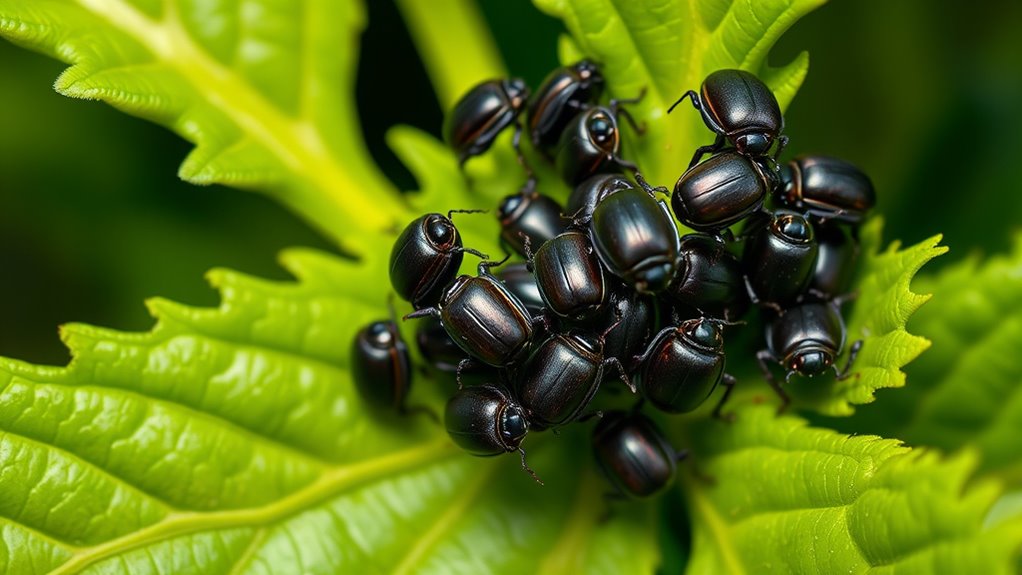

You can expect to see shiny, metallic green or black dock beetles clustering on leaves and stems, often among other forager pests like aphids and caterpillars that feed on foliage and roots. Early detection is key to controlling these pests naturally or with targeted methods. Recognizing their signs helps prevent extensive damage and reduces the need for chemicals. Keep exploring to discover how timely action and eco-friendly strategies can protect your plants effectively.
Key Takeaways
- Dock beetles are shiny, metallic pests that cluster on leaves and stems, feeding on foliage and roots.
- Forager pests like aphids, caterpillars, and beetles can cause significant crop damage if not detected early.
- Early identification of pests enables targeted biological control, reducing crop loss and unnecessary pesticide use.
- Biological agents such as parasitic wasps, predatory beetles, and nematodes effectively maintain pest populations.
- Regular monitoring and timely intervention are essential for sustainable and effective pest management.
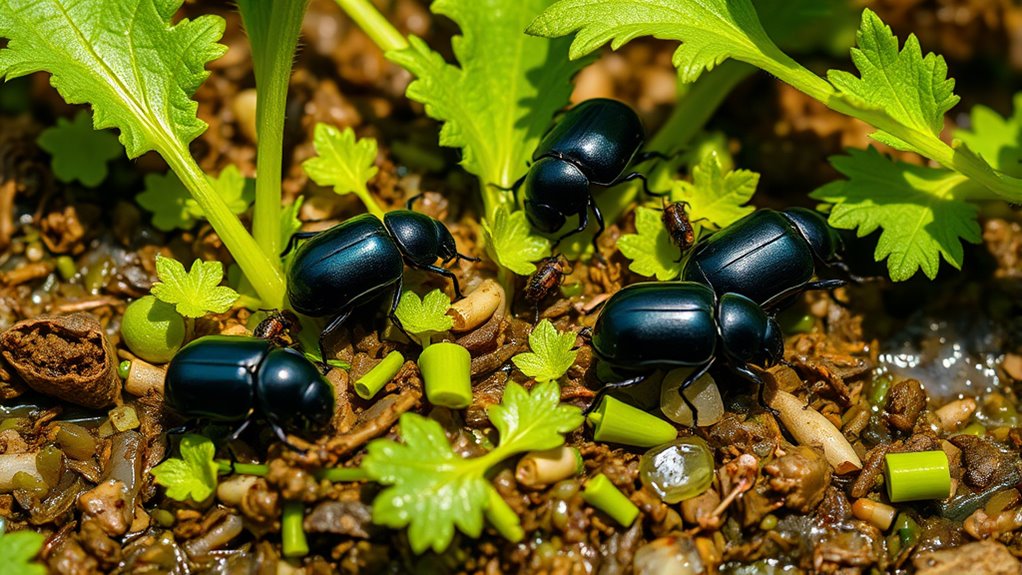
Dock beetles and forager pests pose significant threats to dock crops, often causing extensive damage if not managed promptly. Recognizing these pests early is essential for effective control. Proper pest identification helps you distinguish between harmful insects and beneficial species, ensuring you don’t waste resources on unnecessary treatments. Dock beetles are easily identified by their shiny, metallic green or black bodies and their tendency to cluster on leaves and stems. Forager pests, on the other hand, vary widely but commonly include aphids, caterpillars, and beetles that feast on foliage and roots. Learning to spot these pests early allows you to implement targeted strategies, minimizing crop loss. Understanding the behavior patterns of these pests can further improve management strategies and prevent outbreaks.
Biological control offers a sustainable and environmentally friendly approach to managing these pests. Instead of relying solely on chemical pesticides, you introduce natural enemies like parasitic wasps, predatory beetles, or nematodes. These biological agents prey on or parasitize the pests, keeping their populations in check. For example, certain parasitic wasps specifically target dock beetles’ larvae, reducing their numbers without harming your crop or beneficial insects. Implementing biological control methods requires careful pest identification to guarantee you’re deploying the right natural enemies. If you misidentify the pests, you risk ineffective control or harming beneficial species. Monitoring pest populations regularly helps you determine the right timing and methods for releasing biological control agents.
Maintaining a healthy ecosystem around your dock crop can enhance biological control efforts. Planting a diversity of flowering plants attracts beneficial insects that naturally prey on pests. Avoiding broad-spectrum chemical pesticides preserves these helpful predators and parasitoids. When pest levels are low, you can focus on cultural practices like crop rotation, proper spacing, and weed management to reduce pest habitats. Early intervention is key: the sooner you identify and understand the pest species, the more effectively you can deploy biological control measures before infestations become severe.
Frequently Asked Questions
How Can I Differentiate Dock Beetles From Similar Pests?
To differentiate dock beetles from similar pests, focus on identification tips like size, color, and markings. Dock beetles are typically small, shiny, and have a distinctive metallic sheen, unlike other pests. Compare them to pests like flea beetles or chrysomelids, noting differences in body shape and behavior. Careful pest comparison helps you quickly identify dock beetles and implement the right control measures effectively.
Are Dock Beetles Harmful to Humans or Pets?
You won’t see dock beetles harming your human health or pets directly; they’re harmless creatures, like tiny, shiny bugs scuttling across your dock. While they don’t bite or sting, their presence might cause concern or discomfort. To protect your pet’s safety, keep the area clean and avoid unnecessary contact. Rest assured, these pests don’t pose a significant threat, but maintaining a tidy environment helps keep everyone safe and comfortable.
What Natural Predators Control Forager Pests?
Beneficial insects like ladybugs, lacewings, and parasitic wasps naturally control forager pests. These predators help reduce pest populations without chemicals, making them a key part of pest management strategies. By encouraging these beneficial insects in your garden, you can maintain a healthy balance and minimize damage caused by forager pests. Regularly planting diverse flora and avoiding broad-spectrum insecticides support these natural predators effectively.
How Quickly Do Dock Beetles Reproduce?
You’ll notice dock beetles reproduce fairly quickly, with a reproduction rate that allows their population to grow within a few weeks. Their lifecycle stages, from egg to larva, pupa, and adult, happen rapidly in warm weather. Typically, they complete their lifecycle in about 4 to 6 weeks. This fast reproduction enables them to effectively control forager pests, making them a natural and efficient predator in your ecosystem.
Can Forager Pests Cause Long-Term Crop Damage?
Think of forager pests as relentless invaders, and yes, they can cause long-term crop damage. Their pest lifecycle, from larvae to adults, can weaken plants over time if not managed properly. This ongoing assault challenges your crop resilience, making it harder for your fields to recover. Left unchecked, these pests can deplete resources and reduce yields, so proactive control measures are essential to safeguard your harvest’s future.
Conclusion
Understanding dock beetles and forager pests helps you stay ahead of potential damage. For example, if you notice an increase in beetle activity early in the season, you can take action before they cause serious harm. By monitoring your crops and acting promptly, you protect your harvest and reduce the need for heavy chemical use. Staying vigilant now makes certain you’ll enjoy a healthier, more bountiful harvest later on.