When foraging for sea lettuce, remember that not all green seaweeds are safe to eat. True sea lettuce (Ulva) is soft, thin, and forms loose, sheet-like layers, but look-alikes like green tangle or other algae can be tougher or inedible, and some may even be toxic. Proper identification is key to avoid health risks. If you keep exploring, you’ll discover how to tell these similar-looking plants apart and stay safe while harvesting.
Key Takeaways
- True sea lettuce (Ulva) is thin, flat, and soft, forming loose, sheet-like layers, unlike tougher or differently structured look-alikes.
- Look-alikes like green tangle or algae may be tougher, thicker, or grow in different formations, indicating they are not true sea lettuce.
- Texture, growth pattern, and physical softness are key visual clues to distinguish genuine sea lettuce from similar species.
- Accurate identification requires consulting local guides or experts, as many green marine plants resemble sea lettuce.
- Proper handling and careful inspection help prevent misidentification and ensure safe consumption of edible seaweed.
Sea lettuce, a bright green and leafy seaweed, is a popular edible marine plant enjoyed by foragers and chefs alike. Its vibrant color and delicate texture make it a favorite for salads, soups, and garnishes. But beyond its culinary appeal, sea lettuce offers notable nutritional benefits that can boost your health. It’s rich in vitamins A, C, and K, as well as minerals like iodine, calcium, and magnesium. These nutrients support immune function, promote healthy skin, and help regulate thyroid activity. Incorporating sea lettuce into your diet can be an easy way to enhance your nutrient intake naturally.
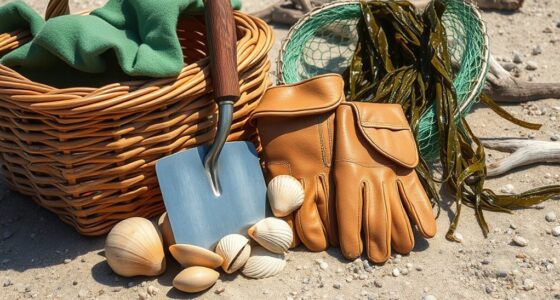
When it comes to harvesting techniques, knowing how to gather sea lettuce properly is vital to guarantee sustainability and safety. You’ll want to look for dense, healthy patches growing on rocks, shells, or other submerged surfaces in clean, unpolluted waters. Using a sharp knife or scissors, gently snip the seaweed at the base, avoiding overharvesting from one location. It’s best to harvest only what you need and leave enough behind for the plant to continue thriving and regenerating. Always wash your sea lettuce thoroughly in cold, fresh water to remove any sand, debris, or tiny marine creatures. Proper handling is essential because contaminated or spoiled seaweed can pose health risks, so inspect your harvest carefully before consumption. Learning harvesting techniques can further improve your foraging success and ensure you’re collecting safe, high-quality seaweed.
As you learn about sea lettuce and its look-alikes, remember that not all green seaweeds are edible or safe. Look-alikes like green tangle or certain species of green algae may resemble sea lettuce, but they can sometimes be inedible or toxic. Recognizing the subtle differences—such as texture, shape, and growth patterns—helps you avoid misidentification. For example, true sea lettuce (Ulva) tends to be thin, flat, and soft, forming loose, sheet-like layers. Its look-alikes may be tougher or grow in different formations. When in doubt, consult local foraging guides or experts to guarantee you’re harvesting the right species. Additionally, understanding seaweed identification techniques can significantly improve your foraging safety. Being aware of marine plant safety guidelines ensures you enjoy wild foraging without risking health issues.
As an affiliate, we earn on qualifying purchases.
Frequently Asked Questions
Can Sea Lettuce Be Safely Foraged for Home Consumption?
Yes, you can forage sea lettuce safely for home consumption if you follow proper foraging regulations and harvesting techniques. Make certain you identify the sea lettuce correctly, avoiding look-alikes that might be toxic. Harvest from clean, unpolluted waters, and use scissors or knives instead of hands to cut it properly. Always research local rules and sustainable practices to guarantee safe, responsible foraging and enjoy your nutritious seaweed at home.
How Does Sea Lettuce Taste Compared to Other Seaweeds?
Sea lettuce has a mild, slightly sweet flavor profile that’s more delicate than many other seaweeds. Its taste is often compared to fresh greens or lettuce, which makes it versatile in culinary uses. You can incorporate it into salads, soups, or stir-fries for a subtle oceanic flavor. Unlike stronger-tasting seaweeds like kelp or nori, sea lettuce’s gentle taste enhances dishes without overpowering other ingredients.
Are There Any Health Risks Associated With Consuming Look-Alike Algae?
Yes, there are health risks if you consume look-alike algae. Some harmful species can contain toxin contamination, which may cause illness or allergic reactions. It is crucial to correctly identify sea lettuce from its look-alikes, as some might be toxic or harbor harmful substances. Always source your seaweed from reputable suppliers or experts to avoid these risks and ensure you’re not unintentionally ingesting dangerous algae.
What Environmental Factors Influence Sea Lettuce Growth?
You’ll find that water temperature and nutrient absorption are key factors influencing sea lettuce growth. In warmer waters, growth rates can double compared to cooler environments, showcasing how temperature impacts development. Nutrients like nitrogen and phosphorus in the water also fuel its proliferation, especially during nutrient-rich runoff periods. These environmental factors directly affect sea lettuce’s ability to thrive, making them essential to understanding its growth patterns and potential overgrowth issues.
How Can I Distinguish Sea Lettuce From Similar Green Marine Plants?
You can distinguish sea lettuce from similar green marine plants by observing color variations and texture differences. Sea lettuce typically has a bright, vibrant green, while look-alikes may have duller or darker shades. Feel the texture—sea lettuce feels soft and tender, whereas others might be rougher or more rigid. Pay attention to growth patterns; sea lettuce often forms loose, overlapping layers on rocks or shells.

Saboten SD-8 6.7" Japanese Garden Pruning Shears, Lightweight Stainless Steel Trimming Scissors for Vegetables, Flowers & Fruit Harvesting, DIY, forest Originals, Made in Japan
- Ultra-Lightweight Design: Weighs only 2.3 oz (65g)
- Precise, Clean Cuts: Sharp blades for delicate trimming
- Durable HRC60 Steel: High-hardness blade for longevity
As an affiliate, we earn on qualifying purchases.
As an affiliate, we earn on qualifying purchases.
Conclusion
So, next time you spot that vibrant green, remember not all that glitters is sea lettuce. Like a modern-day knight wielding a sword, you must wield your knowledge to distinguish the genuine from the imposters. Don’t rely solely on appearance—trust your senses and do your research. In this digital age, it’s easy to be fooled, but with awareness, you’ll navigate the ocean of look-alikes wisely. After all, even in the domain of seaweeds, authenticity still reigns supreme.
As an affiliate, we earn on qualifying purchases.
marine algae safe for consumption
As an affiliate, we earn on qualifying purchases.
As an affiliate, we earn on qualifying purchases.