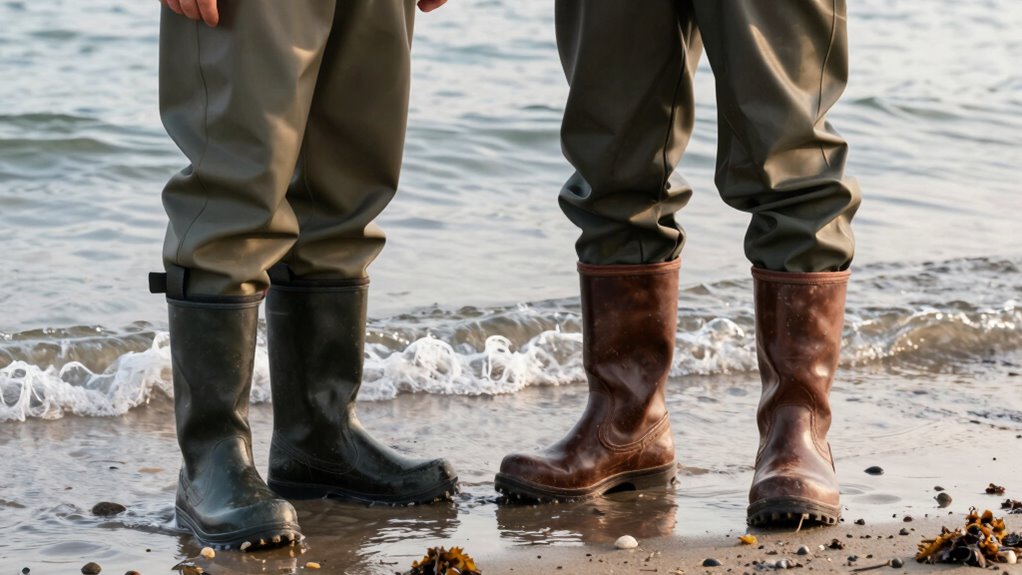

For shoreline harvesting, deck boots are your best choice because they offer ankle support and traction on slippery surfaces, making quick movements easier. They’re lightweight, easy to slip on or off, and suitable for activities like casting or netting along the shoreline. Waders provide full waterproofing and are ideal if you plan to wade into deeper water or spend long periods standing in water. To discover which gear suits your needs best, keep exploring the options.

Get garden gear delivered free with Prime
- Fast, free delivery on millions of items
- Prime Video, Amazon Music and more included
- Member-only deals all year
Key Takeaways
- Deck boots are preferable for shoreline activities due to their lightweight design and quick on/off convenience.
- Waders provide better protection and dryness when wading into deeper or wet shoreline waters.
- Deck boots offer superior traction on slippery docks and rocky shorelines, enhancing safety.
- Waders allow extended wading and standing in water without wet clothing, ideal for prolonged shoreline harvesting.
- Proper gear choice depends on activity focus: quick movements favor deck boots; deep water access favors waders.
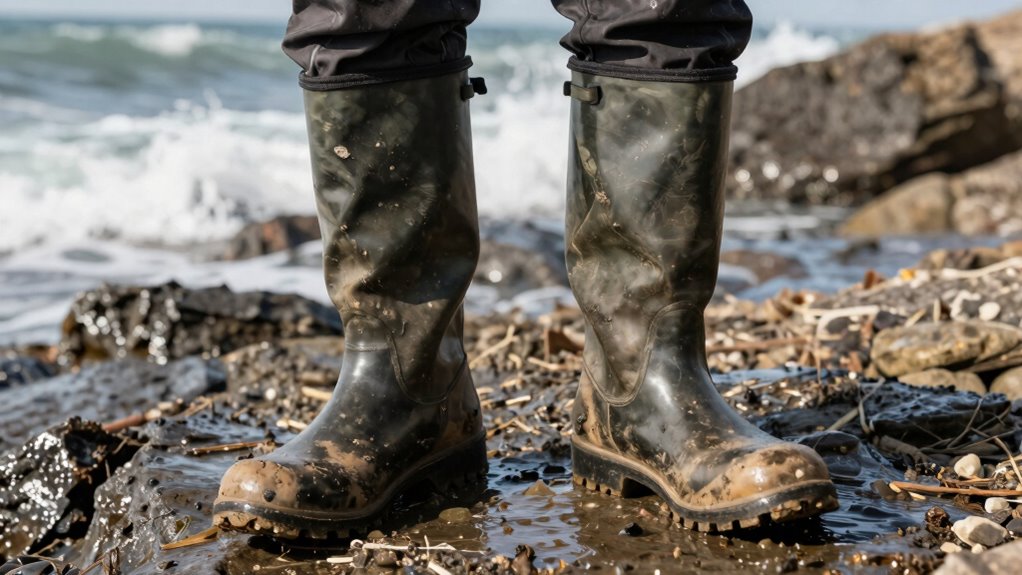
When choosing footwear for water-related activities, understanding the differences between waders and deck boots is essential. If you’re into shoreline harvesting, your choice impacts not just comfort but also your ability to effectively use your fishing techniques. Waders are designed to keep you dry and mobile in the water, providing a full-body waterproof barrier that allows you to wade into deeper waters or stand comfortably in streams and lakes. Deck boots, on the other hand, are more suited for stability on slippery surfaces like boat decks or docks, offering traction and ankle support rather than waterproofing for your entire body. Knowing what suits your specific needs helps you optimize your fishing techniques, whether you’re casting from the shoreline or working from a boat.
If you prefer to stay mostly on the shoreline and focus on casting or netting, deck boots might be your best bet. They’re lightweight, easy to slip on and off, and provide excellent grip on wet surfaces, reducing the risk of slips and falls. This makes them ideal for quick movements, such as chasing after fish or maneuvering around rocky or muddy banks. However, their waterproof capabilities are limited to the sole and ankle area, so if you need to wade into the water, they won’t keep your legs dry. Waders, with their full-body coverage, are perfect for fishing techniques that require prolonged immersion or standing in water. They give you the freedom to change your position without worrying about wet clothing, thus enabling longer periods of active fishing. Additionally, choosing gear made with durable waterproof materials can significantly enhance your experience and safety in wet conditions. Proper gear maintenance is also crucial to prevent damage and ensure these materials function effectively over time.
Gear maintenance plays a crucial role in the effectiveness of both waders and deck boots. Waders need to be cleaned and dried thoroughly after each use to prevent mold, mildew, and material degradation. Proper maintenance extends their lifespan and ensures they continue to keep you dry when you need them most. Deck boots require regular cleaning, especially after exposure to mud, salt, or algae, to maintain their traction and prevent odors. Both types of footwear should be inspected for tears or damage, as compromised gear can jeopardize your safety and fishing success. Investing in quality gear and maintaining it properly means you’ll get more reliable performance, helping you focus on your fishing techniques without worrying about equipment failure. Additionally, understanding the proper care routines for each type of footwear can significantly prolong their usability and performance.
waterproof deck boots for fishing
As an affiliate, we earn on qualifying purchases.
As an affiliate, we earn on qualifying purchases.
Frequently Asked Questions
Which Footwear Is Better for Extreme Cold Shoreline Conditions?
For extreme cold shoreline conditions, deck boots with insulated lining are your best choice. They provide better seasonal performance by keeping your feet warm and dry during prolonged exposure. Deck boots offer ankle support and prevent water intrusion, which is essential in cold, wet environments. Your fishing technique benefits because you stay comfortable and focused. Waders might be too restrictive or lose insulation over time, making deck boots more reliable in harsh cold conditions.
How Do Waders and Deck Boots Compare in Terms of Weight and Mobility?
Waders tend to be heavier and less mobile due to their waterproof material, often made from thick rubber or neoprene, which adds weight. Deck boots are lighter and offer better mobility because they’re usually constructed from lighter materials like rubber or leather with flexible soles. If you need ease of movement and less weight, deck boots are better. But if waterproofing and durability matter more, waders may be the right choice.
Are There Specific Materials That Enhance Durability for Shoreline Harvesting?
You should look for footwear made with wear-resistant fabrics and durable material composition to enhance shoreline harvesting. These fabrics, like reinforced rubber or heavy-duty neoprene, resist tears and abrasions from rocks or shells. Choosing boots with sturdy stitching and high-quality materials guarantees longevity and protection in tough conditions. This way, your footwear stays reliable, even after frequent exposure to saltwater, rocks, and rough terrain.
How Do Maintenance and Cleaning Differ Between Waders and Deck Boots?
You should clean your waders and deck boots regularly to maintain their durability. Waders require gentle cleaning techniques like rinsing with fresh water after each use and occasional deep cleaning to remove dirt and salt. Deck boots need more frequent maintenance, including wiping down with a damp cloth and checking for wear. Both benefit from proper drying and storage, but waders might need more careful attention to seams and material integrity.
Which Footwear Offers Better Protection Against Sharp Objects and Debris?
Deck boots offer better protection against sharp objects and debris because their sturdy soles and reinforced material shield your feet more effectively. You’ll find they also enhance Fishermen’s comfort by providing good ankle support and grip on slippery surfaces. When considering style, deck boots tend to look more classic and versatile, making them suitable for various conditions. Overall, they’re a smart choice for safety, comfort, and style considerations on the shoreline.
men's waders for shoreline fishing
As an affiliate, we earn on qualifying purchases.
As an affiliate, we earn on qualifying purchases.
Conclusion
Ultimately, choosing between waders and deck boots depends on your specific needs and preferences. Waders keep you dry and protected, ideal for extended shoreline work, while deck boots offer agility and quick drainage. Think about what matters most to you—comfort, mobility, or protection. Isn’t it worth investing in gear that truly enhances your experience and safety? After all, the right footwear can make all the difference when you’re out there, harvesting at the shoreline.
As an affiliate, we earn on qualifying purchases.
As an affiliate, we earn on qualifying purchases.
Fall yard work Picks
leaf blowers
As an affiliate, we earn on qualifying purchases.