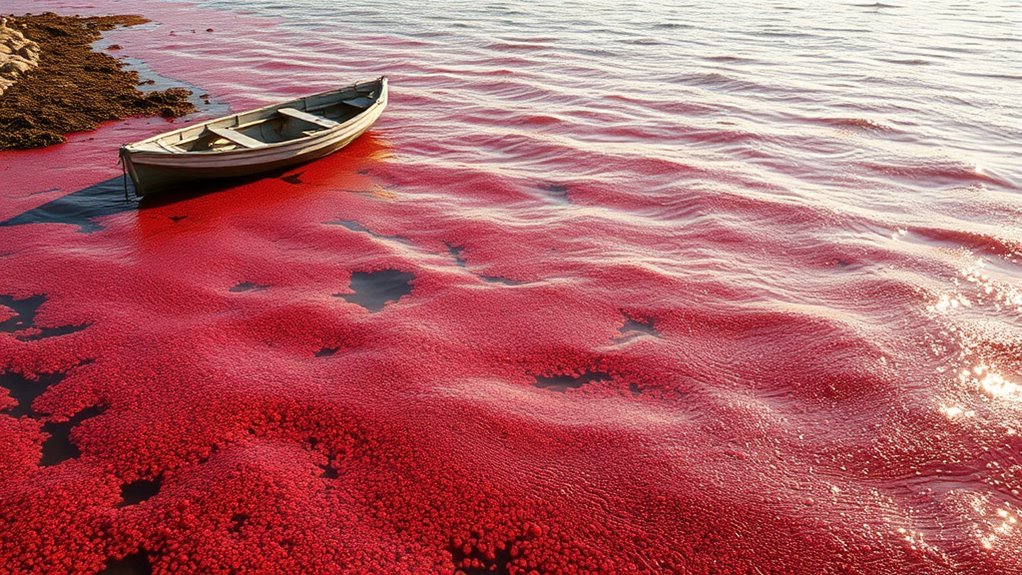
When foraging near water, be aware that harmful algal blooms, like red tides, can produce dangerous toxins that contaminate shellfish and water. Spotting a bloom isn’t always straightforward—colors vary from reddish-brown to green or brown, and appearance alone isn’t reliable. Avoid collecting shellfish or water from areas with visible blooms, especially after heavy rains or warm weather. By knowing what to watch for, you can protect yourself from potential health risks—if you stay alert, you’ll learn more about staying safe.
Key Takeaways
- Recognize that not all algae are harmful; focus on identifying specific toxic species like *Karenia brevis* and *Alexandrium*.
- Visual cues such as reddish-brown water indicate red tides, but microscopic identification is essential for accuracy.
- Avoid collecting shellfish or water samples from areas with active HABs to prevent toxin exposure.
- Stay informed through local advisories and monitor environmental conditions that promote bloom development.
- Practice caution by steering clear of HAB zones to protect yourself from potential neurotoxins and respiratory irritants.
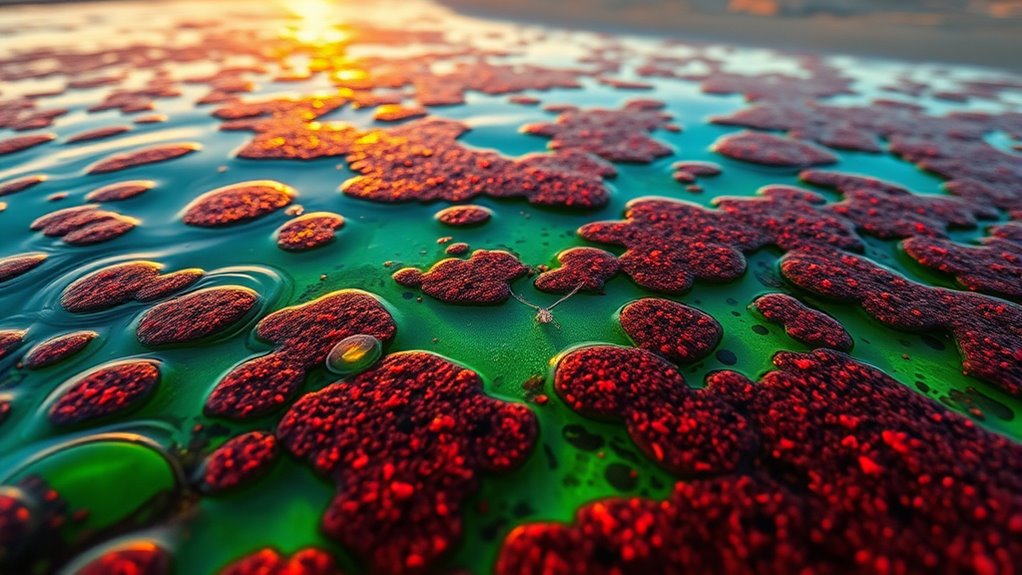
Have you ever wondered what causes the vivid, sometimes toxic, patches of algae that appear in lakes and oceans? These striking displays are often harmful algal blooms, or HABs, and they can pose serious risks to both humans and wildlife. As a forager, understanding what you’re dealing with is essential for your safety. One of the first steps is species identification. Not all algae are dangerous, but some, like certain dinoflagellates responsible for red tides, produce potent toxins that contaminate shellfish and water. Recognizing these specific species helps you avoid misidentifying safe algae as harmful, which is indispensable for maintaining foraging safety.
When you encounter a bloom, take note of its appearance. Red tides, for instance, often turn the water a reddish-brown hue, but other HABs might look greenish or brownish without the characteristic color. Visual cues are helpful but can be misleading, so relying solely on appearance isn’t enough. Instead, learn about the key species involved in your local waters. Many harmful blooms are caused by species like *Karenia brevis* or *Alexandrium*, which are notorious for their toxin production. Familiarizing yourself with these species through local resources or expert guides is a critical part of foraging safety. Knowing what to look for allows you to identify potential hazards quickly and avoid areas where harmful algae are proliferating.
Besides species identification, understanding the conditions that lead to HABs can keep you safe. These blooms tend to thrive in nutrient-rich waters, often after heavy rains or agricultural runoff, which promote algae growth. Warm temperatures and stagnant water also contribute. Monitoring local advisories and reports on bloom activity is a wise move before you start foraging. If a bloom is present, it’s safest to steer clear of collecting shellfish or consuming water from that area. Even if you’re just exploring, touching or ingesting contaminated water can cause serious health issues, including neurological problems and respiratory irritation.
Frequently Asked Questions
How Can Foragers Identify Safe Versus Toxic Marine Algae?
You can identify safe versus toxic marine algae by examining algae morphology closely and looking for toxin indicators. Safe algae often have consistent shapes and colors, while toxic ones may show irregular forms or unusual hues. Learn to recognize specific toxin indicators, such as dark spots or foul smells. Always compare your findings with trusted guides or expert sources, and when in doubt, avoid consuming any algae that seem suspicious.
Are There Effective Home Testing Kits for Harmful Algal Toxins?
Yes, there are effective home testing kits available for toxin detection in marine environments. These kits allow you to quickly identify harmful algal toxins, helping you guarantee safety before foraging. You simply collect a water sample, follow the instructions, and analyze the results. While not as thorough as lab tests, these home testing kits provide a practical way to monitor toxin levels and reduce the risk of consuming contaminated seafood.
What Environmental Factors Trigger Red Tide Blooms?
You should know that red tide blooms are triggered by environmental factors like increased nutrient runoff and elevated water temperatures. When nutrients like nitrogen and phosphorus from agriculture or urban runoff enter coastal waters, they fuel algae growth. Warmer water temperatures further promote bloom development. These combined conditions create an ideal environment for harmful algal blooms, making it essential to monitor nutrient levels and water temperature to predict and prevent red tide outbreaks.
Can Cooking or Processing Neutralize Harmful Toxins in Algae?
Cooking or processing won’t neutralize harmful algae toxins. You might think a quick boil or chop could detoxify algae toxin, but it’s a dangerous misconception—these toxins are incredibly resilient. No matter how much you cook or process, the toxins can remain in the algae, posing serious health risks. Always avoid eating algae that could contain harmful toxins; relying on cooking for detox is a risky gamble you shouldn’t take.
How Often Do Red Tides Occur in Different Coastal Regions?
Red tide frequency varies widely depending on regional bloom patterns. In some areas like Florida or the Gulf Coast, red tides can occur several times a year, especially during warm, nutrient-rich months. In contrast, regions like the Pacific Northwest experience red tides less frequently, often only once every few years. Staying informed on local bloom patterns helps you avoid harvesting during these periods and stay safe.
Conclusion
As a forager, understanding red tides and harmful algal blooms is essential for your safety. Did you know that in some regions, harmful algae can produce toxins that contaminate shellfish, causing illness in thousands annually? Staying informed and avoiding harvesting during blooms protects you and your community. Always check local advisories before foraging in coastal waters. By staying vigilant, you can enjoy nature’s bounty safely and help prevent health risks associated with these dangerous blooms.