To stop slips and avoid ER visits while shucking oysters, always hold the knife firmly with a proper grip, and wear a cut-resistant glove on your non-dominant hand. Keep your fingers tucked away from the blade’s path, and stabilize the oyster on a sturdy surface. Use gentle, controlled pressure when inserting and cutting, avoiding rushing. Paying attention to your hand placement and safety gear makes a huge difference—stick around to learn more safety tips.
Key Takeaways
- Always wear a cut-resistant glove on your non-dominant hand to prevent slips and cuts during shucking.
- Maintain a firm, controlled grip on the oyster and knife, avoiding excessive force that can cause slips.
- Insert the knife at the hinge with a gentle, steady pressure, keeping fingers tucked away from the blade path.
- Use a stable surface or shucking pad to prevent movement and ensure better control.
- Focus on proper technique and safety gear, prioritizing careful movements over speed to reduce injury risk.
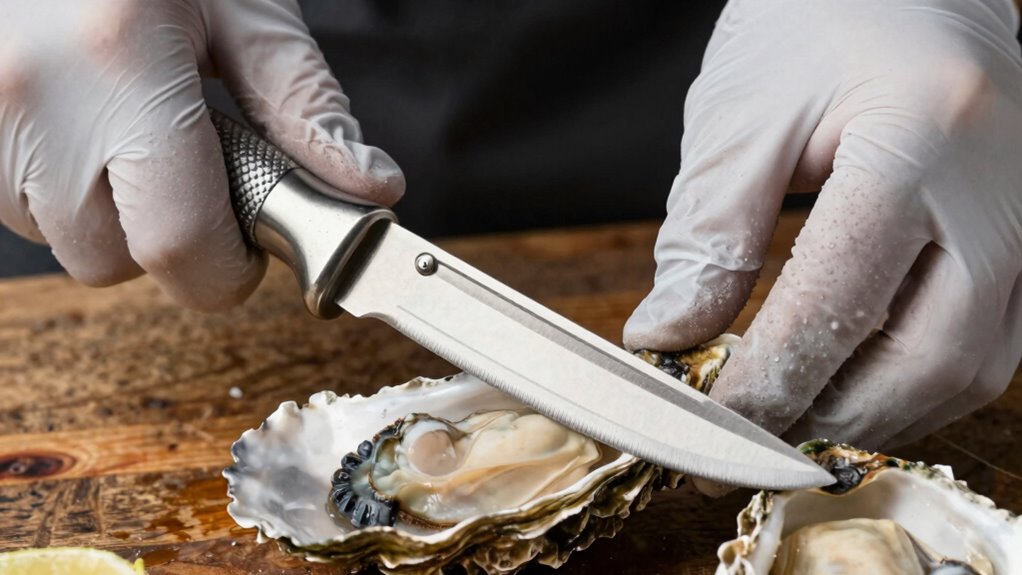
Have you ever wondered how to safely open oysters without risking injury? It’s a skill that requires focus, technique, and the right tools. One of the most vital aspects of oyster opening is maintaining a proper grip on your oyster and knife. You want to hold the oyster firmly but not too tightly, ensuring it doesn’t slip as you work. A proper grip means your hand is stable, your fingers are tucked away from the blade, and your wrist is steady. This helps prevent accidents caused by sudden slips or twisting movements that can lead to cuts. Your grip should feel natural and controlled, allowing you to apply just enough pressure to keep the oyster secure while you insert your knife.
Equally essential is wearing the right protective gear. A cut-resistant glove on your non-dominant hand can be a lifesaver, especially when applying pressure or maneuvering the knife near the shell’s edge. These gloves are designed to resist slicing through, giving you an extra layer of safety if the knife slips. Additionally, wearing safety glasses can protect your eyes from any unexpected spray of shell fragments or juice. Proper protective gear isn’t just about comfort; it’s about minimizing the risk of serious injury, which can happen in an instant if your hand slips or you lose control of the knife.
When you position the oyster on a stable surface or an oyster shucking pad, confirm your hand with the proper grip is secure and your fingers are safely tucked away. This reduces the chance of your fingers being in the path of the blade if the oyster shifts. As you insert the knife at the hinge or the edge of the shell, use a gentle but firm pressure, maintaining control through your grip and supporting yourself with your protective gloves. Never force the knife or rush the process. Instead, take your time, keeping your focus on your hand placement and the angle of your cut. Being aware of the contrast ratio of your tools and surface can also make your shucking process smoother and safer.
Frequently Asked Questions
What Are the Best Materials for an Oyster Knife Handle?
You should choose an oyster knife handle made from durable, non-slip materials like rubber or textured resin. An ergonomic grip guarantees you hold the knife comfortably and securely, reducing slips and accidents. These materials provide excellent control, especially when handling slippery oysters, making your work safer and more efficient. Always prioritize handles with a non-slip surface and ergonomic design to prevent accidents and enhance your oyster-shucking experience.
How Often Should I Replace My Oyster Knife?
You should replace your oyster knife when the blade becomes dull, chipped, or damaged, as these compromise safety and efficiency. Regular knife maintenance—like cleaning and honing—can extend its lifespan, but don’t forget proper storage safety; keep it in a secure, dry place away from children. Replace the knife promptly when signs of wear appear to prevent slips and maintain safe, effective use during your oyster shucking.
Are There Specific Safety Gear Recommendations for Oyster Shucking?
Think of safety gear as your oyster-shucking armor. You should wear glove protection to shield your hands from slips and cuts, and opt for a slip-resistant grip on your knife to prevent accidents. These precautions keep you steady, like a ship in calm waters, reducing the risk of slips that can lead to injuries. Always prioritize these safety recommendations for a safer, more confident shucking experience.
Can Children Safely Learn to Shuck Oysters?
Children can learn to shuck oysters safely if you provide proper supervision and follow age restrictions. Keep a close eye on them during the process, ensuring they use the oyster knife carefully and with appropriate safety gear. It’s best suited for older kids, typically over 12, who can understand the risks and handle the knife responsibly. By supervising closely, you help prevent accidents and make the experience both educational and safe.
What Are Common Mistakes That Lead to Slips During Oyster Shucking?
You often slip during oyster shucking when you neglect slip prevention and technique improvement. Common mistakes include not securing the oyster properly, using a dull knife, or applying excessive force. To stay safe, make certain your hands are dry, grip the oyster firmly, and use controlled, deliberate movements. Practicing proper technique and focusing on slip prevention help you avoid accidents, making shucking safer and more efficient.
Conclusion
Remember, handling an oyster knife carefully can prevent painful slips and trips to the ER. Imagine you’re opening oysters at a backyard party, and a sudden slip causes the blade to jab your hand. That moment of caution could save you from a painful injury and a trip to urgent care. Stay focused, use proper technique, and always wear cut-resistant gloves. With these safety tips, you can enjoy your oyster feast without risking a trip to the hospital.