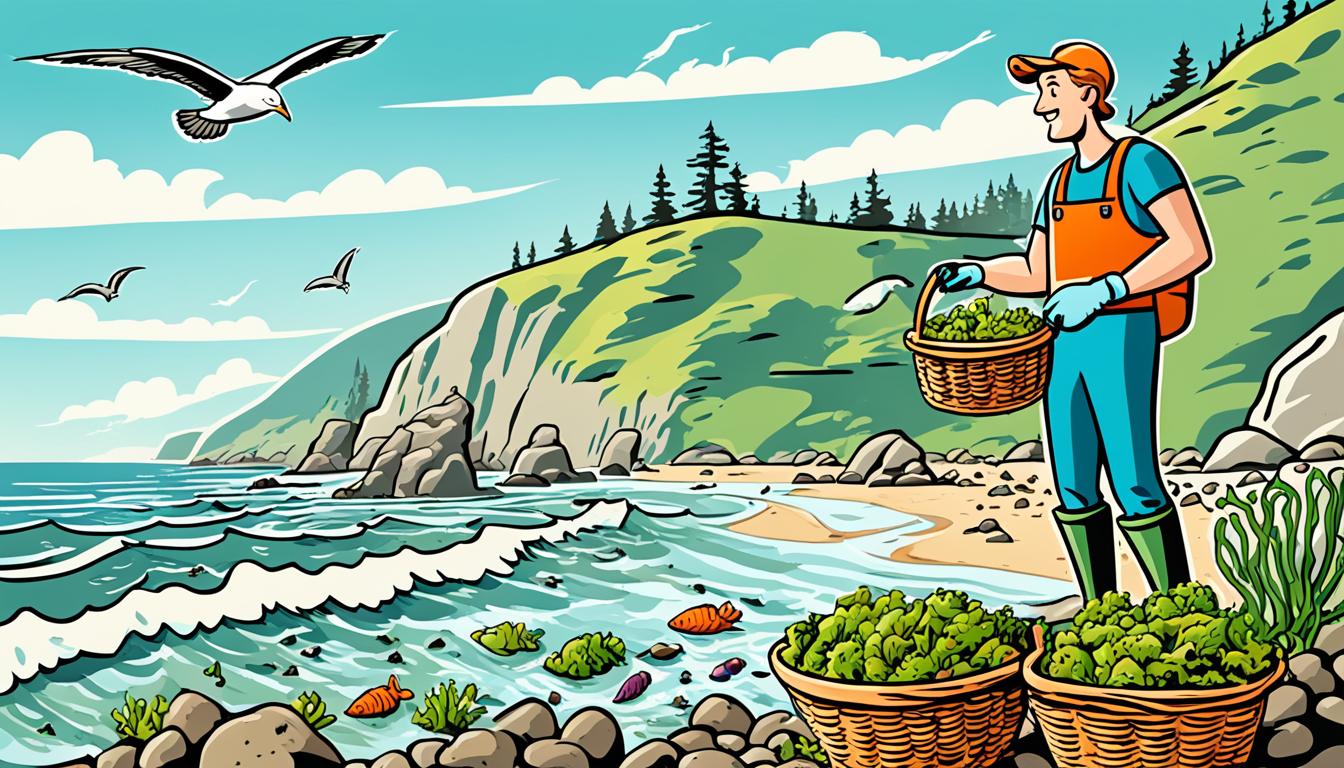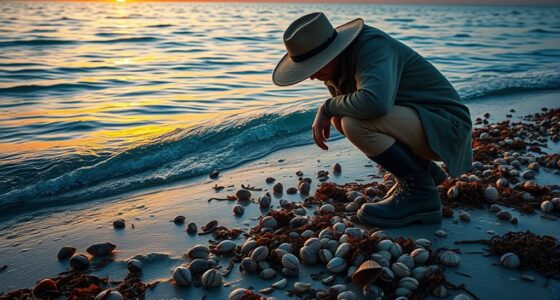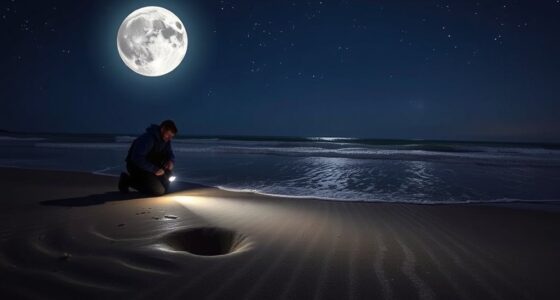
When you go nighttime coastal foraging, plan around tide schedules to access tide pools safely and find marine treasures like crabs and seaweed. Use headlamps with red filters to minimize disturbance to wildlife and reduce your impact on the environment. Stay alert to weather and wave changes, and carry safety gear, informing someone about your plans. By practicing mindful, sustainable foraging, you guarantee a responsible adventure—more helpful tips await if you keep exploring.
Key Takeaways
- Use red-filtered headlamps or flashlights to minimize wildlife disturbance and enhance visibility during night foraging.
- Plan for low tides by consulting tide charts, ensuring safe access to intertidal zones and maximizing harvest opportunities.
- Exercise caution around slippery rocks, waves, and limited visibility; carry safety gear and inform someone of your plans.
- Practice sustainable harvesting by collecting only what is needed and adhering to local guidelines to protect marine ecosystems.
- Move quietly and purposefully, respecting wildlife and habitat to ensure an ethical and environmentally responsible experience.
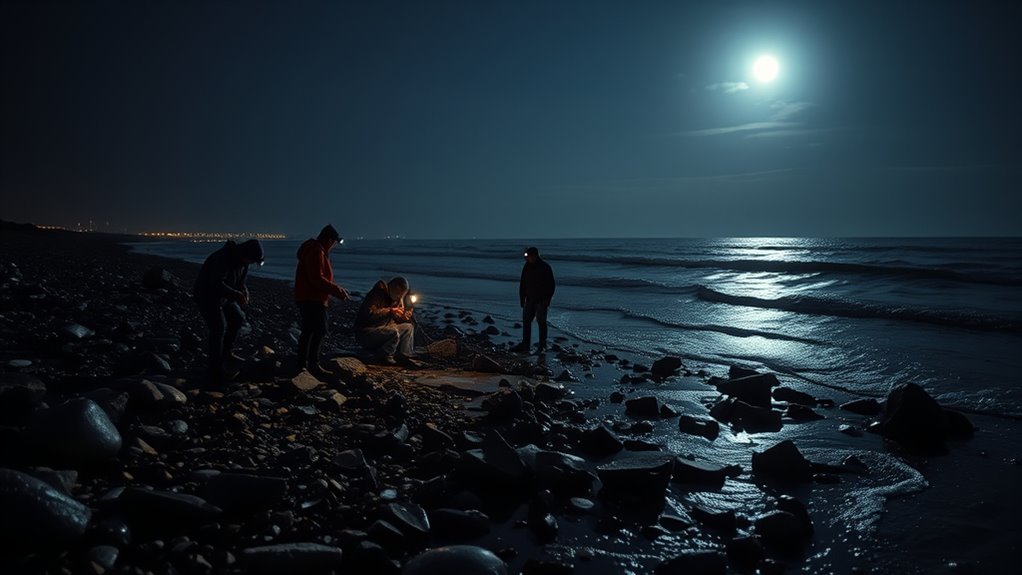
Nighttime coastal foraging offers a unique and rewarding experience that differs markedly from daytime exploration. As you step into the quiet, moonlit shoreline, you’re greeted with a different world—one where the ocean reveals its hidden bounty under the cover of darkness. This activity allows you to connect more deeply with nature, but it also requires mindfulness about marine conservation and ethical harvesting. Your goal isn’t just to gather food but to respect the delicate balance of the ecosystem. By practicing sustainable foraging, you guarantee that marine populations remain healthy for future generations. Avoid overharvesting, and stick to local guidelines, harvesting only what you need without damaging habitats or depleting species. Ethical harvesting isn’t just good practice; it’s vital to preserving the coastal environment and maintaining biodiversity.
Practice sustainable foraging to protect marine life and preserve coastal biodiversity for future generations.
As you move along the shoreline, pay close attention to the tides. Tides dictate the best times for foraging, revealing new areas and exposing marine life that’s otherwise hidden beneath the water. Typically, low tides are prime foraging opportunities, as they expose tide pools and intertidal zones packed with edible creatures like clams, seaweeds, and crabs. Keep an eye on tide charts and plan your outing accordingly, since timing is paramount for both safety and success. Remember, the ocean’s rhythm can be unpredictable, especially at night, so always stay alert to tide changes and be prepared to leave the shore if conditions become unsafe. Incorporating vertical storage solutions or other organization methods can help you carry your foraging tools efficiently and keep your gear accessible during your outing.
Lighting is another essential aspect of nighttime foraging. Use a reliable headlamp or flashlight with a red filter to minimize disturbance to wildlife. Bright lights can disorient marine animals and disturb nesting sites, so dim your lighting when possible. Moving quietly and with purpose will help you avoid unnecessary noise and prevent scaring off potential harvests. Keep in mind that your presence can impact local species, so respect their space and avoid overstepping boundaries. Proper lighting also enhances your safety, helping you navigate rocky terrains, slippery surfaces, and other hazards with confidence.
Safety should always be your top priority. Nighttime conditions can be unpredictable—waves may be stronger, terrain more treacherous, and visibility limited. Always tell someone your plans, carry a fully charged phone, and bring along basic safety gear like a first aid kit and sturdy footwear. Be especially cautious around slippery rocks and sharp objects, and stay aware of changing weather. If you’re new to foraging at night, consider going with an experienced guide who understands local tides, wildlife, and safety protocols. By respecting the environment, staying vigilant, and practicing ethical harvesting, you can enjoy a memorable, responsible, and safe nighttime coastal foraging experience.
Frequently Asked Questions
What Safety Gear Is Essential for Nighttime Foraging?
For nighttime foraging, you need essential safety gear like a reliable flashlight to guarantee safety in the dark and prevent accidents. Wear protective clothing to guard against sharp shells, rocky surfaces, and possible weather changes. Always carry a first aid kit for emergencies, and consider reflective gear to stay visible to others. Prioritize safety by being prepared with the right gear, keeping your experience enjoyable and secure.
How Do Weather Changes Affect Nighttime Foraging Safety?
Weather changes can considerably impact your nighttime foraging safety. Storm impacts, like heavy rain or sudden wind effects, can create dangerous conditions, making it harder to see and stay balanced. Strong winds can cause debris or waves to hit unexpectedly, increasing risk of accidents. Always check the forecast before heading out, and be prepared to leave quickly if weather worsens. Your safety depends on staying alert and adaptable to changing weather conditions.
Can Coastal Tides Be Accurately Predicted for Foraging Trips?
Think of tide prediction like reading a weather forecast; you can usually see the pattern. Using moon phases and tide charts, you can accurately forecast tides for your foraging trips. I once planned a night walk, timing it with a new moon for low tide, and it made all the difference. Reliable tide prediction tools help you stay safe and optimize your foraging, so you can confidently plan your trips around the ocean’s rhythm.
Are There Specific Local Regulations for Nighttime Coastal Foraging?
Yes, there are specific local regulations for nighttime coastal foraging. You should check local fishing laws and permit requirements before heading out, as rules vary by region. Some areas may require a permit for certain species or limited harvesting times, especially at night. Failing to follow these regulations can lead to fines or legal issues. Always verify with local authorities or fishing offices to confirm you’re compliant and safe during your foraging trip.
What Emergency Procedures Should Be in Place During Nighttime Foraging?
You should have emergency communication devices like a fully charged cell phone or a whistle, and make sure someone knows your plans. Carry a basic first aid kit and know how to use it for cuts or injuries. Establish clear procedures for summoning help, such as calling emergency services quickly if needed. Regularly review safety protocols with your group, stay alert, and prioritize your safety during nighttime coastal foraging.
Conclusion
As you venture out for nighttime coastal foraging, remember to stay alert and prioritize safety. The ocean’s glow is like a beacon guiding you, but it can also hide surprises. Keep your tools handy, watch the tides, and never forage alone. With caution and respect, your journey can be as smooth as the calm sea, revealing treasures under the moonlight while keeping you safe and sound.