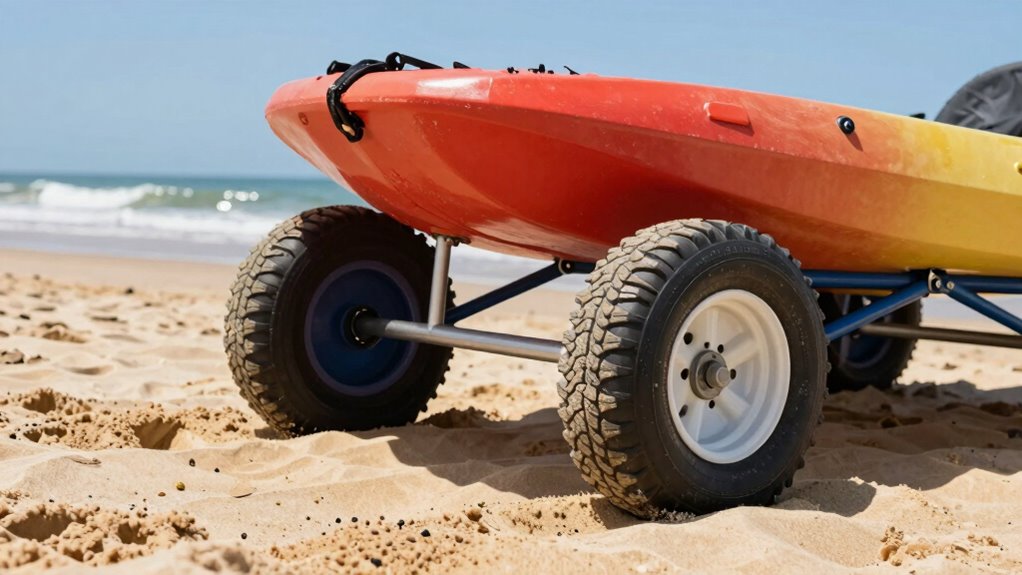

When choosing a kayak cart for soft beaches and dunes, opt for wheels at least 10-12 inches in diameter. Larger wheels help distribute your kayak’s weight more evenly, reducing sinking into loose sand and making towing easier. They also improve stability and control on uneven terrain. The right size minimizes effort and prevents getting stuck. Keep exploring for more expert tips on selecting the best kayak cart for sandy shores.
Key Takeaways
- Larger wheels (10-12 inches+) better distribute weight and reduce sinking on soft beach sand and dunes.
- Increasing wheel diameter decreases the force needed to roll over loose or uneven terrain.
- Wider tires improve stability and prevent the cart from sinking into soft sand or dunes.
- Durable, corrosion-resistant materials ensure longevity when exposed to salt and moisture environments.
- A wide wheelbase and reinforced frame enhance stability and support heavier kayak loads on challenging terrain.
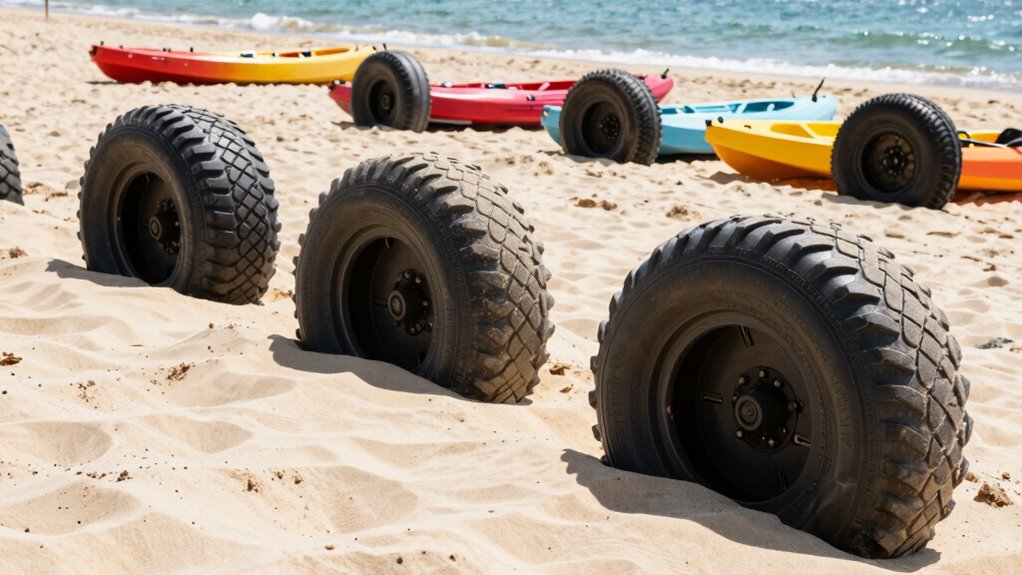
Transporting a kayak across sandy beaches can be challenging, but with the right kayak cart, you can make the process much easier. When dealing with beach terrain, the key is choosing a cart that handles soft sand and uneven surfaces without hassle. The right wheel size can make a significant difference, especially when steering dunes or loose sand. Larger wheels generally roll more smoothly over soft terrain, reducing the effort needed to move your kayak. Smaller wheels tend to sink or get stuck more easily, making your trip more strenuous and frustrating.
Selecting a kayak cart with appropriately sized wheels guarantees you don’t have to exert unnecessary force or struggle to keep your balance. For soft beaches and dunes, look for carts with wheels at least 10 to 12 inches in diameter—these are better suited for uneven, loose surfaces. Larger wheels with wider tires distribute weight more evenly, preventing the cart from sinking into the sand and allowing for easier mobility. Keep in mind that while bigger wheels help with beach terrain, they also need to be durable enough to withstand the harsh conditions. Cart durability is critical because beach environments expose gear to salt, moisture, and abrasive sand. A durable cart, made from corrosion-resistant materials like aluminum or high-quality plastic, ensures longevity and consistent performance.
You should also prioritize a cart with sturdy axles and reinforced frames so it can handle the weight of your kayak and gear without bending or breaking. A lightweight yet durable frame makes transportation manageable, especially when steering dunes or crowded beaches. Additionally, consider a cart with a wide wheelbase; it offers better stability on uneven terrain, reducing the risk of tipping over when moving across dunes or loose sand patches.
Frequently Asked Questions
How Do Kayak Cart Wheels Perform on Wet Versus Dry Sand?
On wet sand, your kayak cart wheels might struggle with traction, especially if they’re small or hard, making it tougher to move smoothly. Dry sand provides better grip, helping your wheels perform more effectively. For both conditions, focus on beach wheel traction and sand wheel durability—larger, pneumatic tires tend to offer better performance and durability across wet and dry surfaces, ensuring your kayak moves easily on all types of sand.
Can Kayak Carts Be Used Effectively on Rocky or Uneven Terrains?
Think of a kayak cart as a trusty steed—great on flat trails, but not so much on rocky terrain or uneven surfaces. You can use it, but expect more jostling and less glide. Its wheels aren’t designed for rugged, uneven surfaces, so choose a cart with sturdy, large tires for better traction. Otherwise, you risk damage or difficulty in maneuvering across rocky, uneven grounds.
What Maintenance Is Required for Kayak Cart Wheels After Beach Use?
After beach use, you should check your kayak cart wheels for dirt and salt buildup. You’ll want to apply wheel lubrication to keep the moving parts smooth and prevent rust. Also, inspect the tires for signs of wear and tear; if they’re worn out or damaged, tire replacement is necessary to guarantee easy transport on sand. Regular maintenance keeps your cart in good shape for all your adventures.
Are There Eco-Friendly Options for Kayak Cart Wheels?
Yes, you can find eco-friendly kayak cart wheels made from biodegradable materials or recycled options. These wheels help reduce environmental impact and are perfect if you’re conscious of sustainability. Look for models specifically designed with biodegradable components or made from recycled plastics and rubber. By choosing these options, you support eco-friendly practices while maintaining the durability you need for beach outings.
How Do Different Wheel Materials Affect Maneuverability on Soft Sand?
Think of your kayak cart as a trusted steed crossing a sandy desert. Rubber wheels offer great traction, helping you glide smoothly, while plastic wheels might slip, making your journey tougher. Aluminum wheels are durable but may weigh you down. Choosing the right material impacts maneuverability—flexible, high-traction rubber excels on soft sand, while sturdy, durable options ensure your cart withstands the test of time. Your choice shapes your adventure’s ease and success.
Conclusion
Now, with the right wheel size, your kayak cart becomes a sturdy steed, smoothly gliding across sandy dunes like a boat sailing over gentle waves. Think of it as your trusty companion, transforming tough terrain into a walk in the park. When you match your wheels to the soft beach’s dance, every step feels lighter, and your adventure becomes a breeze—your kayak’s journey from water to land as effortless as a bird soaring on the breeze.