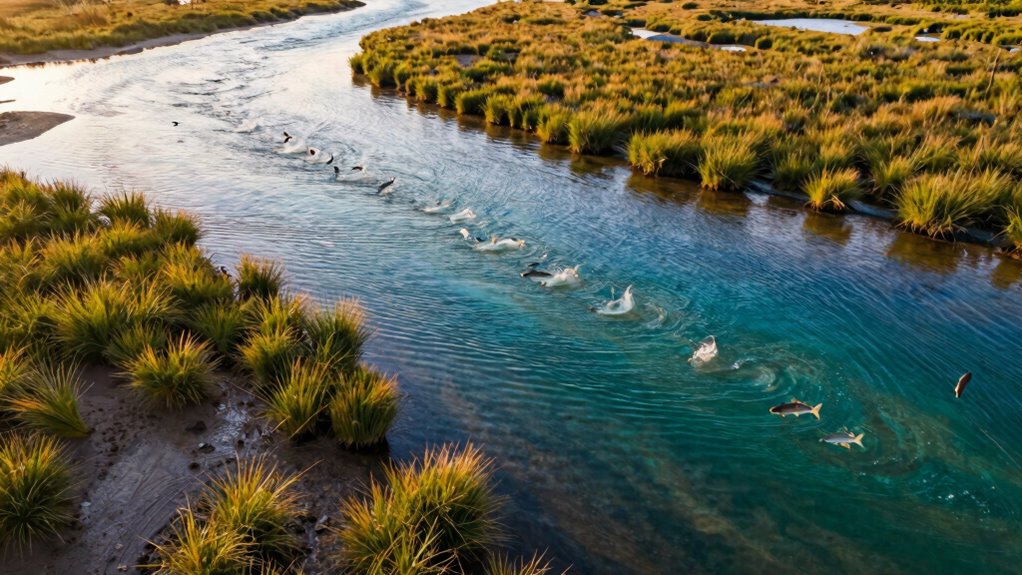

You feel that estuaries are incredibly rich because brackish water creates a unique environment with constant nutrient exchange and a variety of salinity levels. This diversity supports a wide range of species, from tiny microorganisms to large fish and birds, while promoting productive nutrient cycles. The mix of freshwater and seawater fosters many habitats, ensuring resilience and ecological balance. If you explore further, you’ll uncover more about the powerful processes that make estuaries so essential.

Get garden gear delivered free with Prime
- Fast, free delivery on millions of items
- Prime Video, Amazon Music and more included
- Member-only deals all year
Key Takeaways
- Brackish water creates diverse habitats supporting various species with different salinity tolerances.
- Nutrient cycling in estuaries boosts productivity, fueling abundant plant and animal growth.
- Salinity gradients facilitate unique ecological niches, promoting high biodiversity.
- Continuous nutrient exchange prevents harmful buildup, maintaining ecosystem health.
- The mix of freshwater and seawater enhances food web complexity and resilience.
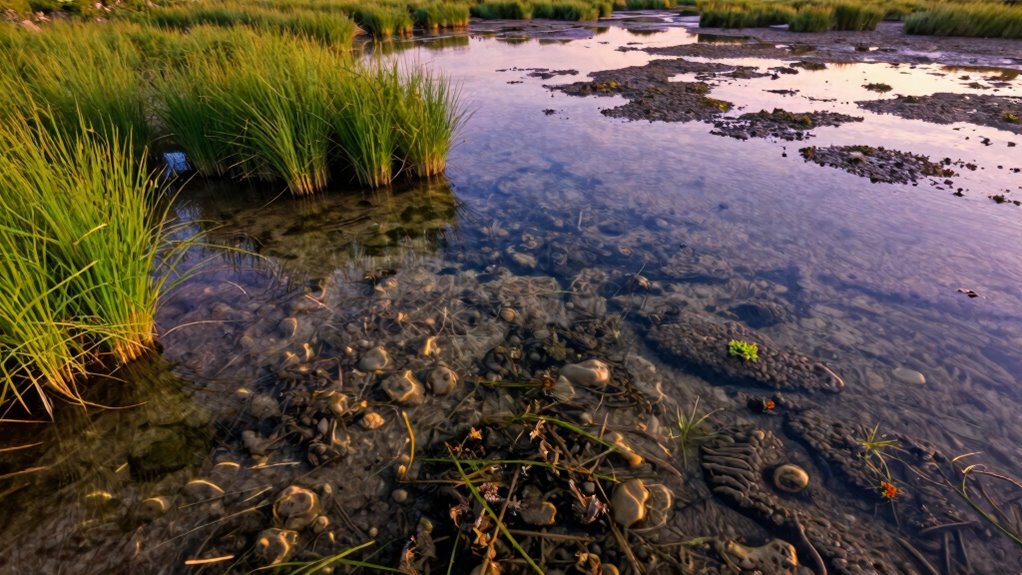
Have you ever wondered what makes estuaries and brackish waters unique ecosystems? These environments stand out because they’re incredibly productive, teeming with life, and play an essential role in the health of our planet. One key reason for their richness lies in the way they handle nutrient cycling. In estuaries, nutrients like nitrogen and phosphorus are constantly exchanged, broken down, and replenished. This ongoing process fuels the growth of aquatic plants, supports diverse fish populations, and sustains the entire food web. Because nutrients are recycled so efficiently here, estuaries serve as biological hotspots, where productivity far exceeds that of many open ocean or freshwater systems.
Estuaries are biological hotspots due to their efficient nutrient cycling and high productivity.
Another factor that makes estuaries so vibrant is the presence of salinity gradients. These gradients are the gradual changes in salinity levels from freshwater inflows to the saltier waters of the ocean. As water moves through an estuary, salinity varies across different zones, creating a mosaic of habitats. You’ll find species specially adapted to these shifts—some thrive in fresher areas, while others flourish where salinity is higher. This variation encourages a high level of biodiversity because different organisms occupy distinct niches, reducing competition and increasing overall ecosystem stability.
The salinity gradients also influence nutrient dynamics. Freshwater inputs often carry nutrients from land, which then mix with seawater, creating ideal conditions for phytoplankton and algae growth. These tiny plants form the foundation of the estuarine food web, supporting everything from tiny invertebrates to large fish and birds. Because of the constant mixing facilitated by salinity changes, nutrients are distributed efficiently, preventing stagnation and promoting healthy, thriving communities. Nutrient cycling is further enhanced by the presence of microbial communities that break down organic matter, ensuring continued productivity. The presence of a salinity gradient also helps in maintaining the ecological balance by supporting species with different salinity tolerances.
You might notice that this dynamic environment is self-sustaining and resilient. The nutrient cycling in estuaries ensures that excess nutrients are broken down and reused, preventing harmful buildup that could lead to issues like algal blooms. Meanwhile, the salinity gradients act as natural barriers, shaping species distribution and fostering ecological diversity. This combination of nutrient recycling and salinity variation makes estuaries some of the most productive and ecologically important ecosystems on Earth.
In essence, it’s this interplay—efficient nutrient cycling and the unique salinity gradients—that makes estuaries so rich and essential. You’re witnessing a finely tuned natural system that sustains a complex web of life, balancing land and sea in a way that’s both resilient and remarkably productive.
As an affiliate, we earn on qualifying purchases.
Frequently Asked Questions
How Do Estuaries Influence Local Climate Patterns?
Estuaries influence local climate patterns through tidal flow and salinity gradients, which help regulate temperature and humidity. As tides move in and out, they distribute heat and moisture, moderating extreme weather. Salinity gradients create diverse habitats that support lush plant life, which further impacts climate by increasing humidity and reducing temperature swings. You’ll notice these effects as milder winters and cooler summers near estuarine regions.
What Role Do Estuaries Play in Carbon Sequestration?
Estuaries play a essential role in carbon sequestration by trapping sediments rich in organic material, which helps store carbon. You’ll find sediment accumulation is fundamental, as it locks away carbon and reduces greenhouse gases. Microbial processes further enhance this effect by breaking down organic matter, converting it into forms that remain stored within sediments. This natural process makes estuaries powerful buffers against climate change, actively removing carbon from the atmosphere.
Are There Specific Species Unique to Brackish Water?
Like explorers in uncharted waters, you discover species uniquely adapted to brackish environments. These species have evolved remarkable salinity tolerance and specialized adaptations, making them exclusive to estuaries. For example, the Atlantic killifish thrives amid fluctuating salinity levels, showcasing resilience and adaptation. Such species embody nature’s ingenuity, thriving where freshwater and saltwater meet, and highlighting the delicate balance that sustains these vibrant, evolving ecosystems.
How Do Human Activities Impact Estuarine Ecosystems?
You impact estuarine ecosystems through activities that alter freshwater influx and sediment dynamics. Pollution from agriculture, industry, and urban runoff can decrease water quality, harming native species. Construction and dredging disrupt sediment balance and water flow, destabilizing habitats. Overfishing depletes key species, while climate change raises sea levels and temperature, further stressing these delicate environments. Your actions can either threaten or help preserve the rich, dynamic nature of estuaries.
Can Estuaries Recover From Pollution or Habitat Destruction?
Like a phoenix rising from ashes, estuaries can recover with dedicated pollution mitigation and habitat restoration efforts. You play a crucial role in helping these ecosystems heal by supporting cleanup initiatives and protecting essential habitats. While recovery takes time, hope remains, as nature’s resilience shines through if we actively restore and reduce harmful impacts. Your actions can help these rich, brackish waters regain their vibrancy and balance.
As an affiliate, we earn on qualifying purchases.
Conclusion
So next time you walk along an estuary’s edge, remember you’re witnessing more than just a meeting of waters. It’s a living mosaic of life, brimming with potential and resilience. Like a wise old storyteller, brackish water whispers secrets of adaptability and strength. In its rich mix, you find nature’s reminder: sometimes, it’s in the blending of opposites that true *essentiality* thrives, teaching us that diversity is the true source of richness.
As an affiliate, we earn on qualifying purchases.
salinity testing kit for estuaries
As an affiliate, we earn on qualifying purchases.
As an affiliate, we earn on qualifying purchases.
Halloween Picks
halloween
As an affiliate, we earn on qualifying purchases.