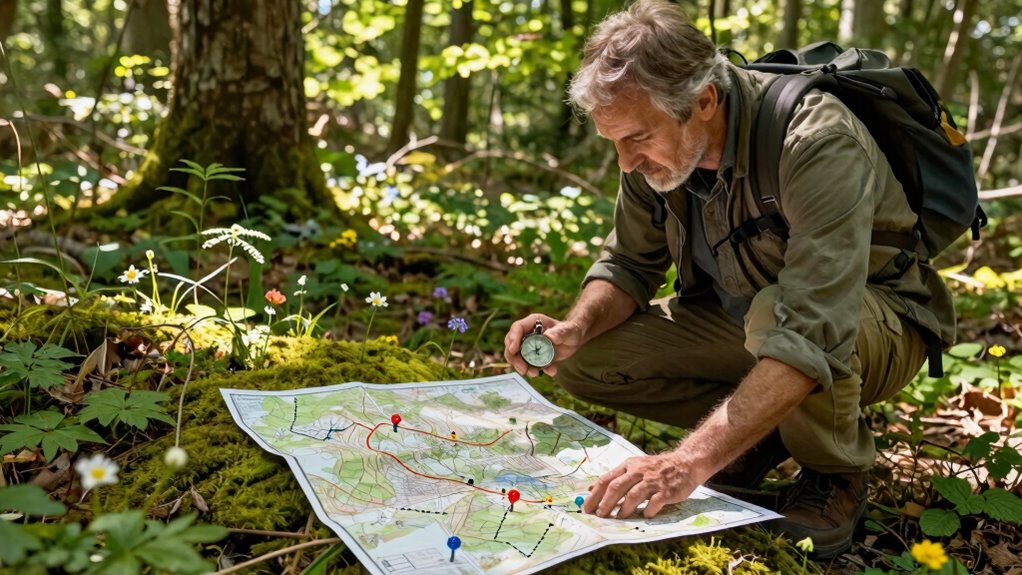

Using digital maps for route planning helps you avoid aimless wandering and find more resources efficiently. You can plot locations, visualize terrain, and identify the best paths to reduce effort and backtracking. Updating maps with real-time data guarantees you’re always aware of changes or hazards, making your trips safer and more productive. Smart planning also minimizes environmental impact and keeps you prepared. Keep exploring for more tips to maximize your foraging success.
Key Takeaways
- Use digital mapping tools to plot efficient routes and avoid unnecessary backtracking.
- Visualize terrain features to identify the shortest, safest paths to resource sites.
- Update maps with real-time data to adapt routes based on current conditions or sightings.
- Plan routes that minimize environmental impact by following sustainable trails and avoiding protected areas.
- Share routes digitally for safety and coordination, ensuring a more productive foraging trip.

Planning an efficient route is crucial for foragers looking to maximize their harvest while minimizing effort. When you approach foraging with a clear plan, you save time and energy, making your outings more productive. Digital mapping tools can be game-changers in this process. With just a smartphone or GPS device, you can plot out the locations of various plants, mushrooms, or other resources you seek. These tools help you visualize the terrain and identify the most direct paths between points of interest, reducing unnecessary backtracking. By pre-planning your route digitally, you avoid wandering aimlessly, which not only conserves effort but also guarantees you don’t miss valuable foraging spots. Plus, digital maps can be updated with real-time data, such as recent sightings or changes in terrain, further refining your plan. Incorporating digital mapping into your foraging routine also encourages a more mindful approach to exploring natural environments.
Pre-planning your route with digital maps boosts efficiency, reduces effort, and helps you discover hidden foraging spots safely.
In addition to efficiency, thoughtful route planning can considerably decrease your environmental impact. When you know the terrain well and stick to established trails or clear paths, you prevent unnecessary trampling of delicate vegetation or disturbing wildlife habitats. This responsible approach helps preserve the natural environment for future foraging trips and maintains the health of the ecosystem. Digital mapping plays an important role here, as it allows you to analyze the landscape beforehand, avoiding sensitive areas and minimizing your footprint. You can identify access points, avoid protected zones, and plan routes that follow existing trails, which helps in keeping your foraging sustainable and eco-friendly. Understanding the landscape features through digital maps can further enhance your ability to choose sustainable routes. Additionally, using these tools can help you learn about local ecosystems, fostering a deeper respect for the natural surroundings. Recognizing ecosystem diversity through mapping can also help you identify the most sustainable foraging locations. Incorporating environmental data can further support responsible foraging practices by highlighting areas of ecological significance.
Another benefit of careful route planning is that it enhances your safety. By studying maps beforehand, you become familiar with the terrain, water sources, and potential hazards. You can plan your route to include safe exit points or places to seek help if necessary. When you incorporate digital mapping, you can also share your planned route with someone else, adding an extra layer of security. Knowing your path and sticking to it reduces the chances of getting lost and makes your entire foraging experience more enjoyable and secure. A well-planned route also helps you manage your time effectively, ensuring you can return before dark or adverse weather conditions arise.
Ultimately, combining digital mapping with a thoughtful approach to environmental impact makes your foraging trips more efficient, sustainable, and safe. You’ll find more resources in less time, while also respecting and protecting the natural spaces you love. Planning your route carefully guarantees that every outing is productive and responsible, allowing you to gather what you need without unnecessary disturbance or effort. With the right tools and mindset, your foraging adventures become smarter, safer, and more sustainable.

Handheld GPS for Hiking, Rugged and Waterproof Handheld GPS Navigator, 3.2" Sunlight Readable Screen, Compact Satellite Handheld GPS with USA Topo Map, Multi-GNSS Support, Extra Battery Life
- Compact and Lightweight Design: Anti-slip, easy to carry
- Sunlight Readable 3.2" Screen: Clear visibility in bright sunlight
- Physical Buttons for Versatility: Operate easily in any conditions
As an affiliate, we earn on qualifying purchases.
As an affiliate, we earn on qualifying purchases.
Frequently Asked Questions
What Tools Can Assist in Route Planning for Foragers?
You can use a foraging app combined with GPS navigation to plan your routes effectively. These tools help you identify productive foraging spots and create efficient paths, saving you steps. A specialized foraging app offers detailed maps and plant info, while GPS navigation guarantees you stay on track. Together, they make foraging safer, quicker, and more rewarding by helping you find more resources with less effort.
How Do Weather Conditions Affect Foraging Routes?
Weather conditions profoundly influence your foraging routes. Adverse weather patterns, like heavy rain or snow, can make paths slippery or inaccessible, forcing you to adjust your plans. Seasonal variations also matter; during certain times, specific plants are abundant, guiding your route choices. By monitoring weather forecasts and understanding seasonal shifts, you can optimize your foraging, avoid hazards, and increase your success rate while staying safe.
What Safety Precautions Should Foragers Take During Planning?
You should prioritize safety by practicing wildlife awareness and emergency preparedness when planning your route. Stay informed about local animal activity and avoid known risky areas. Carry a first aid kit, map, and communication device in case of emergencies. Always let someone know your route and expected return time. Being prepared and aware of wildlife helps prevent accidents, ensuring a safer foraging experience and allowing you to respond quickly if needed.
How Can Foragers Optimize Routes for Different Seasons?
Imagine the changing landscape as you plan your foraging route, adjusting for seasonal migration and plant availability. You can optimize your path by tracking blooming cycles and migration patterns, ensuring you visit abundant spots at peak times. During spring, focus on early bloomers, while fall calls for ripe, migrating berries. This seasonal awareness helps you save steps, find more, and harvest sustainably throughout the year.
Are There Specific Maps Designed for Foraging Route Planning?
Yes, there are maps specifically designed for foraging route planning. You can use mapping techniques like detailed topographic maps and satellite imagery to identify promising areas. Terrain analysis helps you understand elevation, water sources, and vegetation density, guiding your route. These maps enable you to plan efficient paths, save steps, and maximize your foraging success by focusing on the most productive zones.

onX Hunt Premium App – Digital Hunting Map Membership for Phone, Tablet & Computer – Color-Coded Land Ownership, Google Satellite Imagery, 24K Topo Maps & Hunt-Specific Data
- Digital Maps for Selected State: One-year detailed maps with optional additional states
- Color-Coded Land Ownership: Identify public and private land with owner details
- Satellite & Topo Maps: Switch between high-res satellite imagery and 24K topo maps
As an affiliate, we earn on qualifying purchases.
As an affiliate, we earn on qualifying purchases.
Conclusion
By mastering route planning, you’ll save more steps than a squirrel hoarding acorns and find treasures hidden in every corner of the forest. With every well-planned path, you’ll outsmart the wild, outpick the best, and cover ground faster than a fox on the hunt. No more wasted energy or missed spots—just pure, unstoppable foraging brilliance. Get your route right, and watch your bounty grow exponentially—more than you ever dreamed possible!

Huckleberry Foraging Logbook: A Seasonal Field Journal for Tracking Harvests, Mapping Berry Zones, and Recording Preservation Methods
As an affiliate, we earn on qualifying purchases.
As an affiliate, we earn on qualifying purchases.

SealLine Waterproof Map Case, Clear, Regular – 12 x 16"
- Versatile for Wet Adventures: Attaches to kayaks, canoes, backpacks, handlebars
- Easy Waterproof Access: Wide-track zip closure for quick access
- Durable Waterproof Seams: RF welded seams for enhanced durability
As an affiliate, we earn on qualifying purchases.
As an affiliate, we earn on qualifying purchases.