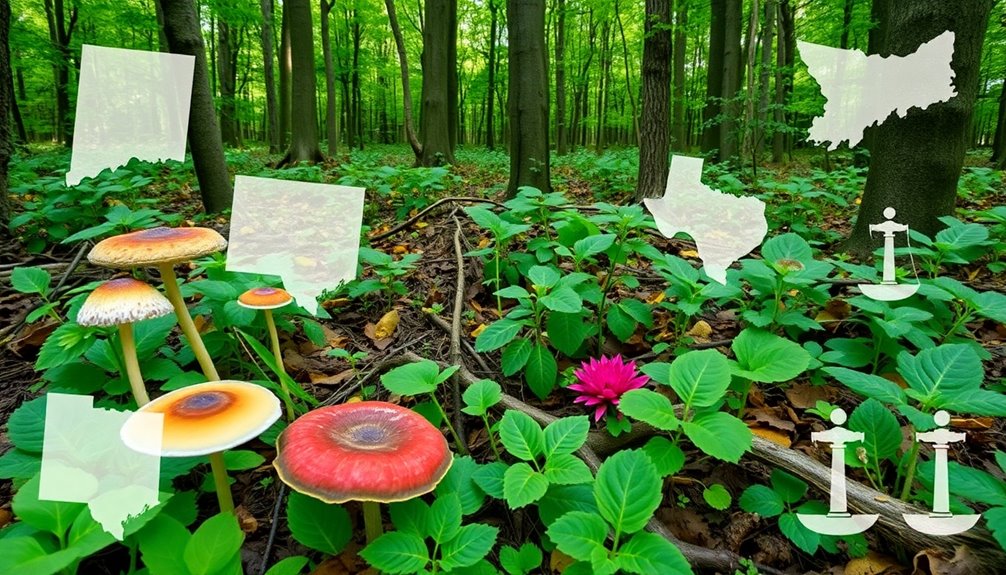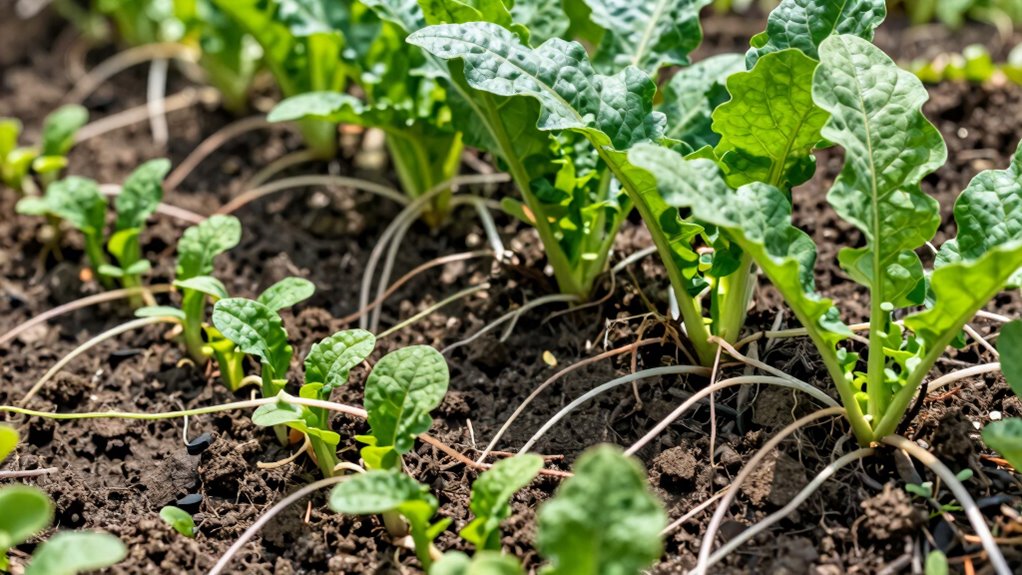

If you seek reliable field edibles that thrive in disturbed ground, look for plants like dandelions, plantains, and chickweed. These hardy species quickly colonize areas of recent disturbance, offering nutritious greens and flowers. You can harvest their edible parts for salads, teas, or medicinal use. Since these plants adapt well to less-than-ideal conditions, they’re perfect for foraging in construction sites or abandoned lots. Keep exploring, and you’ll discover more about how to identify and sustainably harvest these resilient foods.
Key Takeaways
- Plants like dandelions, plantains, and chickweed thrive in recently disturbed soils and are easy to forage.
- These hardy plants quickly colonize disturbed areas, providing accessible, nutrient-rich edible greens.
- Soil restoration techniques such as aeration and composting promote healthy growth of these field edibles.
- Wildflowers and greens in disturbed ground attract pollinators and support local ecosystems.
- Responsible foraging involves recognizing native resilient plants and maintaining soil health for sustainable harvests.
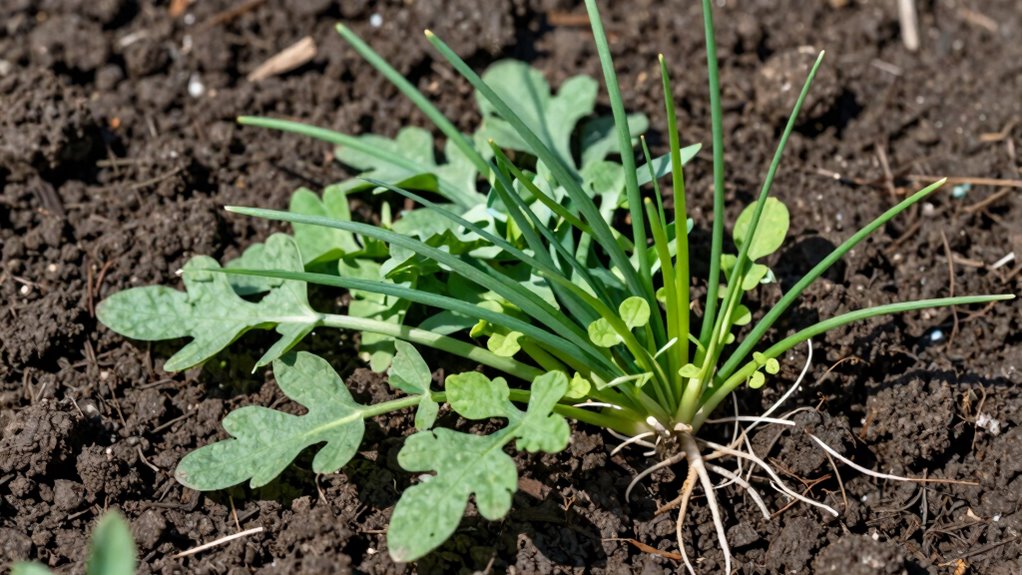
Many plants thrive in disturbed ground, often outcompeting weeds and establishing themselves quickly. If you’re exploring the world of field edibles, understanding which plants favor these conditions can open up new foraging opportunities. Wildflower foraging is a great way to identify edible species that naturally grow in areas of recent disturbance, such as construction sites, abandoned lots, or recently tilled soil. These plants have adapted to flourish in less-than-ideal conditions, making them reliable sources of food in environments where other crops might struggle.
Incorporating soil restoration techniques can also encourage the growth of these useful species. Techniques like aeration, compost addition, and minimal disturbance help improve soil health while supporting the rapid establishment of native wildflowers and edible greens. When you disturb the soil intentionally, you often create the perfect environment for plants that excel in colonizing disturbed areas. This process not only enhances biodiversity but also provides accessible foraging spots for wild edibles, minimizing your need for cultivated plots. Creating a balanced environment for these plants involves understanding how soil health impacts their growth and resilience, which can be achieved through mindful soil management.
Some wildflowers and plants are especially suited for these conditions. For example, plants like dandelions, plantains, and chickweed are hardy and often found thriving in disturbed ground. Dandelions, in particular, are incredibly versatile; their leaves, flowers, and roots are edible and packed with nutrients. They tend to appear quickly after soil disturbance, making them an excellent foraging option for beginners. Similarly, plantains and chickweed grow abundantly in disturbed soils and can be easily foraged for salads, teas, or medicinal uses. Recognizing these plants requires a keen eye, but once you learn their characteristics, you’ll find them growing in many unlikely places.
Using soil restoration techniques also encourages the growth of native wildflowers that attract pollinators and support local ecosystems. These plants can be harvested sustainably, providing a continuous source of fresh greens and flowers. When you focus on wildflower foraging in disturbed areas, you’re not just gathering food—you’re also supporting ecological balance by promoting native species that naturally thrive in such conditions. biodiversity plays a crucial role in the success of these plants, ensuring resilient and sustainable ecosystems. Recognizing how these native plants contribute to ecosystem health can help guide responsible foraging practices that benefit the environment.
Ultimately, understanding which plants love disturbed ground empowers you to forage confidently and responsibly. It’s about recognizing the resilience of certain wild edibles and fostering soil health to ensure these plants continue to grow. With the right techniques and a keen eye, you’ll find that many field edibles are waiting just beneath the surface, ready to be harvested in areas that most overlook.

The Complete Foraging Guide To Edible Wild Berries: Rapidly Identify, Harvest, Process and Store the 20 Finest Wildlife Berries
As an affiliate, we earn on qualifying purchases.
As an affiliate, we earn on qualifying purchases.
Frequently Asked Questions
Are Disturbed Ground Plants Safe for Foraging?
Disturbed ground plants can be safe for foraging, but you must be cautious. Many wild edibles thrive in disturbed areas, yet some have toxic lookalikes, so proper identification is essential. Always learn to distinguish safe plants from harmful ones, and avoid foraging in polluted or chemically treated sites. When in doubt, consult reliable guides or experts. Your safety depends on careful observation and knowledge, especially with plants that grow in disturbed environments.
How Quickly Do These Edible Plants Regrow After Disturbance?
Like a phoenix rising from ashes, edible plants often regrow swiftly after disturbance. Root regeneration is typically rapid, sometimes within a few weeks, depending on the species and soil resilience. You’ll notice new shoots sprouting as the roots tap into stored nutrients. This resilience showcases nature’s ability to recover, so with patience and minimal disturbance, these plants can thrive and return to harvestable abundance sooner than you might expect.
Can These Plants Tolerate Heavy Foot Traffic?
Yes, these plants can tolerate heavy foot traffic, but their resilience depends on wildlife interactions and plant propagation techniques you use. You should focus on minimizing damage by creating designated paths and avoiding trampling during peak times. Regularly engaging in plant propagation techniques like layering or cuttings helps guarantee rapid regrowth. This way, the plants can recover quickly, supporting both local wildlife and your sustainable harvesting efforts.
Do They Require Special Soil Amendments?
You probably don’t need to fuss over special soil amendments with these plants—they thrive on chaos! Most tolerate a range of soil nutrient requirements and pH level preferences, making them incredibly resilient. They’re like the rock stars of disturbed ground, flourishing without fancy care. Just guarantee the soil isn’t overly acidic or alkaline, and they’ll flourish naturally, turning disturbed patches into edible wonderlands.
Are They Resistant to Common Pests and Diseases?
Many field edibles that thrive in disturbed ground show wildflower resilience, making them quite resistant to common pests and diseases. You won’t need to worry much about soil nutrient requirements because these plants adapt well to various soil conditions. Their natural resilience helps them withstand pests and ailments, so you can enjoy a healthy harvest with minimal intervention. Just guarantee proper planting and basic care, and they’ll flourish despite challenges.

TeeLux Dandelion Root & Leaf Tea Bags, Roasted Dandelion Tea Blend, 100 ct
- Flavor Profile: Mild, refreshing, earthy, herbal notes
- Tea Type: Natural roasted dandelion blend
- Ingredients: Pure, gluten-free, caffeine-free
As an affiliate, we earn on qualifying purchases.
As an affiliate, we earn on qualifying purchases.
Conclusion
So, now you know which field edibles thrive in disturbed ground, it’s clear you should seize the opportunity to grow them. These hardy plants are tough as nails and will turn even the most unsettled soil into a bounty of flavor. Remember, when life gives you disturbed ground, make it work for you—sometimes chaos is just the stepping stone to a fruitful harvest. Get out there and turn that chaos into your garden’s greatest asset.

Hale Habitat & Seed Native Grass & Wildflower Refuge, Wildlife & Pollinator Seed Mix, 1/4 Acre
- High-Quality Seed: More seed for your money
- Certified and Designed Mix: Optimized for growth and habitat
- Coverage Area: Plants approximately 1/4 acre
As an affiliate, we earn on qualifying purchases.
As an affiliate, we earn on qualifying purchases.

Knee-Friendly Lawn Aerator Tool, Spring Loaded Self-Cleaning Spike Aerator
- Knee-Friendly Design: Open center frame for natural knee movement
- Adjustable Height: 29.5-38.9 inch height for easy use
- Self-Cleaning Spring: Rebound spring shakes off debris automatically
As an affiliate, we earn on qualifying purchases.
As an affiliate, we earn on qualifying purchases.