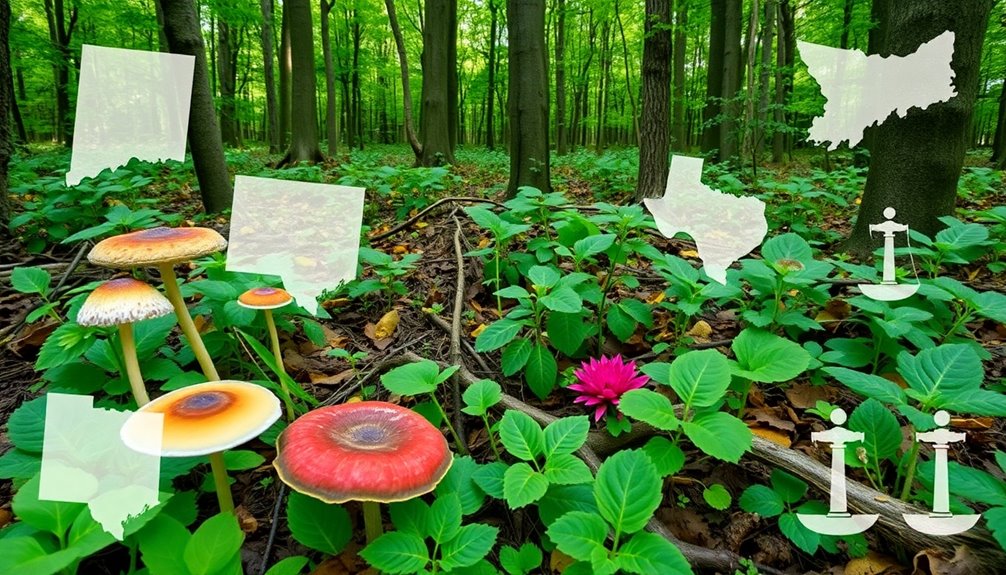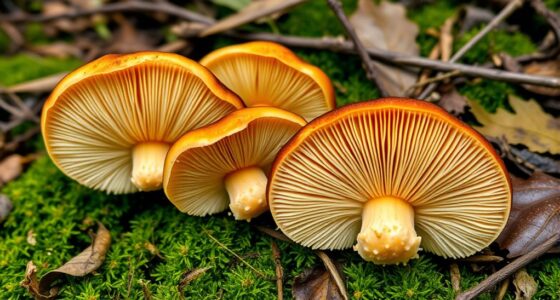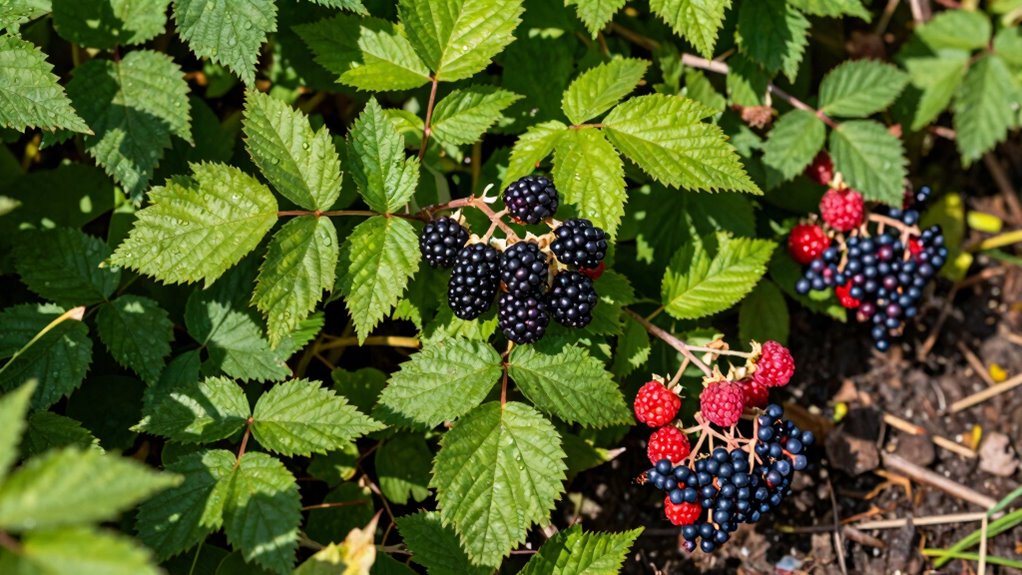

You’ll find wild berries in specific habitats based on their environmental needs. Blueberries grow best in acidic, sandy soils near pine forests, while blackberries thrive in open, sunny fields and clearings. Wild strawberries prefer low-lying ground in disturbed areas. Recognizing these habitats helps you locate berries easily. To learn more about how different berries grow in specific environments and how to harvest responsibly, keep exploring these habitat types and their native conditions.

Get garden gear delivered free with Prime
- Fast, free delivery on millions of items
- Prime Video, Amazon Music and more included
- Member-only deals all year
Key Takeaways
- Blueberries thrive in acidic, sandy soils near pine forests and woodland edges.
- Wild strawberries are common in open fields, clearings, and sunny disturbed areas.
- Blackberries grow in sprawling, thorny bushes along field margins and disturbed habitats.
- Habitat diversity influences where specific berries, like blueberries and blackberries, are most likely to be found.
- Sustainable foraging practices help preserve berry habitats and ensure future availability.
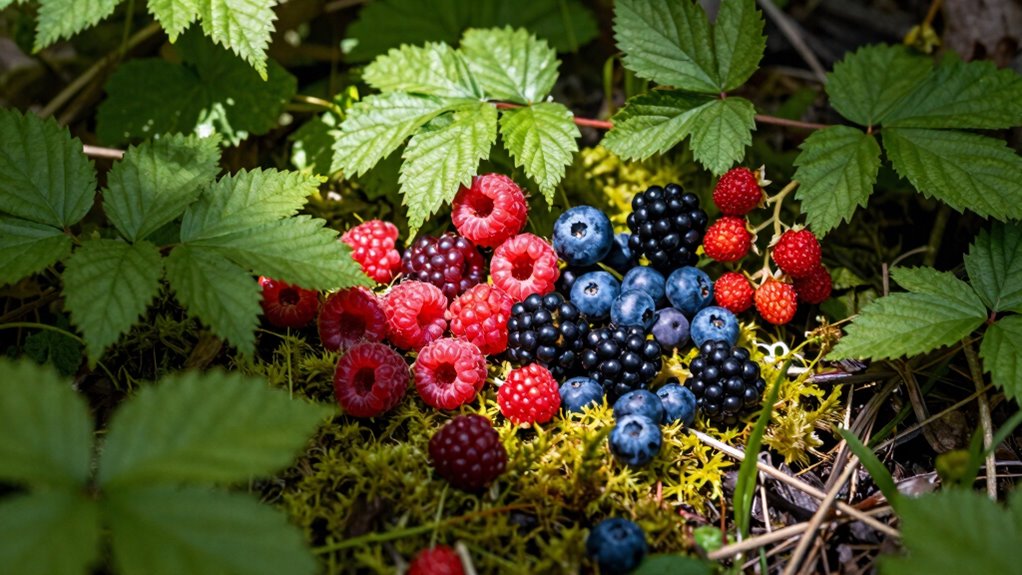
Have you ever wondered where the best wild berries grow? If you’re into berry foraging, understanding their preferred habitats can make your foraging trips more fruitful. Different berries thrive in specific environments, so knowing where to look can save you time and increase your harvest. Plus, learning about habitat conservation is essential to guarantee these wild treasures remain abundant for future generations.
Many wild berries flourish in forested areas, especially along the edges of woodlands where sunlight filters through the trees. Blueberries, for instance, thrive in acidic, well-drained soils typical of pine forests. These areas often have sandy or rocky ground, which helps keep the soil acidic. When you’re searching in such habitats, look for low-growing shrubs with clusters of small, blue-purple berries. It’s imperative to engage in responsible berry foraging, which includes harvesting sustainably and avoiding overharvesting, to support habitat conservation efforts. Overharvesting can disturb the delicate balance of these ecosystems and threaten local berry populations. Recognizing the habitat preferences of each berry can help you locate them more effectively and sustainably.
Blueberries thrive in acidic, sandy soils near pine forests; harvest sustainably to protect these vital habitats.
In open fields and clearings, you’ll find wild strawberries and blackberries. These berries prefer areas with plenty of sunlight, so they grow well in open spaces, along the edges of fields, or in disturbed areas. Blackberries often form sprawling bushes with thorny stems, bearing shiny black or red berries in late summer. Wild strawberries, on the other hand, spread low across the ground and produce tiny, sweet red berries. When foraging here, be mindful of your impact on the habitat. Stick to established trails and avoid trampling sensitive plants or soil, helping to preserve the environment for future berry seasons. Recognizing the significance of habitat diversity can also help you find more productive foraging locations. Additionally, understanding the specific habitat requirements of each berry can help you locate them more effectively and sustainably. Appreciating the environmental factors influencing berry growth is also crucial for sustainable harvesting practices.
As an affiliate, we earn on qualifying purchases.
Frequently Asked Questions
Which Wild Berries Are Safest for Foraging?
You should focus on foraging safety by choosing berries that are easy to identify and known for safety. Safe options include blueberries, blackberries, and raspberries, which have distinctive shapes, colors, and growth patterns. Always double-check your berry identification, as many edible berries have toxic look-alikes. When in doubt, consult a reliable guide or expert to avoid risky mistakes and guarantee your foraging experience is both enjoyable and safe.
How Do Berries Vary Across Different Climates?
Berries adapt gracefully to their surroundings, a dance of climate adaptation that shapes their distribution. In warmer regions, you might find vibrant, resilient varieties, while cooler climates favor more delicate, fleeting berries. As seasons shift, berry distribution varies, revealing nature’s response to temperature, rainfall, and sun. You notice these patterns when foraging, understanding that climate influences where and when berries flourish, guiding your search with keen awareness.
Are There Any Poisonous Wild Berries?
Yes, some wild berries are poisonous. To avoid danger, focus on poisonous berry identification, such as avoiding berries with shiny black or white berries, which can be toxic. Don’t fall for edible berry myths that all wild berries are safe; many can cause illness or worse. Always be cautious, and if you’re unsure, consult reliable guides or experts before consuming any wild berries.
When Is the Best Time to Harvest Wild Berries?
You should harvest wild berries when they’re fully ripe, usually during late summer to early fall, depending on the type. Look for berry ripening signs like vibrant color and softness. Use gentle harvesting techniques to avoid damaging the plant, such as pinching stems or using scissors. Picking berries at peak ripeness guarantees the best flavor and prevents waste, making your foraging both safe and rewarding.
Can Wild Berries Be Cultivated Intentionally?
Yes, you can intentionally cultivate wild berries, turning your yard into a lush orchard. Think of it as inviting nature’s treasure chest to your garden. To do this, focus on berry preservation and use effective cultivation techniques like selecting the right soil, proper watering, and pruning. With patience and care, you’ll grow a sustainable patch of wild berries, providing fresh fruit and preserving these delicious treasures for years to come.
sustainable berry harvesting tools
As an affiliate, we earn on qualifying purchases.
As an affiliate, we earn on qualifying purchases.
Conclusion
Now that you know where different wild berries thrive, you’re like a seasoned explorer ready to uncover nature’s hidden treasures. Just as a compass guides you through uncharted territory, understanding their habitats keeps you on the right path. So, venture into forests, meadows, and wetlands with confidence, and enjoy the thrill of discovering these delicious gifts of nature. With a little curiosity, you’ll find wild berries just waiting to be picked, like secret gems hidden in plain sight.
wild berry identification guidebook
As an affiliate, we earn on qualifying purchases.
As an affiliate, we earn on qualifying purchases.
As an affiliate, we earn on qualifying purchases.
Halloween Picks
halloween
As an affiliate, we earn on qualifying purchases.