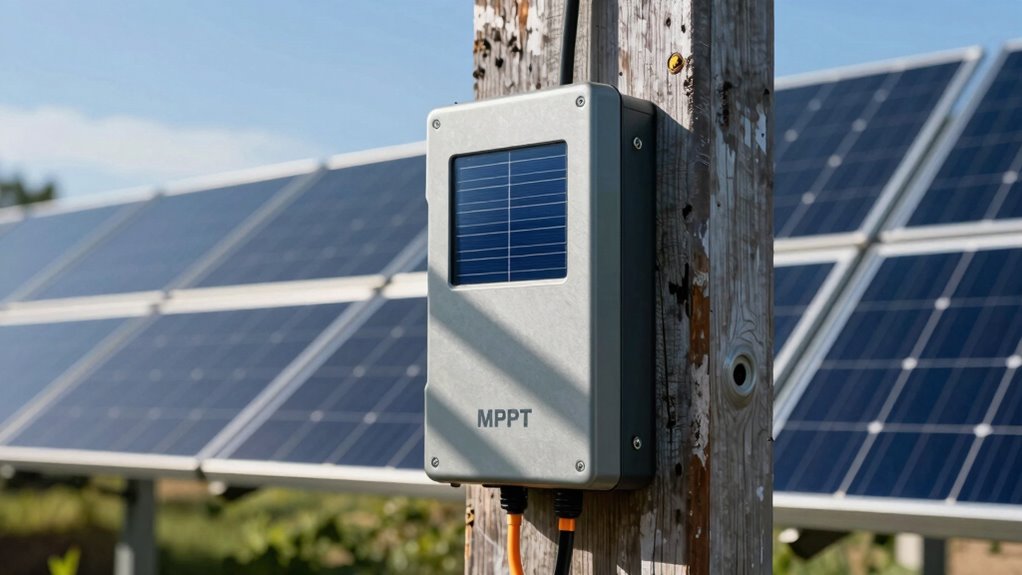

Using MPPT controllers helps you maximize your solar system’s efficiency by constantly adjusting to extract the most power from your panels. However, proper panel matching is essential because it prevents current imbalances and energy losses that can reduce overall performance. When your panels are compatible in voltage and current, your system operates smoothly and lasts longer. If you want to discover how the right setup can boost both your system’s output and reliability, keep exploring the details.
Key Takeaways
- MPPT controllers optimize solar energy by continuously finding the maximum power point, improving overall system efficiency.
- Proper panel matching ensures consistent voltage and current, making MPPT tracking more effective.
- Mismatched panels can cause energy losses and reduce system performance, even with MPPT controllers.
- Correct matching of panels and batteries prevents overcharging, extends lifespan, and enhances system reliability.
- Proper system component matching simplifies installation, maintenance, and maximizes long-term energy output.
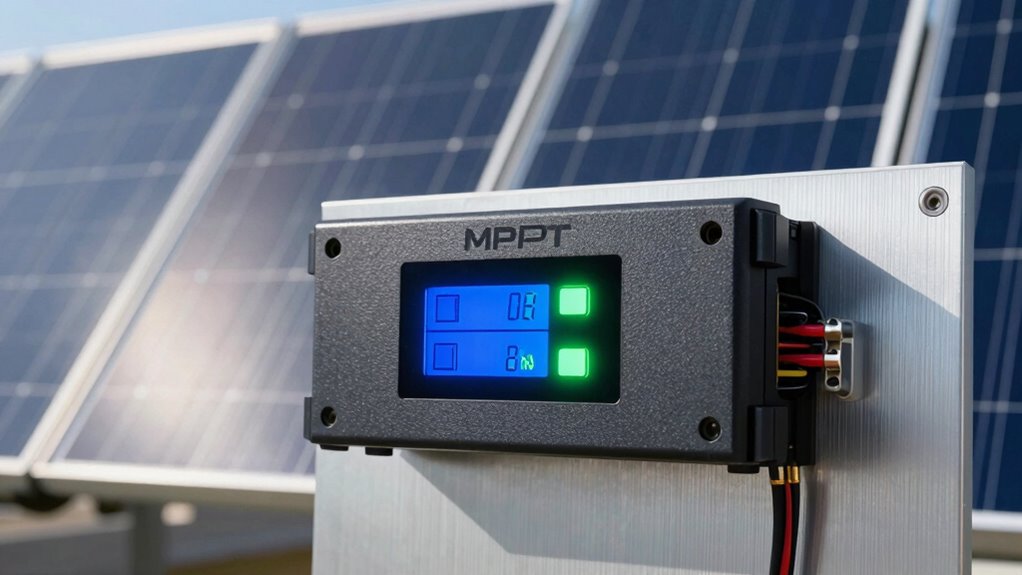
Maximum Power Point Tracking (MPPT)) controllers are essential for maximizing the efficiency of your solar power system. They continuously adjust their input to find the maximum power point of your solar panels, guaranteeing you get the most energy possible. But to fully benefit from an MPPT controller, you need to pay close attention to panel matching. Properly matching your panels not only improves performance but also impacts your system’s overall cost and battery compatibility.
Maximize solar efficiency with MPPT controllers by matching panels and ensuring system compatibility.
When selecting panels, you need to contemplate their voltage and current ratings. Mismatched panels—say, one with a higher voltage and another with a lower voltage—can cause current imbalance, which reduces efficiency. The MPPT controller tries to optimize power, but if your panels aren’t compatible or aren’t matched properly, it can struggle to operate at peak performance. This mismatch can lead to energy losses, meaning you’ll generate less electricity over time, defeating the purpose of installing an efficient system. To get the best results, you should choose panels with similar electrical characteristics, so the MPPT controller can easily maximize power output across all panels.
Battery compatibility is another critical factor to keep in mind. When your system’s components are well-matched, your batteries receive a steady, appropriate charge, extending their lifespan and improving overall system reliability. An incompatible setup can result in overcharging or undercharging your batteries, which can cause damage or reduce their capacity over time. Proper panel matching helps ensure your MPPT controller can fine-tune the charging process, making sure your batteries stay healthy and perform at their best. Additionally, understanding solar panel ratings is crucial for selecting compatible components and optimizing system performance. Ensuring your system components are correctly matched can significantly improve efficiency and longevity. Paying attention to system integration also ensures that all parts work harmoniously, increasing overall efficiency. Incorporating accurate electrical data during the selection process can further improve your system’s performance and help prevent potential issues. When all components are well-matched, it can also simplify troubleshooting and maintenance, saving you time and cost in the long run.

Victron Energy SmartSolar MPPT Solar Charge Controller 100V, 50A, 12/24V
- Smart Solar Charging: Optimizes sunlight conversion and battery health
- Maximize Power Output: Fast MPPT tracking for optimal energy
- Synchronized Charging: Multiple controllers work together for efficiency
As an affiliate, we earn on qualifying purchases.
As an affiliate, we earn on qualifying purchases.
Frequently Asked Questions
How Do MPPT Controllers Perform in Cloudy Weather?
In cloudy weather, MPPT controllers perform well because they optimize power even with shadow shading or partial mismatching. They constantly adjust the voltage to maximize energy harvest, making them efficient despite reduced sunlight. You’ll notice better performance compared to other controllers, especially when clouds cause uneven shading across your panels. This adaptability guarantees you get the most out of your system, even on gloomy days, by intelligently managing the varying conditions.
Can MPPT Controllers Be Used With All Types of Solar Panels?
Yes, MPPT controllers can be used with most solar panels, but you need to check panel compatibility and controller compatibility first. Different panels have varying voltage and current ratings, so verify the MPPT controller is designed to handle those specifications. For maximum performance, match your panels’ electrical characteristics with the controller’s capacity. Proper panel compatibility ensures efficiency and longevity of your solar power system.
What Is the Lifespan of an MPPT Controller?
Think of an MPPT controller as the steady heartbeat of your solar system, and it typically lasts 10 to 15 years with proper care. Its lifespan hinges on battery compatibility and system integration—if these align well, the controller works efficiently longer. Regular maintenance and quality components also extend its life, ensuring your energy flow remains smooth and reliable, just like a well-tuned symphony that endures over time.
Are There Any Safety Concerns With Panel Matching?
Yes, there are safety concerns with panel matching. You should prioritize electrical safety by ensuring proper installation precautions, like verifying connections and avoiding overloads. Mismatched panels can cause uneven voltage or current, increasing the risk of electrical faults or fires. Always follow manufacturer guidelines, use appropriate protective gear, and double-check wiring to prevent accidents. Proper panel matching enhances safety and system performance.
How Does Temperature Affect MPPT Efficiency?
Temperature effects can considerably impact MPPT efficiency, as higher temperatures reduce panel voltage and overall power output. When panels heat up, the MPPT controller may struggle to optimize efficiency because the maximum power point shifts. To guarantee efficiency optimization, you should monitor temperature conditions and consider installing cooling solutions or choosing panels designed to perform well in high temperatures. Proper management helps maintain peak performance and prolongs your system’s lifespan.
As an affiliate, we earn on qualifying purchases.
Conclusion
So, after all the fuss about MPPT controllers and panel matching, you might think it’s just technical mumbo jumbo. But here’s the irony: neglecting proper matching can silently drain your system’s potential, turning your solar setup into a frustratingly slow power producer. It’s almost poetic how something so simple—pairing the right panels—can make or break your solar success. Sometimes, the biggest gains come from paying attention to the tiniest details.
solar panel voltage current meter
As an affiliate, we earn on qualifying purchases.
As an affiliate, we earn on qualifying purchases.
As an affiliate, we earn on qualifying purchases.