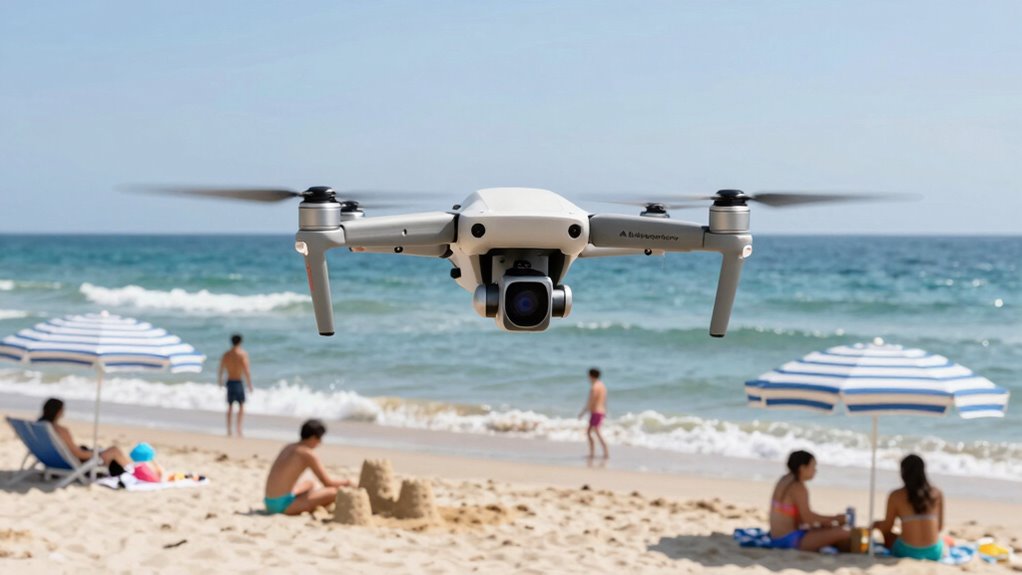
When flying your drone on public beaches, you should keep a safe distance from people to respect their privacy and avoid causing discomfort. Follow local regulations, stay within designated areas, and keep your altitude low to prevent disturbing wildlife like seabirds and turtles. Always be aware of ecological sensitivity, especially near nesting sites, and avoid hovering over animals or crowded spots. If you keep these rules in mind, you’ll be a responsible pilot—more important tips await if you continue exploring.
Key Takeaways
- Respect privacy by maintaining distance from people and avoiding hovering over crowds or individuals.
- Follow local regulations, including altitude limits, restricted zones, and time restrictions specific to beaches.
- Avoid disturbing wildlife by staying clear of sensitive habitats, nesting sites, and animal activity areas.
- Fly at safe altitudes to minimize ecological impact and prevent wildlife agitation or retreat.
- Promote responsible flying to preserve beach tranquility, protect ecosystems, and ensure legal compliance.
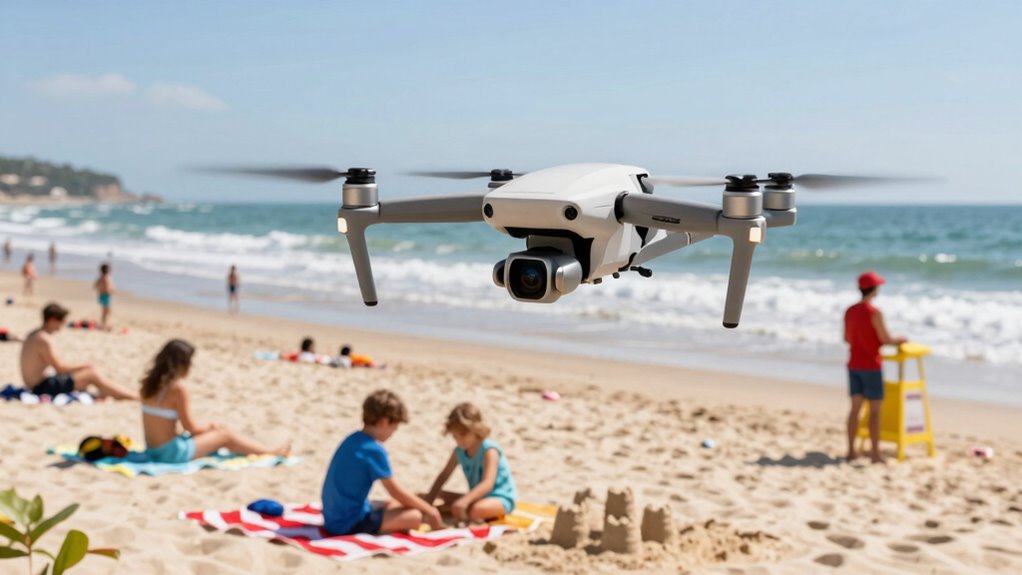
Have you ever wondered how to enjoy flying your drone responsibly on public beaches? It’s a great way to capture stunning aerial photography, but it also comes with important responsibilities. Beaches are lively, natural environments filled with people and wildlife, so understanding how to fly your drone ethically is essential. Respecting others’ privacy and minimizing wildlife disturbance should be your top priorities. When you focus on these aspects, you ensure everyone has a safe and enjoyable experience.
Aerial photography from a drone can produce breathtaking images of the shoreline, waves, and sunset views. However, it’s easy to get carried away with capturing perfect shots. Remember, flying too close to groups of people can invade their privacy and create discomfort. Always maintain a safe distance and avoid hovering over individuals or crowded areas. Be mindful of local regulations and restricted zones, which often indicate where drone flight is prohibited. Staying within designated areas helps prevent accidents and keeps your flying experience legal and worry-free.
Keep a safe distance from people, respect local rules, and enjoy worry-free drone photography on beaches.
Wildlife disturbance is a major concern when flying drones on beaches. Many coastal areas are home to sensitive bird colonies, sea turtles, and other wildlife that can be easily stressed by the noise and presence of a drone. Flying too low or too close can scare animals away from their nesting sites or feeding grounds, disrupting their natural behaviors. To prevent this, keep your drone at a respectful altitude and avoid lingering near wildlife. If you notice animals becoming agitated or retreating, it’s a clear sign you should back off. Not only does this protect the creatures, but it also helps you avoid potential fines or bans for causing ecological harm. Additionally, understanding the local environment and its unique needs can help you make better decisions while flying. Being aware of the marine ecosystem and its delicate balance is crucial for responsible operation. Incorporating environmental awareness into your flying practices enhances your ability to minimize ecological impacts.
Incorporating knowledge about biodiversity and ecosystem health can further inform your flying practices and foster a deeper respect for the environment you’re enjoying. Besides respecting wildlife, you should also be aware of local laws and guidelines regarding drone use on beaches. Many public beaches have specific rules about drone flight, including altitude limits, no-fly zones, and time restrictions. Checking these rules beforehand prevents unintentional violations that could lead to fines or confiscation of your drone. Additionally, always consider the environmental impact of your flying. Avoid disturbing nesting birds or fragile ecosystems, and be conscious of your surroundings at all times.
Ultimately, responsible drone flying on public beaches means balancing your passion for aerial photography with respect for people, wildlife, and regulations. Keep a safe distance, fly at appropriate heights, and stay informed about local rules. When you do, you’ll be able to enjoy capturing stunning images while helping preserve the natural beauty and tranquility of the beach environment. That way, everyone benefits from your considerate approach, and you can continue exploring the skies with your drone for years to come.

Create idea 8Pcs Professional Propeller Guards Drone Propeller Protectors Drone Accessory Kit Compatible with Z908 Pro Quadcopter 7.7cm Black
Compatible with Z908 Pro quadcopter.
As an affiliate, we earn on qualifying purchases.
As an affiliate, we earn on qualifying purchases.
Frequently Asked Questions
Are Drone Flying Permits Required on All Public Beaches?
Permits aren’t always required to fly your drone on public beaches, but it depends on local regulations. You should check specific rules because some areas demand permits, especially if you plan to capture beach wildlife or fly near crowded spots. Keep drone noise levels low to avoid disturbing wildlife and other visitors. Always prioritize safety and respect local guidelines, ensuring a responsible and enjoyable experience for everyone.
How Close Can I Fly My Drone to Swimmers and Sunbathers?
You should keep your drone at least 50 feet above swimmers and sunbathers to respect their privacy and safety. Studies show that most beachgoers prefer a clear distance from drones, which helps maintain a comfortable environment. Flying your drone at a safe altitude prevents invasion of privacy and minimizes disturbance. Always stay aware of local regulations, avoid flying directly over people, and prioritize beach safety for a positive experience.
What Are the Penalties for Violating Drone Regulations on Beaches?
If you violate drone regulations on beaches, you could face fines or even arrest, especially if you ignore privacy concerns or disturb wildlife. Authorities actively enforce rules to protect sunbathers’ privacy and prevent wildlife disturbance, so stay compliant. Failing to follow these regulations risks legal penalties and ruining the experience for others. Always fly responsibly, respect privacy, and avoid disturbing wildlife to guarantee a safe, enjoyable beach environment.
Can Drones Be Used to Take Photos of Other Beachgoers?
You can use drones to snap photos of beach scenes, but when it comes to capturing other beachgoers, tread carefully. Privacy concerns swirl like ripples on water, so respecting consent requirements is essential. Always ask for permission before filming or photographing someone, ensuring your drone’s eye doesn’t intrude on personal space or privacy. Respect keeps the beach friendly, and your aerial shots stay respectful and enjoyable for everyone.
Are There Specific Times When Drone Flying Is Prohibited on Beaches?
You should avoid flying your drone during early mornings or late evenings when beach wildlife is most active, as this can disturb animals and disrupt their natural behaviors. Also, steer clear of times when drone noise levels might bother other beachgoers, such as peak sunlight hours. Being mindful of these periods helps protect wildlife and keeps your drone activities respectful and enjoyable for everyone.
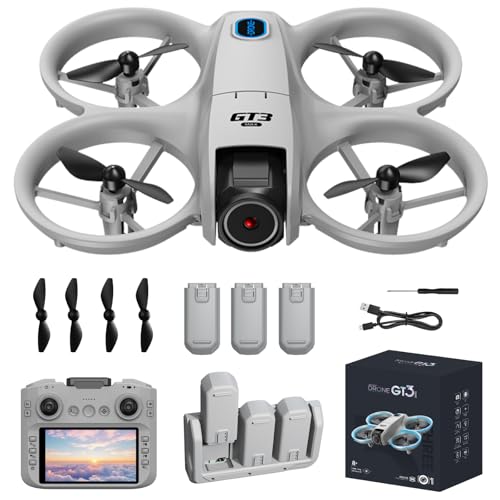
FPV Drone with HD Camera Sceen Remote Controller, Optical Flow Positioning & Intelligent Obstacle Avoidance Mini RC Quadcopter Beginner-Friendly Indoor Outdoor Aerial Photography GT3 Drone for Adults
4.3-Inch Screen Real-Time Transmission + Easy Controls: Perfect for Beginners: The GT3 Drone features a 4.3-inch HD display…
As an affiliate, we earn on qualifying purchases.
As an affiliate, we earn on qualifying purchases.
Conclusion
By following proper drone etiquette on public beaches, you become a guardian of both fun and safety—like a lighthouse guiding others away from trouble. Respecting privacy, keeping a safe distance, and being mindful of others guarantees your drone stays a friendly visitor, not an unwelcome guest. Remember, the sky’s vast enough for everyone’s adventures, so fly responsibly and let your drone’s journey be one others admire, not fear. Happy flying!

GPS Drone with Camera for Adults, 2K HD GPS Drones with Auto Return, Follow Me, Circle Fly, Waypoint Fly, Optical Flow, Brushless Motor, Foldable 5G Transmission FPV Quadcopter
【2K HD Camera & 5G Real-time Transmission 】The 2K drone is equipped with a 90° electrically adjustable camera,…
As an affiliate, we earn on qualifying purchases.
As an affiliate, we earn on qualifying purchases.

Skyvoyant B14 drone replacement accessory kit
Skyvoyant B14 drone replacement accessory kit
As an affiliate, we earn on qualifying purchases.
As an affiliate, we earn on qualifying purchases.