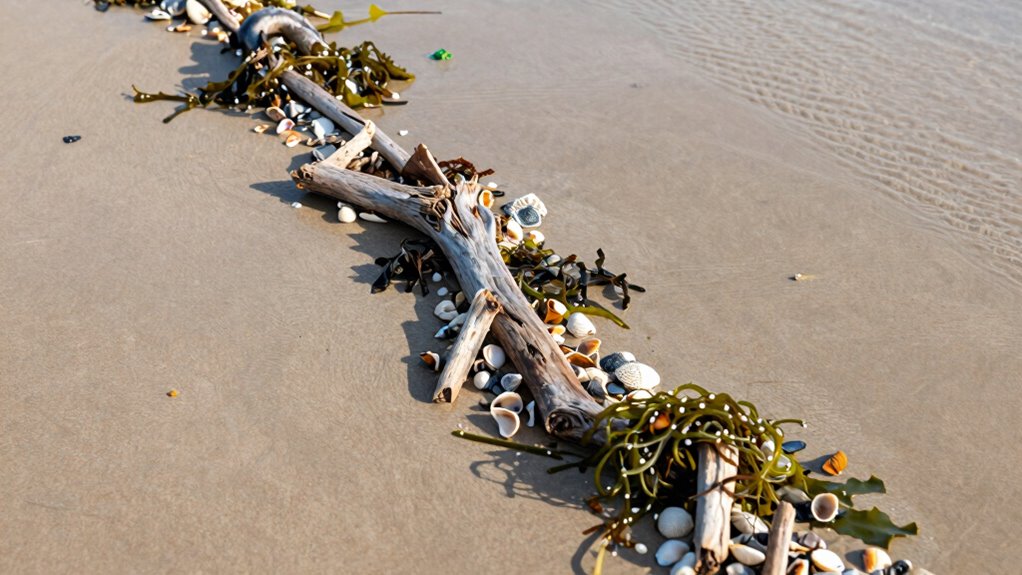

Wrack lines may seem like just debris along the shore, but they play a vital role in maintaining coastal health and stability. They support diverse wildlife, help in nutrient cycling, and act as natural barriers against storms and erosion. Recognizing their importance can deepen your appreciation for the shoreline’s delicate balance. By understanding what wrack lines reveal about ecosystem health, you’ll see these natural features in a whole new light—and there’s much more to discover.
Key Takeaways
- Wrack lines reveal the health and biodiversity of coastal ecosystems often overlooked by beachgoers.
- They act as natural buffers, reducing erosion and protecting shorelines from storm surges.
- Organic materials in wrack lines support nutrient cycling, vital for marine and terrestrial life.
- Their presence indicates the interconnectedness and dynamic balance of shoreline processes.
- Recognizing wrack lines helps in coastal conservation and understanding environmental stability.
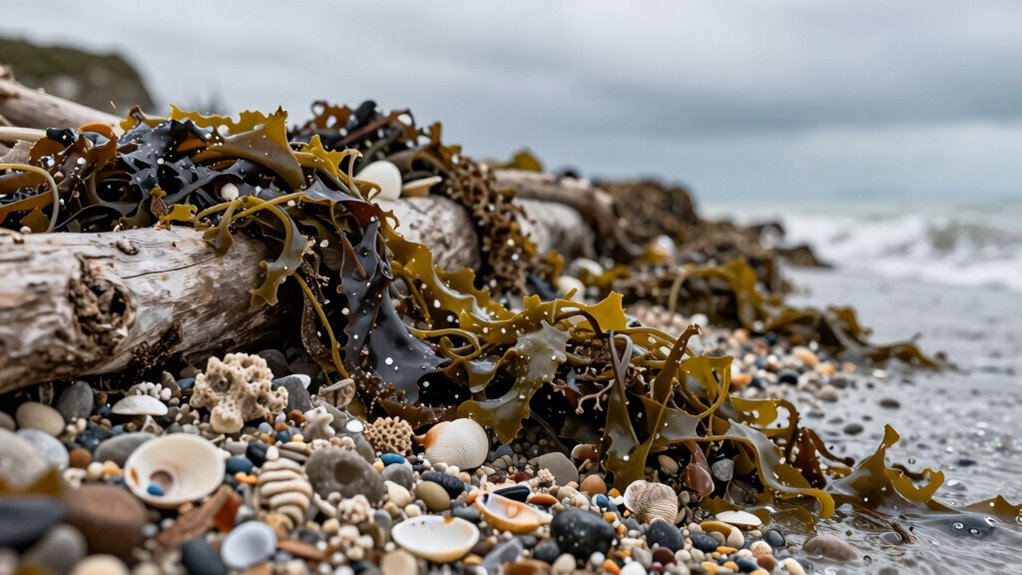
Have you ever wondered why those dark, tangled lines along the shoreline seem so significant? Those wrack lines, often overlooked by casual beachgoers, are much more than just debris washed up on the sand. They hold essential insights into the health of the coastal environment and play a critical role in maintaining the delicate balance between land and sea. Understanding their importance helps you see the beach not just as a recreational spot but as a dynamic system that supports a wide array of life and safeguards the shoreline from erosion. These organic materials also contribute to the overall coastal ecosystem’s productivity, ensuring the sustainability of marine and terrestrial life along the coast. Recognizing the biodiversity within these wrack lines highlights their role as vital habitats for numerous species. Additionally, these organic materials serve as a natural barrier, reducing the impact of storm surges and preventing further coastal erosion. The presence of these materials can also influence the nutrient cycling processes critical to healthy coastal ecosystems. This interconnectedness illustrates how vital these natural shoreline features are to the health of the entire coastal environment.
beachcomber wrack line identification tools
As an affiliate, we earn on qualifying purchases.
As an affiliate, we earn on qualifying purchases.
Frequently Asked Questions
How Do Wrack Lines Indicate Recent Storm Activity?
Think of wrack lines as nature’s alarm clock, signaling recent storm activity. When you see fresh beach debris layered along the shoreline, it shows that powerful waves have recently pushed material ashore, influenced by changing tide patterns. These lines shift and accumulate quickly after storms, giving you clues about recent weather. Spotting new wrack lines helps you understand how recent storms have reshaped the beach landscape.
Can Wrack Lines Help Identify Local Marine Biodiversity?
Yes, wrack lines can help you identify local marine biodiversity. As you observe these lines, you’ll notice various marine species like shells, seaweed, and small invertebrates that thrive in coastal habitats. By studying the composition and diversity of organisms in wrack lines, you gain insights into the health and richness of local marine life, making them valuable indicators of the vibrant ecosystems just beyond the shoreline.
Are Wrack Lines Useful for Shoreline Erosion Studies?
Yes, wrack lines are useful for shoreline erosion studies because they show where debris and organic materials accumulate, indicating areas vulnerable to erosion. By examining these lines, you can track how shoreline pollution and marine debris shift over time, revealing erosion patterns. This helps you understand how natural processes and human activities impact the coast, guiding effective conservation efforts and pollution mitigation strategies.
What Materials Are Most Commonly Found in Wrack Lines?
Wrack lines are a treasure trove of diversity, like a bustling bazaar of beach treasures. You’ll most commonly find seaweed, shells, driftwood, and small marine debris in these lines. Seaweed diversity varies with season and location, creating intricate debris patterns that reveal the rhythm of the shore. By observing these materials, you gain insights into ocean currents and ecological health, making wrack lines an essential part of beach ecology.
How Do Wrack Lines Influence Coastal Ecosystem Health?
Wrack lines play a crucial role in coastal ecosystem health by promoting nutrient cycling and creating habitats. When organic materials decompose, they release nutrients essential for dune plants and marine life. These lines offer shelter and breeding grounds for insects, birds, and small invertebrates. By supporting diverse species and enhancing nutrient exchange, wrack lines sustain the overall vigor of the shoreline, making them more important than many beachcombers realize.
coastal erosion monitoring equipment
As an affiliate, we earn on qualifying purchases.
As an affiliate, we earn on qualifying purchases.
Conclusion
Next time you stroll along the beach, remember that wrack lines aren’t just debris—they’re essential ecosystems. Nearly 90% of coastal birds rely on these lines for food and shelter, highlighting their importance. By paying attention to where they form, you help protect marine life and maintain beach health. So, the next time you see a wrack line, realize it’s more than just trash—it’s a thriving part of the coastal environment you play a role in preserving.
marine biodiversity observation kit
As an affiliate, we earn on qualifying purchases.
As an affiliate, we earn on qualifying purchases.
beach debris collection and analysis tools
As an affiliate, we earn on qualifying purchases.
As an affiliate, we earn on qualifying purchases.