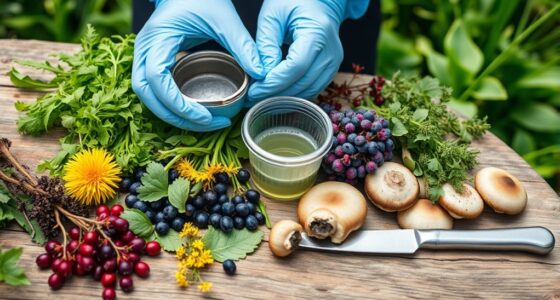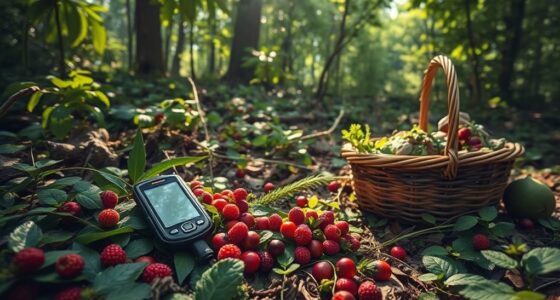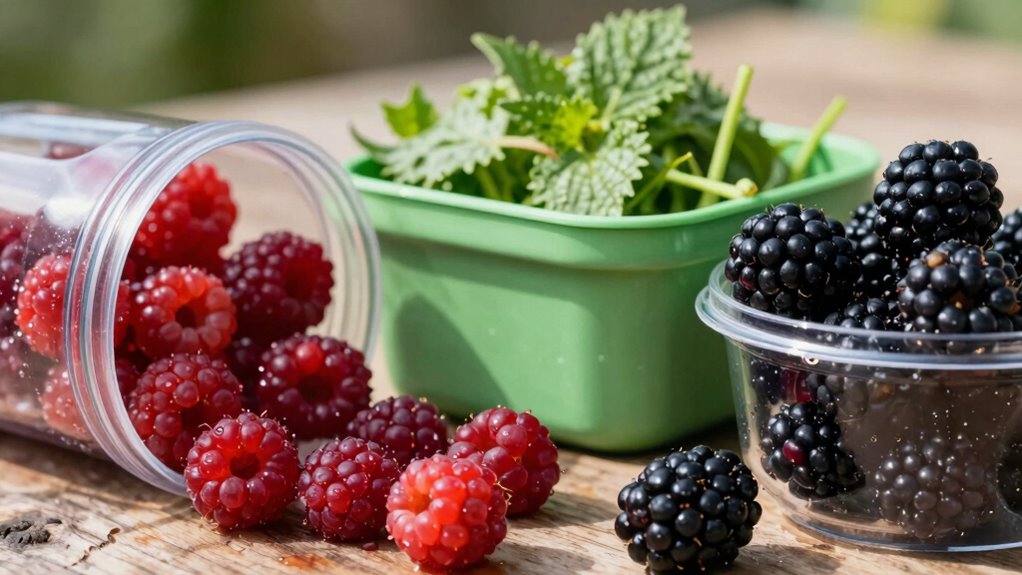
The 3-container foraging system helps prevent crushing berries and bruising greens by organizing your harvest into separate, cushioned compartments. Use a soft-sided pouch for delicate greens, small sturdy containers for berries, and a larger container for other items. This setup keeps everything protected, minimizes damage, and makes sorting easier. Choosing the right containers improves harvest quality and efficiency. Keep going to discover how to set up your system for ideal results.
Key Takeaways
- Use separate, soft-sided containers for delicate greens to prevent crushing and bruising during handling.
- Incorporate small, stiff containers for berries to protect them from damage.
- Organize foraged items into three distinct containers to avoid cross-contamination and facilitate sorting.
- Ensure containers have secure closures and breathable materials to maintain freshness and prevent moisture buildup.
- Select lightweight, ergonomic containers with adjustable straps for comfortable, gentle handling in dense terrain.
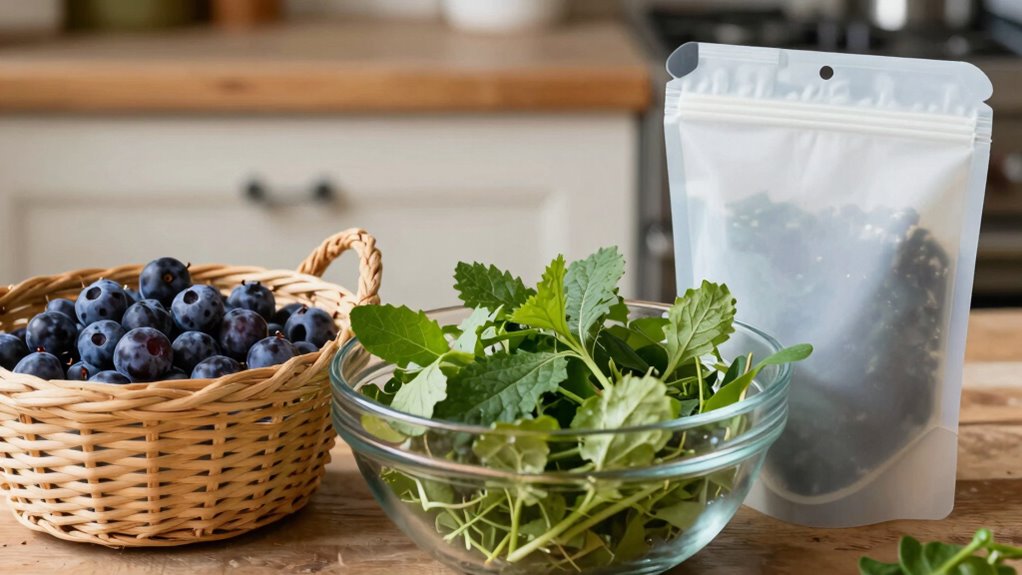
Have you ever wondered how to make foraging more efficient and organized? The key lies in understanding and optimizing your foraging efficiency through smart container design. When you’re out collecting berries, greens, or other delicate edibles, the way you organize and carry your harvest can make a significant difference. Traditional methods often involve tossing everything into a single bag, which can lead to crushing or bruising your finds. But with a thoughtful approach to container design, you can preserve the quality of your foraged items and streamline your process.
The foundation of an effective foraging system is choosing the right containers. Instead of bulky, rigid bags or boxes, consider using multiple small, lightweight containers suited for different types of foraged items. For example, soft-sided mesh pouches work well for greens, allowing air circulation and reducing moisture buildup. Small, stiff-sided containers are perfect for berries, preventing them from being squished or bruised during transport. By segmenting your harvest into dedicated containers, you prevent the cross-contamination of delicate greens with heavier or more fragile items, maintaining their freshness and appearance.
Container design plays a pivotal role in maximizing foraging efficiency. Think about how easily you can access each container and how comfortably it fits in your hands or backpack. Incorporate features like adjustable straps, secure closures, and stackable compartments to keep everything organized. Having clearly designated spaces for different foraged items saves you time when sorting later and minimizes the risk of damaging your finds during transit. Additionally, using breathable materials like mesh or perforated plastics helps prevent moisture buildup, which can spoil greens and berries alike.
Another aspect to consider is how your containers fit into your overall foraging setup. Compact, lightweight containers reduce fatigue and allow for more extended foraging sessions. They also make it easier to navigate through dense bushes or uneven terrain without jostling or knocking over your harvest. Proper container design encourages gentle handling, which is especially essential for fragile greens and ripe berries. When your containers are well-suited for the task, you spend less time sorting and more time collecting efficiently.
Furthermore, choosing containers that are easy to clean and reuse ensures that your foraging gear remains hygienic and sustainable over multiple trips. In essence, investing in thoughtfully designed containers tailored for your foraging needs dramatically improves your foraging efficiency. It keeps your harvest organized, prevents unnecessary damage, and simplifies cleanup after your adventure. By paying attention to container design and choosing the right types for your foraged items, you’ll find that your foraging trips become more productive, enjoyable, and satisfying.
Frequently Asked Questions
How Does the 3-Container System Compare to Traditional Foraging Methods?
You’ll find the 3-container system improves foraging efficiency by reducing damage to your harvest, thanks to its durable containers that prevent crushing berries and bruising greens. Unlike traditional methods, which often involve makeshift or fragile containers, this system offers better container durability, allowing you to handle delicate foraged items carefully. Overall, it streamlines your process, minimizes waste, and helps you gather more quality produce with less effort and damage.
Can This System Be Used for Commercial Foraging?
Yes, you can use this system for commercial foraging. Its versatility in container design supports wild harvesting by protecting delicate greens and berries during transport. You’ll find it efficient for gathering various wild foods, reducing damage and spoilage. The system’s adaptability makes it suitable for large-scale foraging operations, helping you maintain the quality of your harvest, streamline processes, and meet commercial demands effectively.
What Are the Best Materials for the Containers?
You should choose containers made from durable, sustainable materials like stainless steel or high-quality BPA-free plastics. These options offer excellent container durability, resisting cracks and wear over time. Plus, they support material sustainability, reducing environmental impact. Avoid fragile materials like glass or thin plastics, which can break easily and aren’t as eco-friendly. By selecting sturdy, eco-conscious containers, you guarantee your foraging system remains reliable and environmentally responsible.
Is the System Suitable for All Types of Foraged Foods?
Is the system a universal answer? Not quite. While it excels with delicate greens and berries, some harvesting techniques demand specialized containers. Its durability handles most foraged foods, but you might need different sizes or materials for tougher items. Think of it as a versatile tool—great for many, but not all. Adjust your approach based on the specific food type, and you’ll maximize freshness and minimize damage.
How Should I Clean and Maintain the Containers?
You should clean your containers regularly to keep them in top shape. Use warm, soapy water for container cleaning, and rinse thoroughly to remove residue. For container maintenance, check for cracks or damage and replace if needed. Avoid harsh chemicals or abrasive scrubbing, as they can harm the containers. Proper cleaning and maintenance guarantee your foraging system stays effective and prolongs its lifespan, helping you gather food safely and efficiently.
Conclusion
So, as you start using the 3-container foraging system, you’ll notice how effortlessly it changes your gathering game. It’s funny how a simple tweak can make such a big difference—no more crushing berries or bruising greens. Maybe it’s just coincidence, but this system seems to turn chaos into clarity, making every foraging trip smoother and more enjoyable. Give it a try, and see how your foraging luck might just change with it.