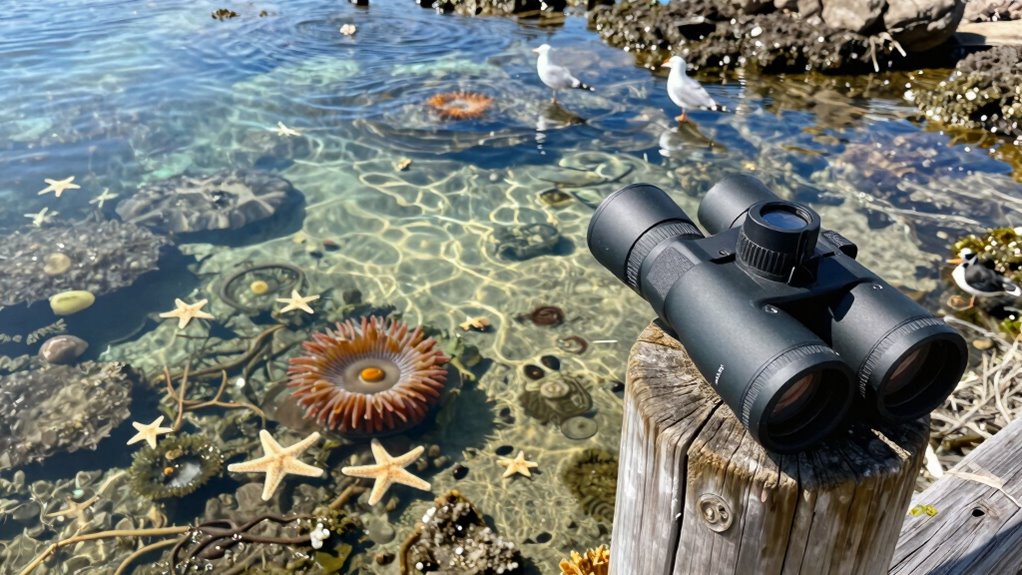

Using a spotting scope on the shore lets you observe tide pools and marine wildlife in incredible detail without scaring shy animals away. Mount it on a sturdy tripod and adjust the zoom smoothly to get clear, close-up views. Keep a respectful distance to avoid disturbance, and move slowly to prevent spooking creatures. Proper setup and gentle techniques help you enjoy natural behaviors without impact—continue further, and you’ll discover more tips for responsible shoreline viewing.

Get garden gear delivered free with Prime
- Fast, free delivery on millions of items
- Prime Video, Amazon Music and more included
- Member-only deals all year
Key Takeaways
- Mount the spotting scope on a stable tripod to ensure steady, shake-free images during tide pool observation.
- Use a moderate zoom setting to maintain natural distance and avoid startling marine wildlife.
- Observe quietly and from a respectful distance to minimize disturbance and preserve natural behaviors.
- Adjust focus smoothly to clearly view tiny details without sudden movements that could spook animals.
- Choose vantage points that provide a broad view of tide pools while staying unobtrusive to wildlife.
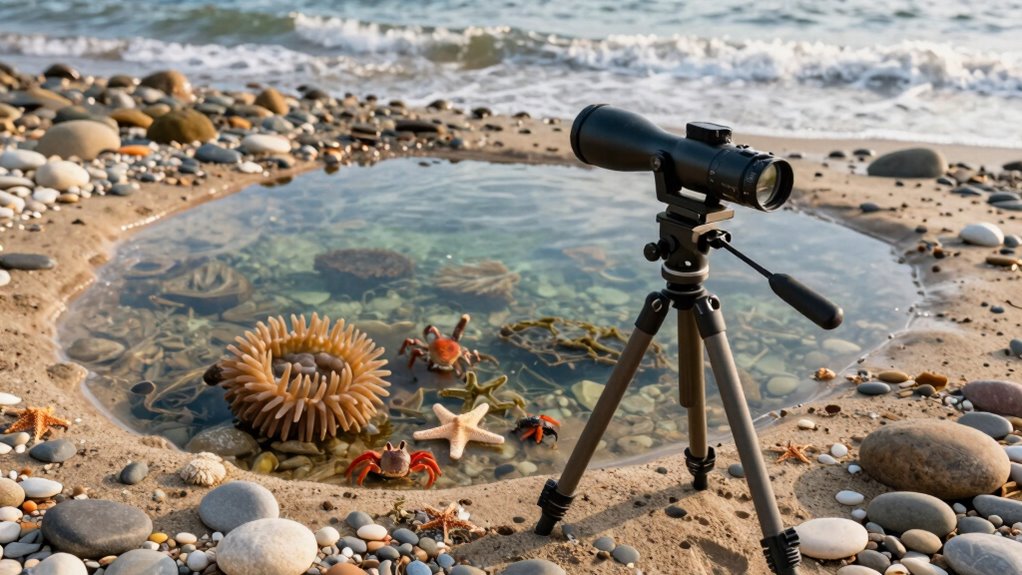
Have you ever wondered how birdwatchers and nature enthusiasts get such clear, detailed views of distant wildlife along the shoreline? The secret often lies in a quality spotting scope paired with the right techniques. When you’re exploring tide pools and rocky shores, a spotting scope allows you to observe marine life, birds, and other shoreline creatures without disturbing them. These scopes are designed to deliver high magnification and excellent image clarity, making it easier for you to spot elusive fish, crabs, or seabirds from a respectful distance. Proper technique ensures you maximize your viewing experience while minimizing the risk of spooking animals.
Using a spotting scope for bird watching along the coast gives you an advantage. Instead of relying on binoculars, which might not provide enough detail for distant or tiny subjects, a scope brings far-off wildlife into sharp focus. You can identify species, observe behaviors, and study intricate features without getting too close and risking spooking the animals. This is especially important when observing sensitive marine life or shy shorebirds that tend to retreat if they sense disturbance. With a scope, you can enjoy a close-up view while remaining hidden behind your equipment.
A spotting scope provides detailed, close-up views of distant wildlife without disturbing them.
When it comes to exploring tide pools, a spotting scope allows you to see the intricate details of the marine life hiding beneath the water’s surface. You can examine the patterns on a sea star, the tiny movements of a clam’s shell, or the vibrant colors of an anemone without diving into the water or leaning dangerously over the edge. The ability to adjust zoom levels smoothly helps you find the perfect focus, whether you’re scanning the entire pool or inspecting a small area closely. Plus, with a sturdy tripod, your scope stays steady, giving you crisp, shake-free images even at high magnifications.
Another benefit of using a spotting scope along the shore is the reduced disturbance to wildlife. Since you can observe from a distance, you don’t need to get close enough to scare away the creatures you’re interested in watching. This preservation of natural behavior enhances your experience, allowing you to witness authentic marine interactions and bird behaviors. Whether you’re watching a flock of seabirds hunting or peering at a crab scuttling across the rocks, a spotting scope helps you observe quietly and respectfully.
Top picks for "spott scope shore"
As an affiliate, we earn on qualifying purchases.
Frequently Asked Questions
What Is the Best Time of Day for Tide Pool Wildlife Viewing?
The best time of day for tide pool wildlife viewing is during low tide, typically in the early morning or late afternoon. During these times, wildlife activity is at its peak because animals come out to forage and explore. You’ll have better chances to observe marine creatures up close without spooking them. Keep an eye on the tide charts, and plan your visit when the water recedes most, revealing hidden tide pools.
How Should I Clean My Spotting Scope After Use?
Ironically, your spotting scope loves a good spa day after shore adventures. You should use lens cleaning solution and a soft brush or cloth to gently wipe off salt, sand, and smudges. Avoid harsh chemicals or touching the lenses directly. Store it in a dry, cool place, preferably in a protective case. Follow these storage tips to keep your scope crystal clear and ready for your next tide pool exploration.
Can I Use a Spotting Scope for Underwater Observation?
You can’t use a standard spotting scope for underwater focus because most aren’t waterproof scopes. These scopes are designed for land-based observation and lack the waterproof seals needed for underwater use. If you want to explore underwater, invest in a waterproof scope specifically built for such environments. Regular spotting scopes will get damaged if submerged, so always choose equipment meant for underwater observation to guarantee durability and clear imagery.
What Accessories Enhance Tide Pool Wildlife Spotting?
You can enhance your tide pool wildlife spotting with magnification accessories like additional eyepieces for better detail. Protective filters are also essential to shield your scope from saltwater spray and scratches. For example, using a high-quality UV filter on your scope during a beach trip keeps the lens clear and safe. These accessories improve your viewing experience without disturbing delicate marine life, making your observations more enjoyable and effective.
How Do Weather Conditions Affect Tide Pool Observations?
Weather conditions greatly influence your tide pool observations. Marine fog can obscure your view, making it harder to spot wildlife clearly. Wind impact is also significant; strong gusts cause water movement, which can scare away creatures and make viewing difficult. On calm, clear days, you’ll enjoy better visibility and more vibrant wildlife activity. Always check local weather forecasts before heading out, so you’re prepared for fog or wind that could affect your experience.
Conclusion
Using a spotting scope on the shore is like having a secret key to nature’s hidden world. With patience and a steady hand, you can observe tide pools without disturbing wildlife, just as a gentle breeze moves through leaves unnoticed. Remember, quiet focus reveals the tiniest miracles beneath the surface. So, keep your scope ready and your movements light—your shoreline adventure will become a mesmerizing journey into nature’s delicate, vibrant life.
Halloween Picks
halloween
As an affiliate, we earn on qualifying purchases.