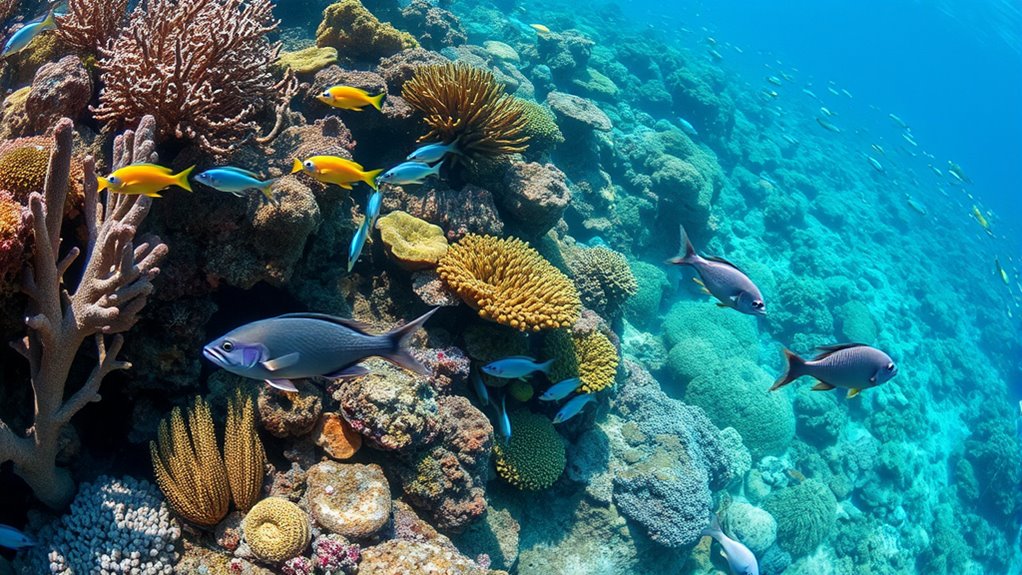

Ciguatera toxin mainly comes from marine algae called Gambierdiscus, affecting tropical and subtropical regions like the Pacific Islands, Caribbean, and Southeast Asia. Larger predatory fish such as grouper, barracuda, and king mackerel often carry the toxin, especially if they’re long-lived. Environmental factors like pollution and warm waters boost algae growth, increasing risks. Knowing which fish species and areas are most affected helps you stay safe—there’s more to uncover if you continue exploring.
Open a free Amazon Business account
Business pricing, bulk buying and tax-exempt orders.
As an affiliate, we earn on qualifying purchases.
Key Takeaways
- Ciguatera toxin primarily accumulates in large predatory reef fish like barracuda, grouper, and king mackerel.
- It is most prevalent in tropical and subtropical regions such as the Pacific Islands, Caribbean, and Southeast Asia.
- Gambierdiscus algae produce ciguatera toxin, thriving in warm, nutrient-rich waters that promote their growth.
- Other marine toxins, like brevetoxins and domoic acid, are associated with different species and regions, often linked to algal blooms.
- Environmental factors like water temperature, pollution, and reef health influence the distribution of ciguatera and related toxins.
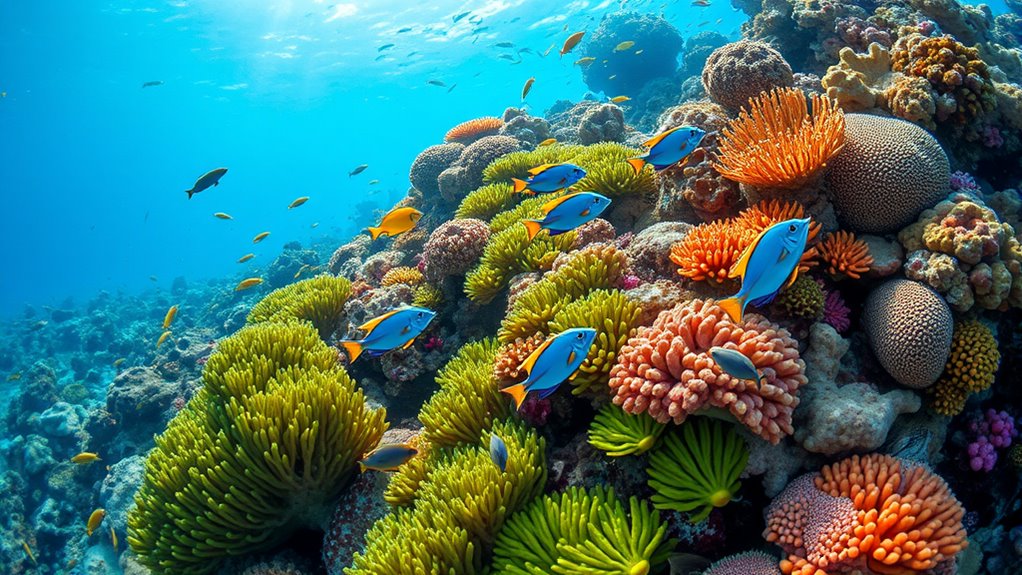
Ciguatera toxin is a harmful substance produced by certain marine algae that can accumulate in reef fish, posing health risks to humans who consume them. When these algae, mainly of the genus Gambierdiscus, proliferate in coral reef environments, they produce toxins that enter the food chain through herbivorous fish. These toxins then move up the chain as larger predatory fish consume smaller ones. Understanding the toxin mechanisms is essential because ciguatoxins are heat-stable, meaning cooking or freezing doesn’t neutralize them. They work by opening voltage-gated sodium channels in nerve cells, leading to neurological symptoms in humans, such as tingling, numbness, and in severe cases, paralysis. Recognizing how the toxins function helps in understanding why symptoms can persist for weeks or months even after fish consumption. The presence of marine algae toxins in reef environments highlights the importance of monitoring environmental health and fish safety. Regional prevalence of ciguatera is uneven, largely depending on environmental conditions and fish populations. It’s most common in tropical and subtropical regions, especially around the Pacific Islands, Caribbean, and parts of Southeast Asia. In these areas, the warm, nutrient-rich waters support the growth of Gambierdiscus algae, increasing the risk of toxin accumulation in local fish species. You should be aware that outbreaks tend to spike during specific seasons when algae blooms are more prevalent, often linked to changes in water temperature, pollution, or coral reef health. Coastal communities relying heavily on reef fish for sustenance are particularly vulnerable because their exposure risk is higher.
The regional prevalence also ties into local fishing practices and fish consumption habits. In some areas, larger predatory fish like barracuda, grouper, and king mackerel are common culprits because they live longer and accumulate higher toxin levels. Conversely, in regions where people prefer smaller fish or different species, the risk might be lower. However, even smaller fish can carry toxins if they feed on contaminated algae or smaller infected fish. It’s essential to be cautious about which fish you eat, especially in regions known for ciguatera cases. Public health efforts in affected areas often include advisories to avoid certain species or sizes of fish during peak seasons, aiming to reduce the incidence of poisoning.
Top picks for "ciguatera other toxin"
As an affiliate, we earn on qualifying purchases.
Frequently Asked Questions
Are There Effective Treatments for Ciguatera Poisoning?
Yes, there are treatment options for ciguatera poisoning, but they mainly focus on symptom management. You should seek medical attention promptly, where doctors may use medications like antihistamines or mannitol to reduce symptoms. Hydration and rest also help your recovery. Keep in mind, no specific antidote exists, so early intervention and supportive care are your best strategies to ease discomfort and prevent complications.
How Does Climate Change Influence Toxin Distribution?
Ever wondered how climate change impacts toxin distribution? You see, rising ocean temperatures accelerate marine pathogen spread, allowing harmful toxins like ciguatera to reach new regions. Warmer waters create ideal conditions for toxin-producing algae and marine species, increasing the risk for communities. As ocean temperatures continue to rise, expect toxin distribution to become more unpredictable, making it vital to monitor marine environments and adapt public health strategies accordingly.
Can Cooking or Freezing Eliminate Toxins in Seafood?
Cooking or freezing doesn’t reliably eliminate toxins in seafood. For food safety, it’s best to avoid consuming seafood known to contain toxins since these are often heat-stable. Proper handling, sourcing from reputable suppliers, and paying attention to advisories are your best strategies for toxin removal. Freezing may slow bacteria growth but doesn’t neutralize toxins, so always prioritize safe practices to protect yourself from potential foodborne illnesses.
Which Regions Are Most at Risk for Toxin Outbreaks?
You should be most cautious in geographic hotspots like the Caribbean, Pacific Islands, and parts of Southeast Asia, where toxin outbreaks are more common. These regions often face challenges with regional seafood safety due to warm waters that promote toxin-producing algae. Always stay informed about local advisories, and when in these areas, avoid consuming large or reef fish, as they’re more prone to toxin accumulation.
Are There Specific Species More Prone to Toxin Accumulation?
You might suspect that larger, longer-lived species are more prone to toxin bioaccumulation, and that’s often true. Predatory fish like groupers, barracudas, and moray eels tend to accumulate higher toxin levels because of their species susceptibility and diet. These species bioaccumulate toxins over time, increasing their risk of poisoning. So, if you’re consuming these fish, be cautious, especially in regions known for higher toxin levels.
Conclusion
By now, you’ve seen how ciguatera and other toxins silently threaten your seafood choices across various regions. Remember, the ocean’s bounty isn’t just a gift—it’s a potential trap if you’re unaware. Stay informed, ask questions, and trust your instincts—like a lighthouse guiding you through treacherous waters. Because in the dance of nature’s beauty and danger, knowledge is your strongest shield, keeping you safe from hidden threats lurking beneath the waves.
NFL season / tailgating Picks
team gear
As an affiliate, we earn on qualifying purchases.