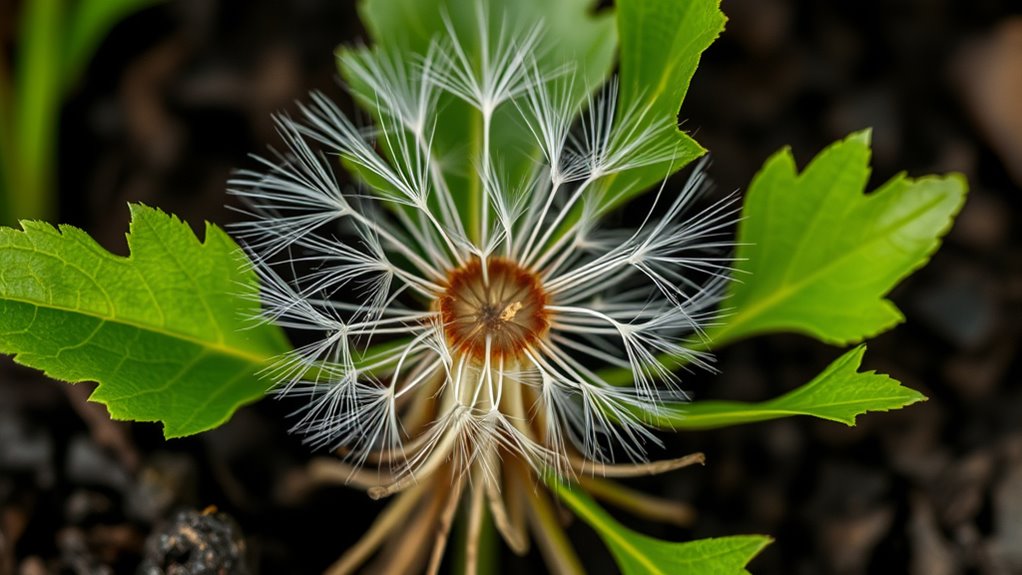

Dandelions have bright yellow flowers, jagged leaves, and deep roots, each offering unique benefits. The flowers can be used in salads or wine, while the leaves are rich in vitamins and minerals, perfect for salads or sautés. The roots can be roasted for coffee or used medicinally to support liver health and digestion. By exploring all parts of this plant, you can uncover its full culinary and health potential—there’s much more to discover.

Get garden gear delivered free with Prime
- Fast, free delivery on millions of items
- Prime Video, Amazon Music and more included
- Member-only deals all year
Key Takeaways
- Dandelion flowers are edible and can be used in salads, teas, and wine-making for flavor and visual appeal.
- The leaves are nutritious, rich in vitamins and minerals, and suitable for salads or sautés with a slightly bitter taste.
- Dandelion roots can be roasted for coffee substitutes or used medicinally to support liver health and digestion.
- All parts of the plant—flowers, leaves, and roots—offer health benefits and culinary uses when harvested safely.
- Proper identification and foraging in pollution-free areas ensure safe consumption of dandelions’ flowers, leaves, and roots.
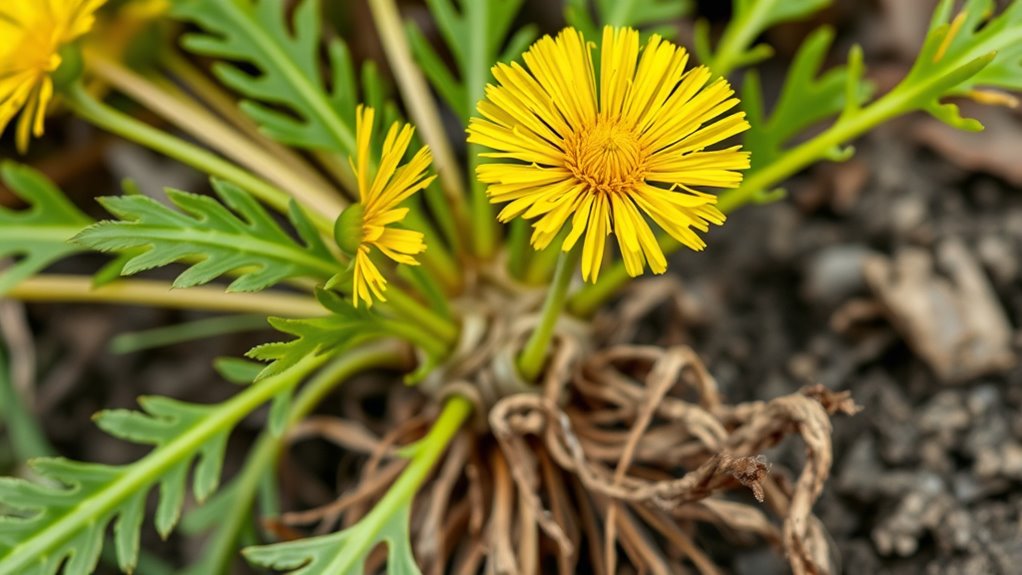
Have you ever wondered why the dandelion is often considered a weed rather than a beneficial plant? It’s easy to see why many see it as a nuisance, but this resilient plant actually offers a surprising array of benefits. The dandelion’s bright yellow flowers, jagged leaves, and deep roots are more than just common lawn invaders—they’re packed with potential. Its medicinal uses are well-known in traditional herbal practices, where every part of the plant is utilized. The leaves are rich in vitamins A, C, and K, as well as minerals like calcium, iron, and potassium. These nutrients support your immune system and help detoxify your body. Dandelion medicinal uses extend to improving digestion, reducing inflammation, and even aiding liver health. It’s often brewed into teas or tinctures to harness these benefits, making it a popular choice for natural remedies. Furthermore, scientific research supports the health benefits of dandelions, confirming their role in promoting overall wellness.
But the dandelion doesn’t just serve a medicinal purpose—its edible parts lend themselves to a variety of culinary recipes. The young leaves are slightly bitter but can be added to salads for a nutritious, peppery flavor. Many chefs incorporate dandelion greens into pasta dishes, sautés, or smoothies, blending their health benefits with delicious taste. The flowers are also edible and can be used to make dandelion wine or added to salads for a splash of color. The roots, often overlooked, are used in some recipes to make dandelion coffee—a caffeine-free alternative that retains the plant’s earthy flavor. You can also roast the roots and grind them into a powder to add depth to baked goods or beverages.
In the kitchen, experimenting with dandelion recipes lets you enjoy its nutritional punch while reducing waste. Just remember, if you’re foraging, guarantee you pick plants from areas free of pesticides or pollution. Incorporating dandelions into your diet is a simple way to tap into their health-promoting properties, and exploring their culinary uses can open up a world of flavors. While it’s easy to dismiss the dandelion as just a weed, understanding its medicinal uses and culinary potential reveals a versatile, beneficial plant that deserves a second look. Whether brewing a tea for its detoxifying effects or tossing fresh greens into your salad, the humble dandelion offers both health and flavor—if you’re willing to embrace it.
Frequently Asked Questions
Are Dandelions Safe for Pets to Consume?
Dandelions are generally safe for pets to consume, but you should always consider pet safety and toxicity concerns. While many pets enjoy munching on dandelions, some may have sensitivities or allergies. It’s best to offer them in moderation and monitor for any adverse reactions. Consult your veterinarian if you’re unsure about introducing dandelions into your pet’s diet, especially if your pet has existing health issues or is on medication.
Can Dandelion Parts Be Cultivated Indoors?
Yes, you can cultivate dandelion parts indoors. Indoor cultivation allows you to enjoy fresh dandelions year-round. To do this, focus on dandelion propagation by providing ample sunlight, well-draining soil, and consistent watering. You’ll want to grow the roots, leaves, and flowers in containers that mimic their natural environment. With proper care, you’ll successfully cultivate dandelions indoors, making it easy to harvest their parts whenever you need them.
How Do Dandelions Affect Local Ecosystems?
You should know that dandelions positively impact local ecosystems by supporting pollinators like bees and butterflies, especially early in the season. They also enrich the soil with nutrients through their deep roots, which helps other plants thrive. However, if they spread excessively, they can outcompete native plants. By managing their growth, you can enjoy their ecological benefits while maintaining a balanced local environment.
Are There Any Recipes That Use All Parts of the Dandelion?
Yes, you can make whole plant recipes using all parts of the dandelion for diverse culinary uses. You might prepare a dandelion salad, incorporating the greens, or make a tea from the roots for health benefits. Dandelion flowers can be used to make syrup or infused in honey. Using the entire plant adds nutritional value and flavors to your dishes, making it a versatile ingredient in your kitchen.
What Are the Historical Medicinal Uses of Dandelions?
You’ll find that in medicinal traditions, dandelions have been valued as a versatile healing herb throughout history. People used them to support digestion, boost liver health, and treat skin conditions. In historical herb uses, different parts of the plant were employed for their diuretic, anti-inflammatory, and detoxifying properties. Your ancestors recognized dandelions as a powerful natural remedy, making them a staple in traditional medicine for centuries.
Conclusion
Now that you know about dandelions’ many parts, imagine what secrets they might hold beneath their familiar faces. As you walk through fields or gardens, consider the hidden powers waiting to be uncovered—roots that could heal, leaves that might surprise, flowers that hide stories untold. Will you take the time to explore further? The more you discover, the more mysterious and intriguing these common weeds become. The next secret is just a breath away—are you ready to find out?
Fall yard work Picks
leaf blowers
As an affiliate, we earn on qualifying purchases.