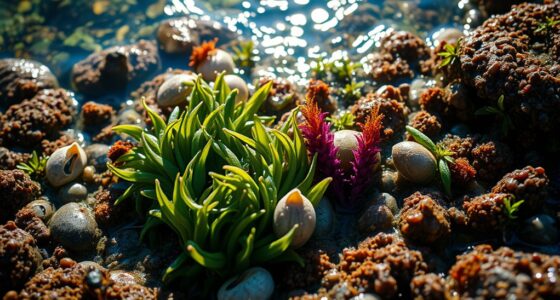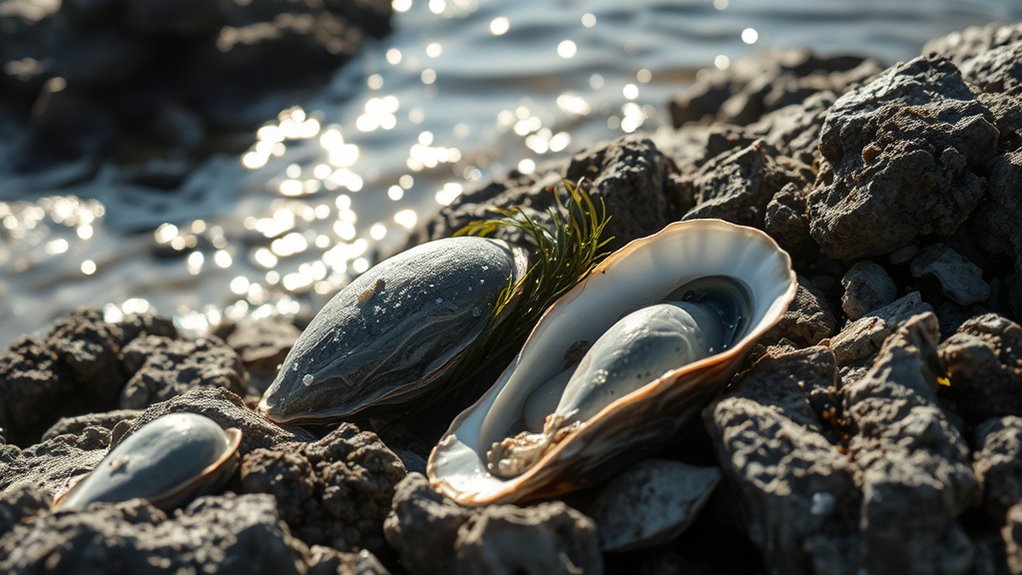

In the wild, you’ll find oysters attached to submerged surfaces like rocks or piers in estuaries and bays, often forming clusters with rough, irregular shells that are grayish or brownish. Live oysters will close their shells when disturbed, and you might see algae or barnacles on them. Preferred habitats have steady currents and nutrient-rich water, indicating a healthy ecosystem. To harvest responsibly and sustainably, learn to identify these features—more tips on proper practices await you.
Listen free for 30 days with Audible
Thousands of audiobooks and originals — cancel anytime.
As an affiliate, we earn on qualifying purchases.
Key Takeaways
- Identify wild oysters by their tightly attached, rough, ridged shells often encrusted with algae or barnacles.
- Confirm live oysters by observing shell closure when disturbed; empty shells remain open or detached.
- Look for clusters attached to stable substrates like rocks, piers, or submerged surfaces in estuarine or coastal waters.
- Ensure harvesting complies with local regulations, including size limits, season restrictions, and protected area guidelines.
- Practice sustainable harvesting by minimizing habitat disturbance and respecting ecological conservation efforts.
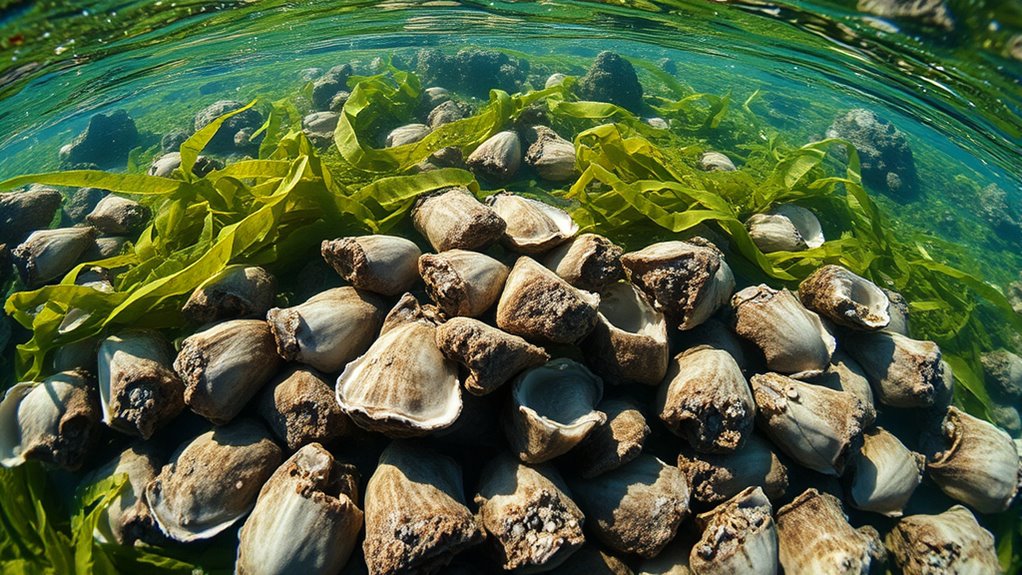
Oysters in the wild thrive in coastal waters, attaching themselves to rocks, piers, and submerged surfaces. As you explore their environment, you’ll notice that their oyster habitat is typically characterized by estuaries, bays, and shallow coastal areas where the water is nutrient-rich and currents are steady. These locations provide the ideal conditions for oysters to filter feed and grow. The habitat’s salinity, water flow, and available substrate heavily influence the presence and health of wild oyster species. Understanding these factors helps you identify where oysters are most likely to be found and guarantees you’re observing them in their natural setting.
Wild oysters thrive in estuaries, bays, and shallow coastal waters with nutrient-rich, steady currents.
When you’re trying to spot wild oyster species, look for clusters of rough, irregularly shaped shells attached tightly together. These shells are often encrusted with algae or barnacles, a sign of a healthy oyster bed. The oysters themselves are generally grayish or brownish, with a rough exterior, and they sit securely on the substrate. Keep in mind that wild oyster species can vary slightly depending on the region, but they all share common characteristics that make them distinguishable from other shellfish. Recognizing the habitat preferences of these species will help you find them more efficiently, whether you’re gathering information or planning a harvest.
As you examine the oyster habitat more closely, you’ll notice that the oysters attach themselves using a strong byssal thread, anchoring tightly to the surface. This attachment is essential for their survival, preventing them from being swept away by currents or predators. The presence of wild oyster species often indicates a stable and healthy ecosystem, as they play a significant role in filtering water and providing habitat for other marine life. When identifying oysters in the wild, look for their characteristic shape—generally oval or irregular—and their rough, ridged shell surface. Be cautious to differentiate between live oysters and empty shells, which can often be found in oyster beds. Live oysters will close their shells when disturbed, a natural defense mechanism.
Additionally, understanding the habitat characteristics of wild oysters can help inform conservation efforts and sustainable harvesting practices. Understanding the features of the oyster habitat and the appearance of wild oyster species equips you to recognize these creatures in their natural environment. Whether you’re interested in sustainable harvesting or simply observing marine life, respecting their habitat is key. Avoid disturbing the ecosystem more than necessary, and always adhere to local guidelines for collection. By paying close attention to how oysters attach themselves and thrive, you gain insight into their ecological importance and how best to approach them responsibly. This knowledge guarantees that your interactions with wild oysters are both respectful and informed, supporting conservation efforts while enjoying the bounty of the ocean.
Top picks for "oyster wild identification"
As an affiliate, we earn on qualifying purchases.
Frequently Asked Questions
What Are the Legal Regulations for Oyster Harvesting in Different Regions?
You need to follow regional harvesting permits and oyster farming regulations, which vary by area. Check with local authorities to obtain the necessary permits before harvesting oysters; some regions have strict limits on size, season, and quantity. Always stay updated on regional regulations to avoid fines or legal issues. Following these rules guarantees sustainable harvesting and helps protect oyster populations for future generations.
How Can I Differentiate Edible Oysters From Toxic or Inedible Varieties?
You might think all oysters are edible, but that’s not true. To tell edible ones from toxic or inedible varieties, examine shell morphology for healthy, intact shells with no cracks or discoloration. Smell the oyster—edible ones have a clean, briny scent, while toxic varieties may smell off or sour. Taste cautiously, noting flavor—fresh oysters taste like seawater, whereas inedible ones often have a bitter or strange flavor.
What Equipment Is Recommended for Sustainable Oyster Harvesting?
For sustainable oyster harvesting, you should use eco-friendly tools like hand tongs or oyster knives made from recycled materials. Invest in sustainable gear that minimizes habitat disturbance, such as gentle harvesting rakes or low-impact boats. Always carry biodegradable gloves and mesh bags to reduce environmental impact. These eco-friendly tools help you harvest responsibly, ensuring oyster populations thrive and ecosystems stay healthy for future harvests.
Are There Seasonal Best Times to Harvest Oysters in the Wild?
You’ll find the best time for seasonal harvesting right after oyster spawning, typically in late summer to early fall. During this period, oysters are plump and bursting with flavor, making it a truly extraordinary experience. Avoid harvesting during spawning season, as oysters are more fragile and less tasty. Timing your harvest carefully guarantees you enjoy the richest, most sustainable oysters while supporting healthy oyster populations.
How Do Environmental Changes Impact Oyster Populations and Habitats?
Climate change impacts oyster populations by raising water temperatures, causing acidification, and altering salinity levels, which stress their habitats. You can support habitat restoration efforts to help mitigate these effects by restoring oyster reefs and protecting estuaries. These actions boost resilience, improve water quality, and provide safer environments for oysters to thrive, ensuring healthier populations despite ongoing environmental changes.
Conclusion
Now that you know how to identify and harvest wild oysters responsibly, you hold the key to preserving these treasures. Think of wild oysters as nature’s delicate gems—easily tarnished if mishandled. By following the guidelines, you become a guardian of this fragile ecosystem, ensuring future harvests and vibrant reefs. Respect their habitat, and you’ll keep the cycle alive, like a well-tuned symphony where every note counts. Your careful actions make all the difference.
Flea & tick season Picks
flea and tick prevention
As an affiliate, we earn on qualifying purchases.