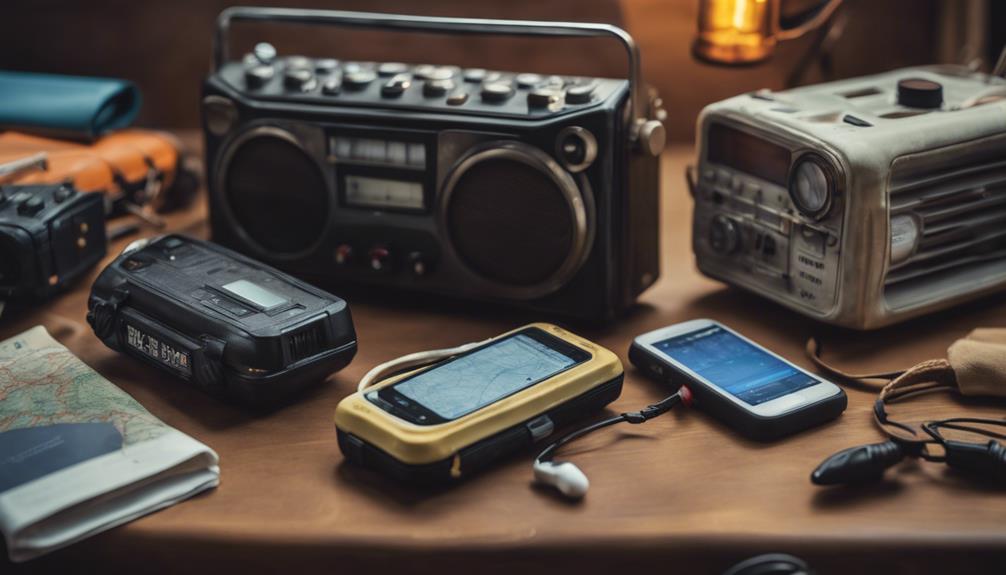

Radios for preppers need to do more than receive broadcasts: they should keep you informed when power and mobile networks fail. My best overall pick is the C. Crane CCRadio 3 for its broader listening options, including a 2-meter ham band, while the FosPower A1 stands out for its stated 7400mWh battery capacity and multiple charging methods. The Raynic Emergency Radio is another flexible option, pairing AM/FM/SW reception with NOAA alerts and backup charging. The main tradeoff is between compact, self-charging emergency radios and larger or more capable sets that may offer better reception but depend on a more involved setup. Read on for the full comparison and guidance on matching a radio to your preparedness plan.

Get garden gear delivered free with Prime
- Fast, free delivery on millions of items
- Prime Video, Amazon Music and more included
- Member-only deals all year
Complete the kit


Key Takeaways
- The C. Crane CCRadio 3 is the standout for listening versatility: its 2-meter ham band and Bluetooth set it apart from the lineup of mostly compact emergency radios, though ham-band reception does not replace a two-way transmitter.
- Several radios combine solar and hand-crank charging, but their battery figures differ: the FosPower lists 7400mWh, the Leaton 10000mAh, and two unnamed-capacity models list 12000mAh; those figures are not directly comparable without voltage and runtime details.
- The Raynic covers more broadcast bands than most compact picks: AM/FM/SW plus NOAA alerts suit listeners who want shortwave access, while buyers focused on straightforward weather updates may prefer a simpler model.
- Emergency features recur across the lineup: flashlights, SOS alarms, and phone-charging functions appear on multiple radios, so buyers should prioritize reliable radio reception and usable power over a long feature checklist.
- Charging methods do not guarantee long runtimes: solar and hand-crank inputs are useful backups, but a radio’s battery capacity, charging conditions, and power use determine how long it can support a household.
| Emgykit Hand Crank Radio with AM/FM/NOAA Weather Band, Emergency Portable Radio with LED Flashlight and SOS Alarm |  | Best Compact Emergency Kit Radio | Radio bands: AM, FM, NOAA weather | Battery capacity: 2000mAh | Power sources: Hand crank, solar, Type-C | VIEW ON AMAZON | See Our Full Breakdown |
| FosPower NOAA Emergency Weather Radio A1 7400mWh Solar Hand Crank (Orange) |  | Best for Flexible Backup Power | Radio bands: NOAA weather, AM, FM | Power bank capacity: 7400mWh (2000mAh) | Power sources: Solar panel, hand crank, AAA batteries | VIEW ON AMAZON | See Our Full Breakdown |
| Emergency Crank Weather AM/FM Radio – Red/Black |  | Best for Weather Alerts and Outdoor Signaling | Radio bands: AM/FM and NOAA weather | Power sources: Solar, hand crank, USB, six AA batteries | Batteries: Six AA batteries included | VIEW ON AMAZON | See Our Full Breakdown |
| RunningSnail Hand Crank Radio with Flashlight, NOAA/AM/FM Emergency Radio |  | Best Compact Pick for Damp Conditions | Radio bands: AM, FM, NOAA | Battery capacity: 2000mAh | Power sources: Hand crank, solar panel, rechargeable battery | VIEW ON AMAZON | See Our Full Breakdown |
| C. Crane CCRadio 3 Long Range Reception AM, FM, NOAA Weather Plus Alert and 2-Meter Ham Band Portable Digital Radio with Bluetooth |  | Best Premium Reception and Everyday Listening | Radio bands: AM, FM, NOAA weather, 2-meter ham band | AM antenna: Twin-coil ferrite | Battery life: Approximately 250 hours | VIEW ON AMAZON | See Our Full Breakdown |
| Eoxsmile Emergency Radio with NOAA Weather Alert, Solar Hand Crank Portable |  | Best for Compact Emergency Kits | Bands: AM 520–1710 kHz, FM 88–108 MHz, SW 7–19 MHz | Weather alerts: National Weather Service | Battery capacity: 5000 mAh rechargeable | VIEW ON AMAZON | See Our Full Breakdown |
| Leaton Hand Crank Emergency Radio, NOAA Weather Radio AM/FM, 10000mAh |  | Best for Wet-Weather Outings | Battery capacity: 10000 mAh | Water resistance: IPX6 | Dimensions: 6.3 × 3.5 × 3.1 inches | VIEW ON AMAZON | See Our Full Breakdown |
| Raynic Emergency Radio, 5000mAh Weather Radio with NOAA Alert, Solar Hand Crank, AM/FM/SW, Cell Phone Charger, Flashlight, SOS Siren |  | Best for Alert-Focused Preparedness | Battery capacity: 5000 mAh | Bands: AM, FM, shortwave, NOAA | Power sources: AC adapter, USB, hand crank, solar, AAA batteries | VIEW ON AMAZON | See Our Full Breakdown |
| 12000mAh Emergency Radio with NOAA Weather, Hand Crank & Solar Charging |  | Best for Extended Backup Runtime | Battery capacity: 12000 mAh | Power sources: Rechargeable battery, solar, hand crank, USB, three AAA batteries | Solar panel: 850 mm² monocrystalline | VIEW ON AMAZON | See Our Full Breakdown |
| Solar Emergency Hand Crank Radio with 12000mAh Power Bank and LED Lights |  | Best for High-Capacity Power and Lighting | Battery capacity: 12000 mAh lithium | Radio bands: NOAA, FM, AM | Frequency: 162 MHz | VIEW ON AMAZON | See Our Full Breakdown |
| radios for prepper | Power sources | Battery capacity | Radio bands | Dimensions |
|---|---|---|---|---|
| Emgykit Hand Crank Radio with | Hand crank, solar, Type-C | 2000mAh | AM, FM, NOAA weather | 5.1 x 2.1 x 2.4 inches |
| FosPower NOAA Emergency Weathe | Solar panel, hand crank, AAA batteries | — | NOAA weather, AM, FM | — |
| Emergency Crank Weather AM/FM | Solar, hand crank, USB, six AA batteries | — | AM/FM and NOAA weather | 9.61 x 2.95 x 6.85 inches |
| RunningSnail Hand Crank Radio | Hand crank, solar panel, rechargeable battery | 2000mAh | AM, FM, NOAA | — |
| C. Crane CCRadio 3 Long Range | — | — | AM, FM, NOAA weather, 2-meter ham band | — |
| Eoxsmile Emergency Radio with | Solar, hand crank, USB, AAA batteries | 5000 mAh rechargeable | — | — |
| Leaton Hand Crank Emergency Ra | — | 10000 mAh | — | 6.3 × 3.5 × 3.1 inches |
| Raynic Emergency Radio | AC adapter, USB, hand crank, solar, AAA batteries | 5000 mAh | — | 6.8 × 3.7 × 2.9 inches |
| 12000mAh Emergency Radio with | Rechargeable battery, solar, hand crank, USB, three AAA batteries | 12000 mAh | — | 6.8 × 2.9 × 4.7 inches |
| Solar Emergency Hand Crank Rad | Solar panel, hand crank, battery, Type-C input, three AAA batteries | 12000 mAh lithium | NOAA, FM, AM | 6.8 × 2.9 × 4.7 inches |
More Details on Our Top Picks
Emgykit Hand Crank Radio with AM/FM/NOAA Weather Band, Emergency Portable Radio with LED Flashlight and SOS Alarm
The Emgykit makes sense for a go-bag where size and several ways to restore power matter more than extended battery backup. At 5.1 inches long and 0.51 pounds, it is easier to pack than the larger C. Crane CCRadio 3, while its hand crank, solar panel, and Type-C input give you options if one charging method is unavailable. The 140-lumen flashlight and SOS alarm add useful signaling and lighting functions without requiring separate gear. Its 2000mAh battery is a modest reserve, though, so I would treat phone charging as an emergency top-up rather than a dependable power source. Unlike the RunningSnail, the supplied details do not mention water repellence, which makes the Emgykit a weaker choice for wet outdoor conditions.
Pros:- Compact, lightweight body is easy to store in a go-bag.
- Hand crank, solar, and Type-C charging offer several ways to replenish power.
- 140-lumen flashlight and SOS alarm add emergency lighting and signaling.
- Receives AM, FM, and NOAA weather broadcasts.
Cons:- The 2000mAh battery is better suited to limited device charging than sustained backup power.
- Water resistance is not specified, leaving uncertainty for rain or damp storage.
- The feature set is focused on basic emergency use rather than broader radio listening.
Best for: Go-bag owners who want a lightweight radio with multiple charging methods, weather broadcasts, and a built-in signal alarm.
Not ideal for: People planning to rely on the radio for extended phone charging or regular use in wet conditions; its battery is modest and water resistance is not specified.
- Radio bands:AM, FM, NOAA weather
- Battery capacity:2000mAh
- Power sources:Hand crank, solar, Type-C
- Flashlight:3W LED with 3 LED beads
- Brightness:140 lumens
- Dimensions:5.1 x 2.1 x 2.4 inches
- Weight:0.51 lbs
Our verdict“Choose the Emgykit for a compact, multi-powered go-bag radio, but not as a long-duration charging source or wet-weather specialist.”
FosPower NOAA Emergency Weather Radio A1 7400mWh Solar Hand Crank (Orange)
The FosPower A1 stands out for households that want a choice of backup power methods, including AAA batteries as well as solar and hand crank. That battery option is a practical distinction from the Emgykit and RunningSnail, which list rechargeable batteries but not replaceable AAA cells in the supplied details. Its 7400mWh power bank is listed as 2000mAh, so it is useful for a limited device boost rather than a substitute for a dedicated power bank. The radio also combines NOAA, AM, and FM reception with a reading light and a 1W flashlight, giving it more lighting variety than the simpler Emgykit. I would not pick it on claims of ruggedness: water resistance and durability details are not provided, and battery runtime is unspecified.
Pros:- Solar, hand crank, and AAA battery power provide useful backup flexibility.
- Receives NOAA weather, AM, and FM broadcasts.
- Combines a four-LED reading light with a separate 1W flashlight.
- Built-in power bank can provide a limited charge to small devices.
Cons:- No battery-life duration is supplied, making runtime hard to plan around.
- Water resistance and durability details are not specified.
- The listed 2000mAh capacity limits its usefulness as a device-charging source.
Best for: Households that want NOAA alerts and the option to power a compact emergency radio with stored AAA batteries when solar or cranking is impractical.
Not ideal for: Buyers needing documented weather resistance, known operating runtime, or substantial phone-charging capacity.
- Radio bands:NOAA weather, AM, FM
- Power bank capacity:7400mWh (2000mAh)
- Power sources:Solar panel, hand crank, AAA batteries
- Reading light:Four LEDs
- Flashlight:1W
- Device charging:Power bank for small devices
Our verdict“Pick the FosPower A1 if replaceable AAA backup power matters more than documented runtime or a larger charging reserve.”
Emergency Crank Weather AM/FM Radio – Red/Black
The Midland ER310 puts weather monitoring and emergency signaling ahead of pocketable size. Its NOAA weather scan and alert function is paired with AM/FM reception, a flashlight, and an ultrasonic dog whistle, giving it a distinct safety focus compared with the FosPower A1’s more varied lighting setup. Solar, crank, USB, and the included six AA batteries offer several ways to keep it running, though the supplied specs do not clarify how those power options affect runtime. At 16 ounces and roughly 9.6 inches long, it is far less compact than the Emgykit or RunningSnail. The lack of water resistance also argues for storing it in a protective bag during wet-weather outings. This is a better fit for a vehicle or home emergency kit than a minimal pocket-sized loadout.
Pros:- NOAA weather scan and alert support emergency weather monitoring.
- Solar, crank, USB, and included AA batteries provide several power routes.
- Built-in flashlight and ultrasonic dog whistle add safety functions.
- AM/FM reception supports routine broadcasts as well as weather updates.
Cons:- Larger and heavier than the compact Emgykit and RunningSnail options.
- Listed as not water resistant, so outdoor use calls for added protection.
- Runtime details and sound-quality information are not provided.
Best for: Preparedness-minded households and vehicle-kit owners who value NOAA alerts, multiple power options, and an additional signaling feature.
Not ideal for: Ultralight packers or people who need a radio for exposed, rainy conditions; it is relatively large and listed as not water resistant.
- Radio bands:AM/FM and NOAA weather
- Power sources:Solar, hand crank, USB, six AA batteries
- Batteries:Six AA batteries included
- Connectivity:USB
- Display:LED
- Water resistance:Not water resistant
- Dimensions:9.61 x 2.95 x 6.85 inches
- Weight:16 ounces
Our verdict“Choose the Midland ER310 for a home or vehicle kit centered on weather alerts and signaling, not for a small, rain-ready pack.”
RunningSnail Hand Crank Radio with Flashlight, NOAA/AM/FM Emergency Radio
The RunningSnail is a straightforward choice for someone who wants a small weather radio with a little more protection from the elements. Its water-repellent listing gives it an advantage over the Emgykit and Midland ER310, both of which lack stated water resistance, though that wording does not establish that the radio is waterproof. At 0.5 pounds, it is also easy to carry, and hand-crank, solar, and rechargeable-battery power reduce reliance on disposable cells. The 2000mAh battery and USB output can help with an emergency phone top-up, but they are not a replacement for a larger power bank; the FosPower A1 offers a similar stated battery capacity and also accepts AAA batteries. Choose the RunningSnail for portability and basic wet-weather resilience, not extended charging or severe-weather exposure.
Pros:- Compact body and 0.5-pound weight suit portable emergency kits.
- Water-repellent listing offers more weather protection than the Emgykit or Midland ER310.
- Hand crank, solar panel, and rechargeable battery provide multiple power options.
- AM, FM, and NOAA reception plus a built-in flashlight cover core emergency needs.
Cons:- Water repellent does not mean waterproof, and no protection rating is supplied.
- The 2000mAh battery offers limited capacity for charging other devices.
- Runtime details are not provided for its power sources.
Best for: Campers and go-bag owners seeking a lightweight AM/FM/NOAA radio with water-repellent construction and basic USB charging.
Not ideal for: Buyers who need waterproof protection, a large device-charging reserve, or more detailed power-runtime information.
- Radio bands:AM, FM, NOAA
- Battery capacity:2000mAh
- Power sources:Hand crank, solar panel, rechargeable battery
- Flashlight:Built-in LED
- Connectivity:USB
- Maximum output power:3 watts
- Water resistance:Water repellent
- Dimensions and weight:5 x 1.8 x 2.4 inches; 0.5 lbs
Our verdict“The RunningSnail fits compact kits that may face damp conditions, provided you do not need waterproofing or prolonged device charging.”
C. Crane CCRadio 3 Long Range Reception AM, FM, NOAA Weather Plus Alert and 2-Meter Ham Band Portable Digital Radio with Bluetooth
The C. Crane CCRadio 3 is the clear choice here for a prepper who values dependable broadcast listening over a compact hand-crank design. Its twin-coil ferrite AM antenna is paired with AM, FM, NOAA weather, and a 2-meter ham band, giving it broader listening options than the emergency-focused Emgykit or FosPower A1. Bluetooth, presets, a clock, and an alarm also make it more useful between emergencies. The tradeoff is its reliance on AC power or four D batteries: unlike the Midland ER310, it does not list solar or hand-crank charging, and the D cells are not included. Its approximately 250-hour battery life is attractive, but its bulk and limited power options make it better suited to a home shelter or sturdy base camp than a lightweight go-bag.
Pros:- Twin-coil ferrite AM antenna is designed for long-range AM reception.
- Includes AM, FM, NOAA weather, and a 2-meter ham band.
- Bluetooth, presets, clock, alarm, and sleep timer support regular everyday use.
- Approximately 250 hours of stated battery life.
Cons:- Requires four D batteries, which are not included, or AC power.
- No solar or hand-crank power option is listed.
- Bulkier than the Emgykit and RunningSnail, making it less suited to compact kits.
Best for: Home-preparedness buyers who prioritize long-range AM/FM listening, NOAA alerts, and access to a 2-meter ham band.
Not ideal for: People building a lightweight go-bag or seeking solar and hand-crank power; it uses four D batteries or AC power and is bulkier than the compact emergency radios.
- Radio bands:AM, FM, NOAA weather, 2-meter ham band
- AM antenna:Twin-coil ferrite
- Battery life:Approximately 250 hours
- Power:AC power cord or four D batteries
- Batteries:Four D batteries, not included
- Bluetooth:Included
- Listening and alarm features:Clock, alarm, sleep timer, headphone jack
- Warranty:1-year limited
Our verdict“Choose the CCRadio 3 for a home base where reception range and everyday listening matter more than pack size and self-generating power.”
Eoxsmile Emergency Radio with NOAA Weather Alert, Solar Hand Crank Portable
The Eoxsmile makes the most sense for a grab-and-go kit where weather alerts and backup lighting matter more than a large battery. It covers AM, FM, and shortwave, and its NOAA weather alerts can help users stay informed without relying on a phone connection. Solar, hand-crank, USB, and AAA power options give it several ways to stay usable; the 5000 mAh battery is a more modest reserve than the Leaton’s 10000 mAh capacity, though, so I’d choose Leaton for longer periods away from charging. The Eoxsmile’s flashlight, adjustable reading lamp, and compact build make it easier to pack than larger radios. Its limits are practical: solar charging alone is slow, and the AAA backup batteries are not included.
Pros:- NOAA weather alerts plus AM, FM, and shortwave reception
- Four power options: solar, hand crank, USB, and AAA batteries
- Flashlight and two-level reading lamp add useful emergency lighting
- Compact, lightweight design is practical for a go-bag
Cons:- AAA backup batteries are not included
- Solar power alone provides limited runtime
- No power adapter is included for USB charging
Best for: People assembling a compact home or evacuation kit who want NOAA alerts, shortwave reception, and built-in lights in one radio.
Not ideal for: Campers or households expecting extended outages without USB access; its 5000 mAh battery and limited solar-only runtime offer less reserve than the Leaton or 12000 mAh options.
- Bands:AM 520–1710 kHz, FM 88–108 MHz, SW 7–19 MHz
- Weather alerts:National Weather Service
- Battery capacity:5000 mAh rechargeable
- Power sources:Solar, hand crank, USB, AAA batteries
- FM runtime:Up to 13 hours
- Flashlight:3W; illuminates up to 80 meters
- Reading lamp:2.5W with two adjustable brightness levels
- Additional features:USB port, compass, hand strap
Our verdict“Choose the Eoxsmile for a compact emergency kit that needs weather alerts and lighting, but pick a higher-capacity model for longer off-grid use.”
Leaton Hand Crank Emergency Radio, NOAA Weather Radio AM/FM, 10000mAh
The Leaton is the strongest fit here for preppers who expect to carry a radio outdoors in unsettled weather and want a larger rechargeable reserve. Its 10000 mAh battery is double the Eoxsmile’s stated capacity, and USB-C charging is a convenient everyday option alongside solar and hand crank. The IPX6 rating gives it a more clearly stated level of water resistance than the Raynic’s IPX3 rating, although it is not intended for immersion. A flashlight, reading lamp, and compass add practical camp functions. The tradeoff is a missing feature that matters in a fast-moving emergency: NOAA reception requires manual tuning, rather than automatic alert activation. With no headphone jack, it also suits shared listening better than quiet, private monitoring.
Pros:- 10000 mAh battery provides more capacity than the Eoxsmile and Raynic
- USB-C, solar, and hand-crank charging offer multiple ways to recharge
- IPX6 water-resistance rating is clearly specified
- Built-in flashlight, reading lamp, and compass support outdoor use
Cons:- NOAA weather channels must be tuned manually; automatic alerts are not provided
- No headphone jack, so audio is limited to the built-in speaker
- IPX6 does not mean the radio can be submerged
Best for: Campers and preparedness-minded hikers who want a higher-capacity radio with USB-C charging and a stated water-resistance rating.
Not ideal for: People who need automatic NOAA alerts or private listening; this model requires manual weather-band tuning and has no headphone jack.
- Battery capacity:10000 mAh
- Water resistance:IPX6
- Dimensions:6.3 × 3.5 × 3.1 inches
- Weight:1.1 lb (500 g)
- Charging modes:Solar, hand crank, USB-C
- Radio frequencies:AM 520–1710 kHz, FM 87–108 MHz, NOAA 162.400–162.550 MHz
- USB output:5V/1A
Our verdict“Pick the Leaton for outdoor use and a larger battery, but choose the Eoxsmile or Raynic if automatic NOAA alerts are a priority.”
Raynic Emergency Radio, 5000mAh Weather Radio with NOAA Alert, Solar Hand Crank, AM/FM/SW, Cell Phone Charger, Flashlight, SOS Siren
The Raynic is a practical choice for households that put NOAA alerts and clear status information ahead of maximum battery capacity. Its large LCD, SOS alarm, and built-in flashlight and reading lamp make it easier to use as a central emergency station than a bare-bones receiver. Unlike the Leaton, which requires manual weather-band tuning, this model lists NOAA alerts; that distinction matters when users may not be monitoring the radio continuously. It also receives AM, FM, and shortwave, while offering AC adapter, USB, hand-crank, solar, and AAA power options. The compromise is its 5000 mAh battery, half the Leaton’s capacity, plus IPX3 water resistance that offers less protection outdoors. At 1.2 lb, it is also not the lightest carry option.
Pros:- NOAA alerts, AM/FM/SW reception, and a large LCD support emergency monitoring
- Five listed power sources include AC adapter, USB, hand crank, solar, and AAA batteries
- SOS alarm, flashlight, and reading lamp add emergency utility
- USB charging port can provide power to another device
Cons:- 5000 mAh capacity is lower than the Leaton and 12000 mAh models
- IPX3 water resistance offers limited protection in heavy rain
- AAA batteries are not included, and the 1.2 lb weight may be noticeable on long carries
Best for: Households building a stationary outage kit that want NOAA alerts, an easy-to-read display, and an SOS alarm.
Not ideal for: People planning frequent wet-weather use or long stretches without charging; the IPX3 rating and 5000 mAh battery are limiting beside the Leaton and larger-capacity radios.
- Battery capacity:5000 mAh
- Bands:AM, FM, shortwave, NOAA
- Power sources:AC adapter, USB, hand crank, solar, AAA batteries
- Water resistance:IPX3
- Dimensions:6.8 × 3.7 × 2.9 inches
- Weight:1.2 lb
- Speaker power:3W
- Additional features:Large HD LCD, flashlight, reading lamp, USB charging port, SOS alarm
Our verdict“Choose the Raynic for a home emergency station centered on alerts and display visibility, rather than for maximum runtime or wet-weather protection.”
12000mAh Emergency Radio with NOAA Weather, Hand Crank & Solar Charging
For a prepper who values fewer charging interruptions, this radio’s 12000 mAh battery and stated 60-hour playback claim are its main reasons to stand out. Its 5W speaker is also more powerful than the Raynic’s 3W output, which may help when weather updates need to be heard across a room or camp. Solar, hand-crank, and USB charging offer several ways to replenish power, while the 850 mm² monocrystalline panel is a specified component rather than an unspecified solar feature. That capacity comes with a larger footprint than the compact Eoxsmile, so it is less appealing for a tightly packed go-bag. The product data also gives fewer details about alert behavior and water resistance than the Raynic or Leaton, making it a better fit for battery-focused buyers than those prioritizing those protections.
Pros:- 12000 mAh battery and stated 60-hour playback support extended use
- 5W speaker is higher output than the Raynic’s 3W speaker
- Solar, hand-crank, USB, and AAA power options provide charging flexibility
- Specified 850 mm² monocrystalline solar panel
Cons:- Bulkier than the Eoxsmile, making it less convenient for compact kits
- Hand-crank charging requires manual effort
- Product data does not specify a water-resistance rating or automatic alert behavior
Best for: Households and campers who want a high-capacity backup radio with a strong speaker for longer listening periods.
Not ideal for: Minimalist hikers who prioritize low carry weight, or buyers who need clearly specified water resistance and automatic NOAA alert behavior.
- Battery capacity:12000 mAh
- Power sources:Rechargeable battery, solar, hand crank, USB, three AAA batteries
- Solar panel:850 mm² monocrystalline
- Speaker power:5W
- Playback claim:Up to 60 hours
- Dimensions:6.8 × 2.9 × 4.7 inches
- Reception:NOAA weather band
Our verdict“Choose this model when battery capacity and speaker output matter more than compact carry size or clearly stated weather protection.”
Solar Emergency Hand Crank Radio with 12000mAh Power Bank and LED Lights
This model pairs a 12000 mAh battery with a 5W maximum output and built-in LED lighting, making it a strong option for buyers who want one device to cover radio listening, basic device charging, and blackout lighting. Its listed Type-C input supports 5V/2A charging, and solar and hand-crank options give it alternatives when wall power is unavailable. Compared with the similarly sized 12000 mAh radio in this group, it adds explicit AM, FM, and NOAA band support plus a stated weight of 1.6 lb; neither figure makes it a lightweight choice. I would favor the Raynic for a more clearly described water-resistance rating, while this radio makes more sense for its larger battery and lighting setup. The water-resistance details are vague, so I would not rely on it in heavy rain.
Pros:- 12000 mAh lithium battery offers substantial onboard capacity
- Solar, hand crank, Type-C input, and AAA batteries provide multiple power routes
- 5W maximum output and NOAA, AM, and FM reception cover core radio needs
- Flashlight and adjustable soft reading light add blackout utility
Cons:- At 1.6 lb, it is heavier than the Leaton and less suited to long-distance carry
- Water resistance is listed without a specific rating
- Battery level should be checked on first use
Best for: Preparedness buyers who want a high-capacity radio and power bank paired with a flashlight and adjustable reading light for home outages.
Not ideal for: People who need a lightweight pack radio or a clearly rated wet-weather model; this unit weighs 1.6 lb and its water-resistance details are limited.
- Battery capacity:12000 mAh lithium
- Radio bands:NOAA, FM, AM
- Frequency:162 MHz
- Power sources:Solar panel, hand crank, battery, Type-C input, three AAA batteries
- Type-C input:5V/2A
- Maximum output power:5W
- Dimensions:6.8 × 2.9 × 4.7 inches
- Weight:1.6 lb
- Water resistance:Water resistant; specific rating not provided
Our verdict“Pick this radio for high-capacity backup power and useful lighting at home or camp, but favor a lighter or better-rated model for wet-weather travel.”

How We Picked
I ranked these radios by how well their stated features serve a prepper’s core needs: receiving weather and public broadcasts, staying usable during a power outage, and offering practical backup power. I gave added weight to clearly differentiated reception capabilities, including shortwave and the CCRadio 3’s 2-meter ham band, while treating NOAA alerts, hand-crank or solar charging, battery capacity, lighting, and SOS functions as useful supporting features. I also looked at ease of use and whether the feature set seems suited to an individual grab-and-go kit or a more deliberate home setup.
The ordering favors radios with a clear advantage for preparedness rather than the longest list of functions. Models with published capacity figures or distinctive band coverage are easier to compare, but capacity labels alone do not prove runtime or charging speed. Several entries have overlapping features and limited distinguishing details, so I treat them as practical alternatives rather than claiming meaningful performance differences unsupported by the listed specifications. Before relying on any pick, I recommend checking the exact manual for alert behavior, charging input, battery replacement, and local band compatibility.
| radios for prepper | Radio bands | Water resistance |
|---|---|---|
| Emgykit Hand Crank Radio with | AM, FM, NOAA weather | — |
| FosPower NOAA Emergency Weathe | NOAA weather, AM, FM | — |
| Emergency Crank Weather AM/FM | AM/FM and NOAA weather | Not water resistant |
| RunningSnail Hand Crank Radio | AM, FM, NOAA | Water repellent |
| C. Crane CCRadio 3 Long Range | AM, FM, NOAA weather, 2-meter ham band | — |
| Eoxsmile Emergency Radio with | — | — |
| Leaton Hand Crank Emergency Ra | — | IPX6 |
| Raynic Emergency Radio | — | IPX3 |
| 12000mAh Emergency Radio with | — | — |
| Solar Emergency Hand Crank Rad | NOAA, FM, AM | Water resistant; specific rating not provided |
Factors to Consider When Choosing Radios For Preppers
Choosing among radios for preppers starts with the information you need during an outage, not the number of accessories in the box. These broader checks can help you build a radio plan that remains useful after the first charge runs down.
Match reception to the information you need
NOAA weather reception can help you follow alerts in the United States, but it is only one part of an information plan. Check whether the radio receives the broadcast bands you actually expect to use, and verify coverage for your location before an emergency. Shortwave can add access to distant broadcasts, while a ham band may let you listen to some amateur-radio activity. A receiver with a ham band is not automatically a two-way radio, so it cannot transmit without the appropriate equipment and authorization. Avoid paying for extra bands unless you know how you will use them. A simpler radio may be easier for family members to operate under stress.
Treat backup charging as a supplement, not a power plan
Hand cranks and solar panels can help when wall power is unavailable, but neither should be assumed to replace a charged battery or a supply of compatible batteries. Cranking usually takes sustained effort, and small built-in solar panels depend on good light and favorable placement. A radio can also spend power on a flashlight, display, or phone-charging output, leaving less for listening. Check the manual for charging times and whether the unit can run while charging. For a household kit, a charged power bank or spare batteries may be a more dependable first backup than repeated cranking. Keep more than one charging path if communications matter to your plan.
Read battery claims carefully
Battery capacity is useful for comparing products only when the measurement and operating conditions are clear. A figure in mAh cannot be compared directly with mWh unless voltage is known, and neither number alone tells you how many hours a radio will run. Volume, reception conditions, alert settings, and attached devices can all affect battery use. Treat phone charging as an emergency reserve rather than a replacement for a dedicated power bank; radio batteries may not deliver much usable phone power. Look for manufacturer runtime information and charging specifications before choosing based on capacity. If those details are absent, plan conservatively instead of assuming a large number means days of dependable use.
Decide whether alerts should wake you
A NOAA alert feature is most useful when you understand how it behaves: some radios can monitor alerts while otherwise quiet, while others need active tuning or a particular setting. Confirm the alert mode, supported frequencies, and whether the radio needs to remain plugged in or powered on. Test the alert function at home and learn how to silence or acknowledge it before storing the radio. Do not rely on a feature label alone, since setup errors can leave a radio unable to notify you as expected. In a shared household, choose controls that another person can operate without a long explanation. Keep a separate way to receive urgent notices if your radio is being charged or moved.
Plan for household use, not just the feature list
Think through where the radio will live, who will use it, and how often it will be checked. A compact emergency set can suit a vehicle bag or bedside kit, while a more capable receiver may make better sense at a home information station. Controls should be legible, tuning should feel manageable, and the radio should be stable enough to use with its antenna extended. If multiple people may need it, write down local weather frequencies and basic operating steps. Check whether the battery is replaceable, how the unit should be stored, and what maintenance the maker recommends. Regularly confirm that the radio still powers on and that its charging cable and accessories remain with it.
Frequently Asked Questions
Is a radio with a ham band enough to communicate with other people?
No. A ham-band receiver lets you listen to compatible amateur-radio transmissions, but listening is different from transmitting. Two-way communication requires a transmitter or transceiver, a suitable antenna, and compliance with the rules that apply where you live. The CCRadio 3’s 2-meter ham-band reception can broaden what you hear, but it should not be mistaken for a complete two-way communications setup. If sending messages is part of your plan, choose and learn the appropriate equipment separately.
Should I choose the largest advertised battery capacity?
Not on that figure alone. The lineup includes capacity claims in both mAh and mWh, and those units cannot be compared directly without voltage information. Runtime also depends on volume, alert monitoring, lighting, and whether you are charging another device. Look for tested or manufacturer-stated runtime details, charging time, and battery replacement information. If those are unclear, favor a radio with a practical charging plan rather than assuming the largest number will last longest.
Can I rely on a hand crank or solar panel as my only backup power?
I would treat both as emergency supplements, not the whole power plan. Cranking takes effort and may provide limited operating time, while solar charging depends on daylight, panel size, and placement. Neither method removes the need to keep the radio charged and understand how long it runs. Pair the radio with a charged power bank or compatible spare batteries when the model supports them. Check the manual so you know whether the radio can operate while charging and how long each charging method takes.
Do I need shortwave reception for a prepper radio?
Shortwave is useful if you want to listen to broadcasters beyond local AM and FM, but it is not necessary for every household. Reception depends on the station, time, antenna, and local conditions, so extra band coverage does not guarantee useful signals during an outage. For many buyers, dependable local weather and broadcast reception will matter more. The Raynic includes shortwave alongside AM/FM and NOAA, making it a better fit for listeners who want that extra range. Choose shortwave only if you are willing to learn how and when to tune it.
What should I test after buying an emergency radio?
Set it up before storing it: tune local stations, locate the weather-alert settings, and confirm the flashlight and SOS controls. Try each charging method and note how the unit indicates a full charge or low battery. Check reception from the places where you expect to use it, since walls and terrain can affect signal strength. Make sure another household member can operate the radio without help, and store the manual and charging cable with it. Add periodic battery and function checks to your preparedness routine instead of waiting for an outage.
Conclusion
For most buyers, I would start with the C. Crane CCRadio 3 as the best overall because its 2-meter ham-band reception and broader listening role distinguish it from the simpler emergency sets. The FosPower A1 is my best value-style pick for buyers who want a clearly stated 7400mWh capacity alongside solar and hand-crank charging, while the CCRadio 3 is also the best premium choice for a home listener seeking more than basic weather reception. For beginners, the RunningSnail is a straightforward feature-led option to compare, particularly if a flashlight and NOAA/AM/FM reception cover your needs. For shortwave listeners, I would choose the Raynic; for buyers prioritizing a stated 10000mAh battery, compare the Leaton, and for a 12000mAh claim, check the exact specifications of the two similarly described models before choosing. Match the radio to your local signals and backup-power plan, then test it before storing it.
Evergreen bestsellers Picks
bestsellers
As an affiliate, we earn on qualifying purchases.