
To prevent burning your plants and promote fast growth with LED grow lights, you need to manage PPFD levels carefully. Measure the light intensity in your grow area using a quantum sensor, ensuring it matches your plant’s stage—more light for flowering, less for vegetative growth. Reposition lights or adjust the spectrum to fine-tune PPFD, avoiding overexposure or underexposure. Keep these tips in mind, and you’ll optimize your setup for healthy, rapid plant development. Keep going to discover more ways to perfect your lighting.

Get garden gear delivered free with Prime
- Fast, free delivery on millions of items
- Prime Video, Amazon Music and more included
- Member-only deals all year
Key Takeaways
- Measure PPFD with a quantum sensor to ensure your plants receive optimal light levels without burning.
- Adjust light distance and intensity to prevent excessive PPFD that can stress or scorch plants.
- Use spectrum-specific LEDs to promote healthy growth and reduce the risk of overexposure.
- Regularly monitor PPFD to maintain appropriate levels for each growth stage, ensuring rapid development.
- Balance PPFD to provide enough light for growth without exceeding plants’ tolerance limits.
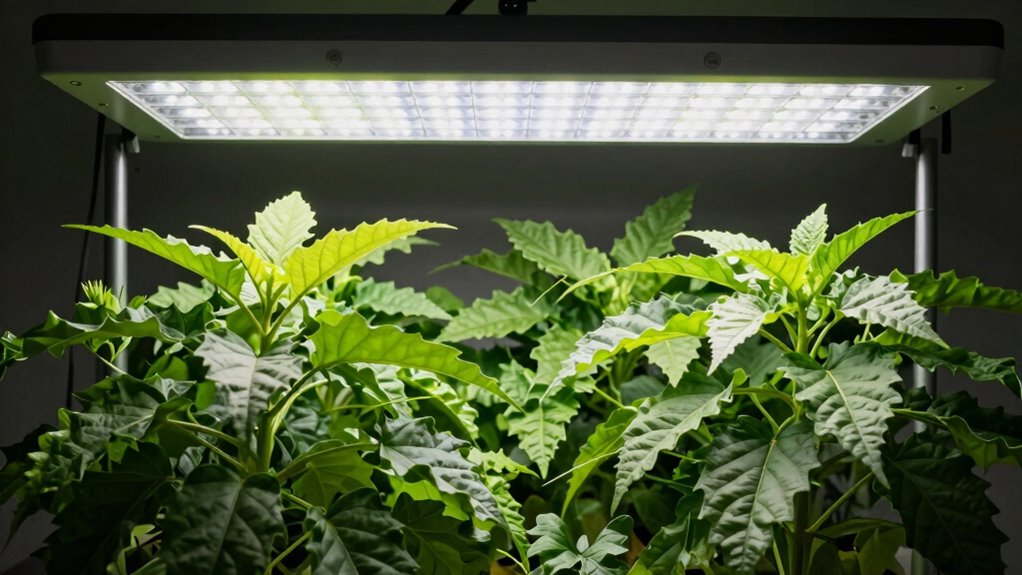
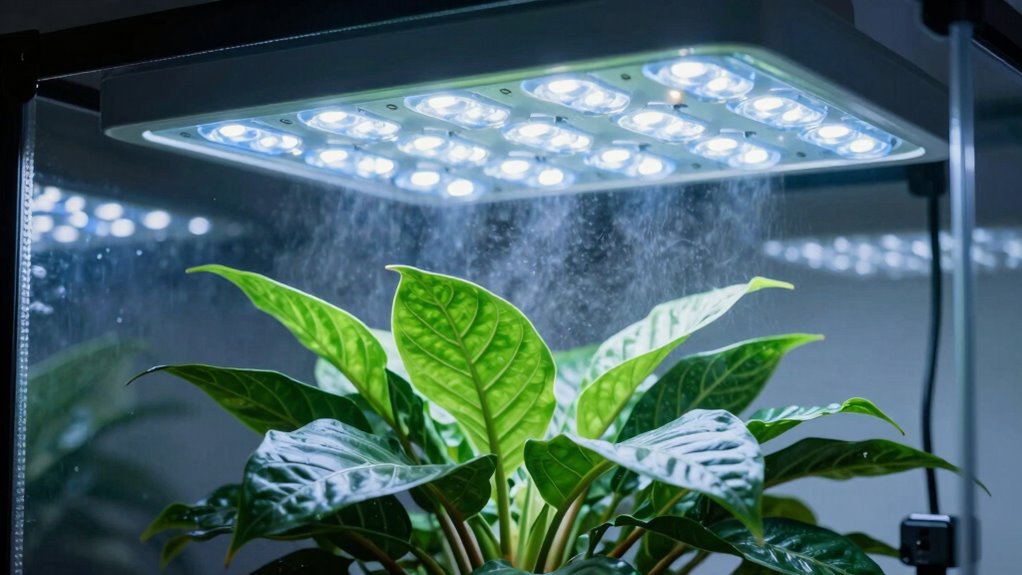
Understanding LED grow light PPFD (Photosynthetic Photon Flux Density) is essential for optimizing your indoor garden. PPFD measures how much light your plants receive in a specific area, which directly impacts their growth and overall health. When you’re trying to perfect your setup, focusing on spectrum optimization and energy efficiency becomes crucial. These factors help you deliver the right amount of light to your plants without wasting power or causing stress.
Spectrum optimization means providing the ideal light wavelengths that plants need at different growth stages. For example, blue light promotes vegetative growth by encouraging healthy leaves and stems, while red light boosts flowering and fruiting. By choosing LED grow lights with adjustable spectrums or tailored spectrum outputs, you ensure your plants receive the precise light they require. This targeted approach not only enhances growth rates but also prevents issues like stretching or weak structures caused by inappropriate lighting. When you optimize the spectrum, you’re effectively supporting your plants’ natural processes and maximizing photosynthesis efficiency, which leads to healthier, faster-growing plants.
Optimizing spectrum ensures healthy, faster plant growth by providing the right light wavelengths at each stage.
Energy efficiency is equally vital. LED technology is inherently more efficient than traditional grow lights, converting more electricity into usable light. However, not all LEDs are created equal. Some models produce excessive light that exceeds your plants’ needs, wasting energy and increasing your electricity bills. Others might lack enough intensity, prolonging your growth cycle. To strike the right balance, you need to select LEDs that deliver the correct PPFD levels for your specific plants and growth stage. This targeted delivery prevents overexposure, which can lead to light stress, or underexposure, which stunts growth. By carefully managing PPFD levels and choosing energy-efficient fixtures, you reduce your environmental impact and operating costs, making your indoor garden more sustainable and profitable.
Understanding how to measure and adjust PPFD allows you to fine-tune your lighting setup for optimal results. When you keep PPFD within the recommended range for your plant types, you prevent burning or stressing your plants, which can occur if the light intensity is too high. Conversely, if the PPFD is too low, your plants won’t develop as quickly as they could. Using a quantum sensor to measure PPFD helps you verify that your setup is delivering the right light levels. Adjustments can then be made by repositioning lights or modifying their output, ensuring your plants receive consistent, appropriate illumination. Incorporating advanced measurement tools can further enhance your ability to optimize lighting conditions precisely.
Frequently Asked Questions
How Does Temperature Affect PPFD Readings?
Temperature impacts PPFD readings through thermal effects on your light sensor calibration. When it gets too hot, sensor accuracy can decrease, making readings seem higher or lower than actual. Cooler temperatures keep sensors stable, ensuring precise measurements. To avoid errors, manage thermal effects by maintaining consistent temperature and allowing your light sensor to calibrate properly in the growing environment, so you get reliable PPFD data for ideal plant growth.
Can PPFD Be Adjusted Without Changing the Light?
Imagine a garden glowing under vibrant lights, yet you wonder if you can tweak PPFD without changing the fixture. You can. By adjusting the distance between the light and your plants or modifying reflectors, you essentially calibrate the PPFD. This light adjustment allows you to control intensity, ensuring ideal growth. Remember, precise PPFD calibration involves subtle tweaks, maximizing your grow setup without replacing or modifying the actual light source.
Is Higher PPFD Always Better for Plant Growth?
Higher PPFD isn’t always better for plant growth. Increasing light intensity can boost photosynthesis, but it also raises the risk of plant stress and light burn. You need to find the right balance for your plants’ specific needs. Too much light can damage leaves, so monitor their response closely. Adjust your PPFD gradually, ensuring your plants get enough light without overwhelming them, promoting healthy, fast growth.
How Do Different Plant Species Respond to PPFD Levels?
Think of plant species as unique travelers on a journey; their adaptation to PPFD levels varies like travelers’ comfort with different terrains. Some plants thrive with high PPFD, reaching light saturation quickly, while others prefer gentle illumination to avoid stress. You’ll find that understanding each species’ adaptation helps you tailor light levels, ensuring ideal growth without burning or stunting, like guiding travelers safely through their preferred landscape.
What Is the Ideal PPFD Range for Seedlings?
For seedling lighting, aim for a PPFD range of 200-400 µmol/m²/sec to optimize growth without burning your plants. You should keep the light intensity moderate to prevent stress and promote healthy development. Adjust your LED grow light to maintain this PPFD range, ensuring proper light penetration and energy efficiency. Consistently monitoring and fine-tuning your light setup helps with PPFD optimization and fosters strong, healthy seedlings.
Conclusion
By understanding LED grow light PPFD, you can optimize your plants’ growth and avoid burning them. Remember, a PPFD of around 600-900 µmol/m²/sec is ideal for most stages, ensuring healthy, rapid growth. Did you know that proper PPFD levels can increase plant yield by up to 30%? So, measure carefully, adjust your lights accordingly, and watch your plants thrive. With the right setup, you’ll see faster, healthier growth every time.
Halloween Picks
halloween
As an affiliate, we earn on qualifying purchases.