Trauma kits and first aid kits differ mainly in purpose and contents. A first aid kit handles minor injuries like cuts, scrapes, and burns, using items like bandages and antiseptics. Trauma kits are for severe, life-threatening cases, containing tourniquets, advanced dressings, and airway tools. Knowing these differences helps you respond effectively in emergencies. Keep exploring to discover how each kit can prepare you for different situations and make sure you’re ready when it counts.
Key Takeaways
- First aid kits treat minor injuries; trauma kits are for severe, life-threatening emergencies.
- Trauma kits contain advanced supplies like tourniquets and chest seals, unlike basic bandages in first aid kits.
- First aid kits are simple and accessible for everyday use; trauma kits require specialized training for effective use.
- Trauma kits are essential in wilderness or remote settings to manage critical injuries until help arrives.
- Proper understanding of each kit’s purpose ensures appropriate response during emergencies.
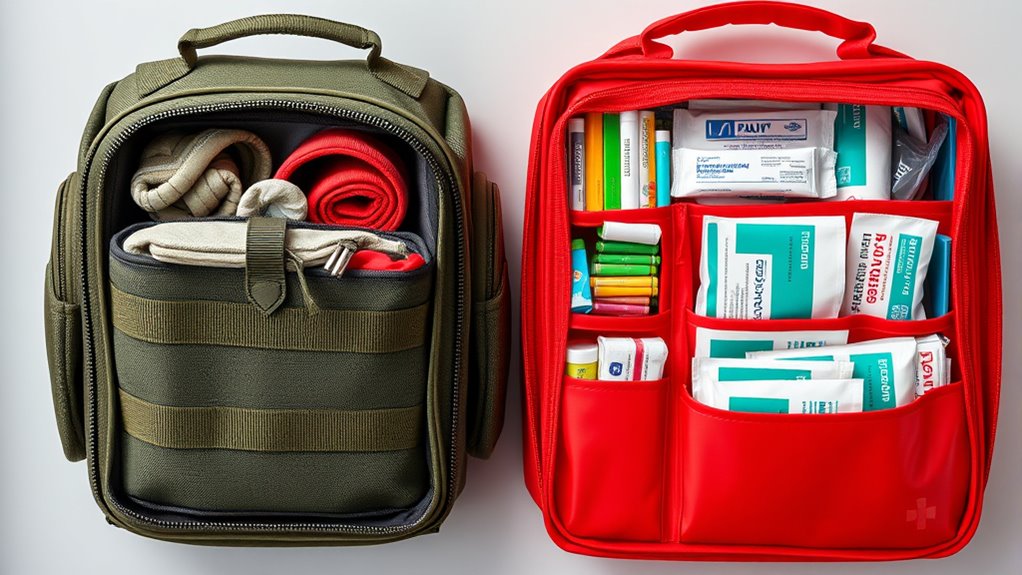
When emergencies strike, knowing the difference between trauma kits and first aid kits can be essential. Whether you’re out in the wilderness or managing workplace safety, understanding what each kit offers guarantees you’re prepared to handle injuries effectively. First aid kits are designed to treat minor injuries like cuts, scrapes, burns, or sprains. They typically contain bandages, antiseptic wipes, adhesive tape, scissors, and basic medications. These are necessary for everyday incidents and can be kept in homes, cars, or workplaces. Their simplicity makes them accessible and easy to use, helping you stabilize minor injuries until professional help arrives.
First aid kits are essential for treating minor injuries like cuts, burns, and scrapes.
Trauma kits, on the other hand, are built for more severe, life-threatening situations. If you’re steering through wilderness emergencies or working in environments where advanced medical help might be delayed, a trauma kit becomes essential. These kits include items like tourniquets, hemostatic dressings, chest seals, and advanced airway equipment. Their purpose is to control significant bleeding, manage shock, and address critical injuries that could otherwise be fatal. Unlike basic first aid kits, trauma kits demand a higher level of knowledge to use effectively, but they can be lifesavers when every second counts.
In wilderness emergencies, having a trauma kit can make the difference between survival and tragedy. If you’re hiking, camping, or exploring remote areas, injuries can happen far from quick medical assistance. A trauma kit allows you to manage bleeding or stabilize wounds until rescue arrives. Similarly, in the workplace, especially in industries like construction or manufacturing, the risk of severe injuries increases. Adequate trauma kits guarantee you’re prepared for major accidents, helping to minimize the severity of injuries and maintain safety standards. Proper training on how to use these kits is equally important, as a trauma kit isn’t just about having supplies but knowing how to apply them correctly.
While a first aid kit is suitable for everyday minor injuries, a trauma kit is indispensable for serious emergencies. In both wilderness settings and workplaces, having the right kit and knowing how to use it can be the difference between life and death. Remember, being prepared isn’t just about having the supplies—it’s about understanding when and how to use them effectively. Knowing the distinction helps you make smarter choices about safety gear, guaranteeing you’re ready to respond confidently when every second counts.

Jackery Solar Generator 1000 v2 with 2x100W Light Solar Panels,1070Wh Portable Power Station,LiFePO4 Battery, 1500W AC Output, Flexible&Lightweight Solar Kit for RV,Balcony,Camping, Emergency Backup
Compact Powerhouse with High Output: Boasting a substantial 1500W AC output (3000W Surge) and 1070Wh capacity, this solar...
As an affiliate, we earn on qualifying purchases.
Frequently Asked Questions
Can a Trauma Kit Replace a Comprehensive First Aid Kit?
A trauma kit can’t fully replace a thorough first aid kit because medical training is essential for proper use, especially in emergencies. Trauma kits focus on severe injuries, but first aid kits cover a broader range of issues like minor cuts, burns, and bandaging. To guarantee you’re prepared, customize your kit based on potential emergencies and get trained, so you know how to respond effectively in different situations.
Are Trauma Kits Suitable for Everyday Minor Injuries?
Trauma kits aren’t ideal for everyday minor injuries because they focus on severe trauma care. For everyday preparedness, a well-stocked first aid kit is better suited for handling minor injuries like cuts, scrapes, and bruises. Keep a trauma kit on hand for emergencies, but rely on a first aid kit for routine minor injuries to make certain you’re prepared for all situations without overloading your supplies.
How Often Should Trauma Kits Be Restocked?
You should restock your trauma kit regularly as part of your first aid maintenance, ideally every six months or after any use. Keep an eye on expiration dates and replace supplies like bandages, gloves, and gauze promptly to make certain kit replenishment. Regularly checking your trauma kit guarantees you’re prepared for emergencies, especially since trauma supplies can expire or get used up quickly, so stay proactive to maintain readiness.
Are Trauma Kits Legal to Carry in Public Spaces?
Did you know that over 60% of Americans carry some form of first aid kit? Trauma kits are generally legal to carry in public spaces, but legal restrictions vary by location. You should check local laws before carrying one, as some areas might have specific regulations on public accessibility or require special permits. Always make certain your trauma kit complies with local rules to stay prepared and within legal boundaries.
Do Trauma Kits Require Special Training to Use Effectively?
You don’t need special medical training to use a trauma kit, but having some emergency protocols knowledge helps. Basic first aid training can make you more confident and effective during emergencies. Many trauma kits include instructions, so you can follow them even without advanced skills. However, taking a CPR or first aid course is highly recommended, especially if you want to respond quickly and correctly in critical situations.

OUPES 2000W Mega 1 Solar Generator Kit with 240W Panel Included, 1024Wh LiFePO4 Battery Power Station with UPS & APP, for Road Trip, Off-grid, RVs, Power Outages
[Solar Ready Kit] - 240W monocrystalline panel recharges Mega 1 in 5-8hrs (sunlight conditions apply).
As an affiliate, we earn on qualifying purchases.
Conclusion
Remember, knowing the difference between trauma kits and first aid kits can save lives. While first aid kits handle minor injuries, trauma kits are built for serious emergencies. Be prepared and choose the right kit for the situation. As the saying goes, “Better safe than sorry.” By understanding their unique roles, you can act quickly and confidently when it matters most. Stay informed, stay prepared, and you’ll be ready for anything that comes your way.

Apowking Portable Solar Powered Generator 300W Rated, with Solar Panels 40W Included, 220Wh Power Bank with AC Outlet 110V, and 10*DC Connectors, Pure Sine Wave for Home Use Camping Outdoor
SOLAR POWERED GENERATOR WITH PANELS INCLUDED: Apowking portable solar panels 40W performances better even under the condition of...
As an affiliate, we earn on qualifying purchases.

Portable Solar Generator, 300W Portable Power Station with Foldable 60W Solar Panel,110V Pure Sine Wave 280Wh Battery Power Pack with USB DC AC Outlet for Camping Smart Devices RV Van Outdoor-Orange
Portable Generator with 60W Solar Panel Included: with a big battery pack, ZeroKor 300W power stations Generator are...
As an affiliate, we earn on qualifying purchases.