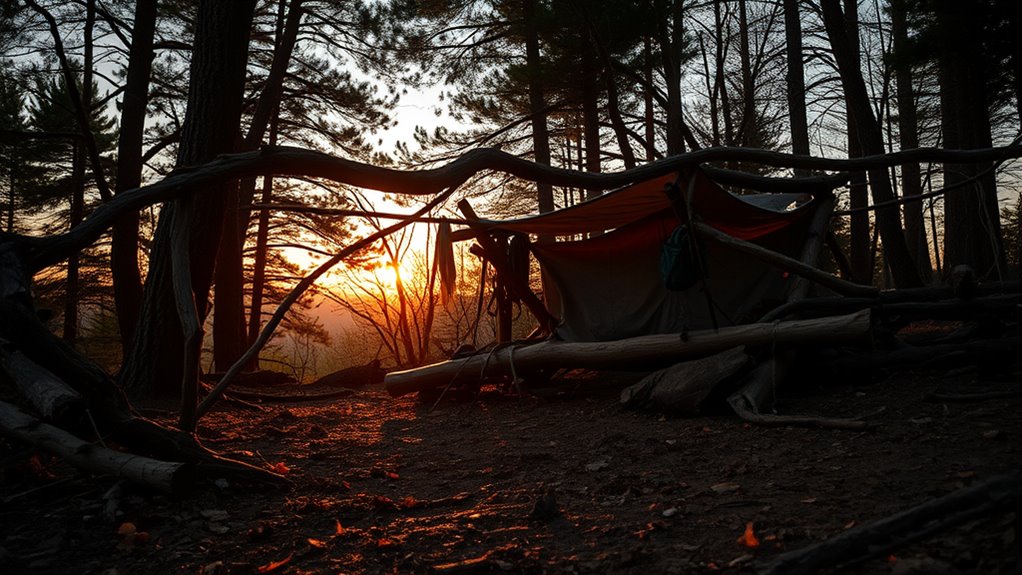

To build a shelter by sundown using only deadfall, quickly gather large, stable logs and lean them against natural anchors like fallen trees or rocks to form your frame. Reinforce with smaller branches, and use deadfall as a roof to shed rain. Block wind on sides with additional dead logs and insulate with leaves or needles if possible. Always handle materials safely and mind fire safety. Continue exploring these techniques to master rapid, eco-friendly shelter construction.

Get garden gear delivered free — and shop member deals
- Fast, free delivery on millions of items
- Access to Prime Big Deal Days deals on October 6–7
- Prime Video, Amazon Music and more included
Key Takeaways
- Select large, stable deadfall logs and natural anchors for quick, sturdy support.
- Lean logs against fallen trees or boulders to create a quick frame structure.
- Fill gaps with smaller branches and twigs to reinforce and insulate the shelter.
- Use deadfall as a roof to shed rain and block wind, enhancing protection.
- Clear fire safety zones and use natural materials responsibly to prevent environmental impact.
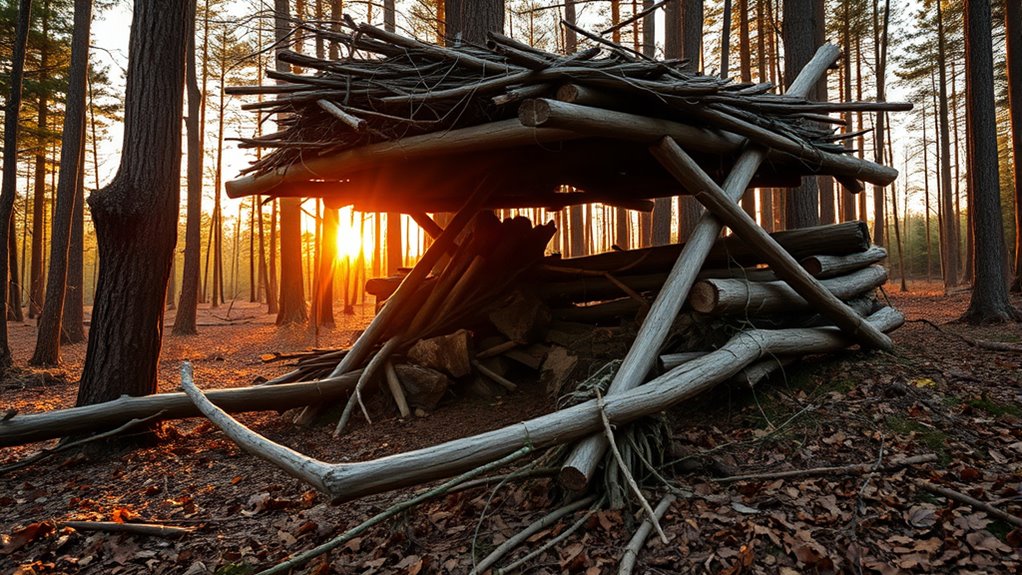
Building a lean-to quickly can be a lifesaver when you need shelter fast, and using deadfall makes the process even more efficient. Deadfall, the fallen branches and logs from trees, is an abundant resource in most wilderness areas. Not only does it help you construct a sturdy shelter rapidly, but it also minimizes the need to carry extra gear. As you gather deadfall, remember to prioritize safety—look out for unstable branches or logs that might shift or roll. Handling natural materials with care is essential to prevent injuries, especially when working with heavy or sharp-edged wood. Incorporating safe handling practices ensures you minimize the risk of accidents while working with natural materials.
Start by selecting a solid, natural frame using larger logs for the main support. Lean these logs against a sturdy natural anchor, like a fallen tree or a large boulder, forming a sloped roof. Be mindful of fire safety when choosing your location; avoid building directly over dry leaves or near overhanging branches that could ignite easily. As you assemble the structure, use smaller branches and twigs to fill gaps and reinforce the frame, creating a windproof barrier. You can also use additional deadfall as a natural roof covering, laying smaller branches across the larger supports to shed rain and keep you dry.
Select sturdy logs and lean them against natural anchors, then reinforce with smaller branches for a safe, effective lean-to.
When constructing your lean-to, consider how natural materials can help insulate and protect you from the elements. Use deadfall to create a wall on one or two sides, blocking wind and cold air. For added insulation, pile up leaves or pine needles over the roof if available, but only if they’re dry. Always keep fire safety in mind—if you plan to build a fire nearby for warmth or cooking, clear away deadfall and dry leaves from your immediate area to prevent accidental fires. Remember that natural materials should be used responsibly, avoiding the destruction of living trees or plants that could be essential to the local ecosystem.
Your goal is to build a shelter that’s quick, durable, and safe. Deadfall makes that possible, allowing you to harness what nature provides without additional tools or supplies. With careful attention to fire safety, you can avoid accidental fires, and by selecting natural materials wisely, you ensure your shelter is both functional and environmentally conscious. By working efficiently and responsibly, you can create a reliable lean-to that keeps you protected until help arrives or you’re ready to move on. Ultimately, mastering this skill can be a lifesaver, turning natural resources into a crucial refuge in an emergency situation.
Frequently Asked Questions
What Are the Best Locations for Quick Lean-To Construction?
You should choose locations that are close to water sources and offer natural windbreaks for quick lean-to construction. Look for areas with abundant deadfall nearby, avoiding spots with high wildlife disturbance to reduce risks. Consider elevated ground to improve emergency signaling visibility and minimize flood risks. These spots let you build fast, stay safe, and signal for help effectively, especially when time’s limited and conditions demand quick shelter.
How Durable Are Lean-Tos Built With Deadfall?
You might wonder about the shelter longevity and material resilience of lean-tos built with deadfall. While quick to assemble, their durability depends on the quality of deadwood and construction technique. Properly built, they can withstand moderate weather for a short period, but they’re less resilient long-term compared to sturdier materials. Expect them to serve well in emergencies, but plan for eventual reinforcement or replacement to ensure safety.
Can Deadfall Materials Be Used for Other Shelter Types?
You can definitely use deadfall as alternative materials for various shelter types, enhancing your shelter versatility. Deadfall provides a natural, readily available resource that can be incorporated into different designs like A-frames, quinzhees, or debris huts. Its use allows you to adapt quickly to changing conditions and available resources, making deadfall a practical choice for building durable, functional shelters in survival situations or outdoor adventures.
What Safety Precautions Should Be Taken During Quick Build?
Building quickly is like racing against time, so safety becomes your guiding star. You should always prioritize fire safety, keeping a water source nearby and clearing flammable debris. Use tools carefully, cutting away from your body and wearing gloves if possible. Check for unstable branches or deadfall that could fall unexpectedly. Stay alert, and don’t rush—precautions safeguard you from injuries and ensure your shelter stands strong through the night.
How Do Weather Conditions Affect Deadfall Shelter Stability?
Weather impact substantially influences deadfall shelter stability. If rain or snow occurs, the added weight can weaken materials and cause shifts. Wind can also destabilize your structure by pushing on the lean-tos, especially if they’re not securely anchored. You should choose dry, sturdy deadfall, and reinforce your shelter against weather conditions. Regularly check for signs of stress or movement, ensuring your shelter remains safe and stable throughout changing weather.
Conclusion
By mastering the art of quick shelter-building with deadfall, you can create a reliable refuge in just minutes. Imagine how knowing this skill could save your life—studies show that quick shelter construction can increase survival odds by over 50%. So next time you’re caught in the wild, remember: with patience and resourcefulness, you can build a sturdy lean-to before sundown, turning a dire situation into a safe haven and boosting your confidence in the wilderness.
Halloween Picks
halloween
As an affiliate, we earn on qualifying purchases.