TL;DR

Get garden gear delivered free — and shop member deals
- Fast, free delivery on millions of items
- Access to Prime Big Deal Days deals on October 6–7
- Prime Video, Amazon Music and more included
An Ideal Home report points to a photo on Monty Don’s Instagram captioned “Dicksonia corner” as inspiration for planting tree ferns in shady garden areas. The plants can add height and dense foliage, but need consistently moist soil; the report says they tolerate temperatures down to -5°C.
An Ideal Home report has pointed to a photograph on Monty Don’s Instagram, captioned “Dicksonia corner,” as inspiration for planting tree ferns in a shady garden. The plants can bring height and broad foliage to dimmer borders, though they need consistently moist soil to grow well.
The photograph shows tree ferns of varying heights in what the report describes as a shadier part of Don’s garden. Their large, feathery fronds create layers and texture, offering a way to make a dark corner feel more densely planted. The report identifies the plants as Dicksonia, a genus of tree ferns.
Garden designer Gary Farrell, founder of outdoor furniture brand Nth Degree, told Ideal Home that tree ferns bring “a lushness and scale that few other plants can match” in shady areas. He said their broad fronds add depth and that the plants suit the dappled light found in many UK gardens.
The report says tree ferns prefer soil that remains consistently moist. It recommends mulching around the base to help retain moisture. It also says they are hardy down to -5°C, meaning they may remain evergreen in milder parts of the UK; conditions and local temperatures will affect how they fare.
Adding Structure to Shady Borders
Shady areas can limit choices for gardeners seeking a dense, layered planting scheme. Tree ferns offer a way to add height and prominent foliage where many sun-loving plants may not thrive, according to Farrell’s comments in the report. Their scale can also help create a sense of depth in a border.
Their screening potential may appeal to gardeners who want foliage to soften a boundary or divide a space. However, that effect depends on the plants retaining their fronds through local winter conditions. The report’s -5°C hardiness figure is a general guide, not a guarantee that every tree fern will keep its foliage in every UK garden.
As an affiliate, we earn on qualifying purchases.
The Photograph Behind the Advice
The report is based on a social media photograph captioned “Dicksonia corner”, rather than an announced gardening project or new planting product. Ideal Home’s writer describes the image as featuring tree ferns at different heights, then uses it to discuss their possible role in shadier garden borders.
For gardeners considering the plants, the report names a Dicksonia antarctica log sold by YouGarden and says it comes with specialist tree fern feed. YouGarden is cited as saying new fronds may unfurl within weeks. That is a retailer’s product information, not a reported guarantee of growth for every plant or garden.
“Tree ferns bring a lushness and scale that few other plants can match, especially in shadier corners where most flowering plants struggle.”
— Gary Farrell, designer and founder of Nth Degree, quoted by Ideal Home
As an affiliate, we earn on qualifying purchases.
Moisture and Winter Conditions
The source does not give details about the soil, watering routine, or exact location of Don’s tree fern corner. It is therefore unclear how the plants in the photograph are maintained or how closely the planting conditions match other gardens.
The report describes tree ferns as hardy to -5°C and evergreen in milder UK areas, but it does not specify the conditions behind that temperature figure. It also does not identify the length of time needed to establish the plants. Gardeners should treat the retailer’s claim about fronds unfurling within weeks as product information, not a certain outcome.
moisture retaining mulch for ferns
As an affiliate, we earn on qualifying purchases.
As an affiliate, we earn on qualifying purchases.
Planning for a Moisture-Retaining Site
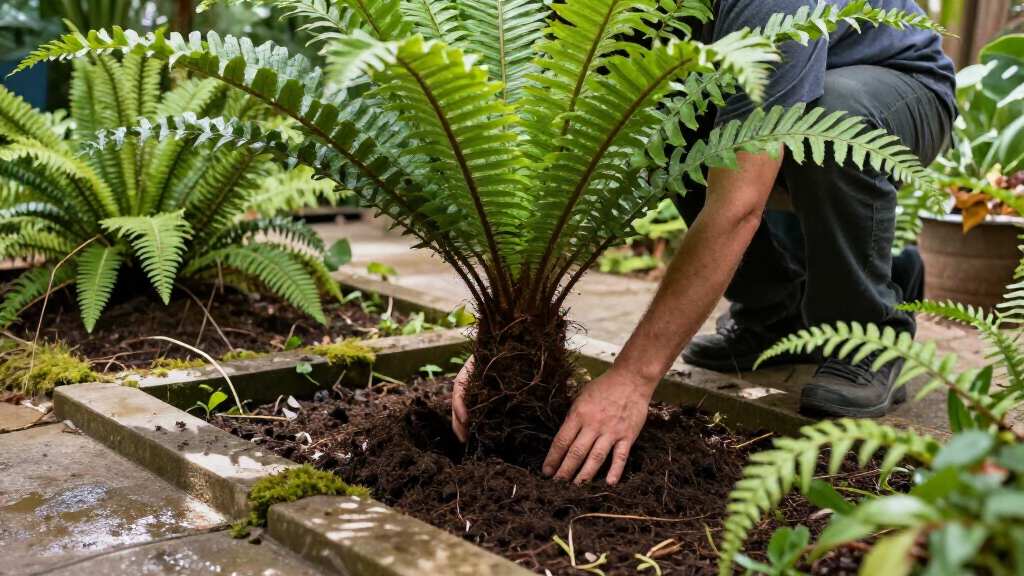
Gardeners interested in copying the look can first check whether a shady border can stay consistently moist, as the report identifies water as the main requirement. Mulch around the plant base may help conserve soil moisture. The report also lists a tub for soaking the fern trunk before planting and a spade for digging, though it does not provide a complete planting guide.
Anyone buying a tree fern should check the seller’s current planting and care instructions, including what to do in cold weather. The next practical step is to match the plant to the garden’s local conditions; the source gives no further update or scheduled development.
As an affiliate, we earn on qualifying purchases.
Key Questions
What did Monty Don share?
The Ideal Home report describes a photograph on Don’s Instagram captioned “Dicksonia corner,” showing tree ferns in a shaded area of his garden.
Why are tree ferns suggested for shady gardens?
Their tall trunks and broad, feathery fronds can add height, texture, and dense foliage to shaded borders, according to the report and garden designer Gary Farrell.
What care do tree ferns need?
The report says they prefer consistently moist soil and suggests mulching around the base to help retain moisture.
Will tree ferns stay evergreen through winter?
The report says they are hardy down to -5°C and may remain evergreen in milder parts of the UK. It does not guarantee foliage retention in all locations or conditions.
Source: rss
Fall Picks
fall essentials
As an affiliate, we earn on qualifying purchases.