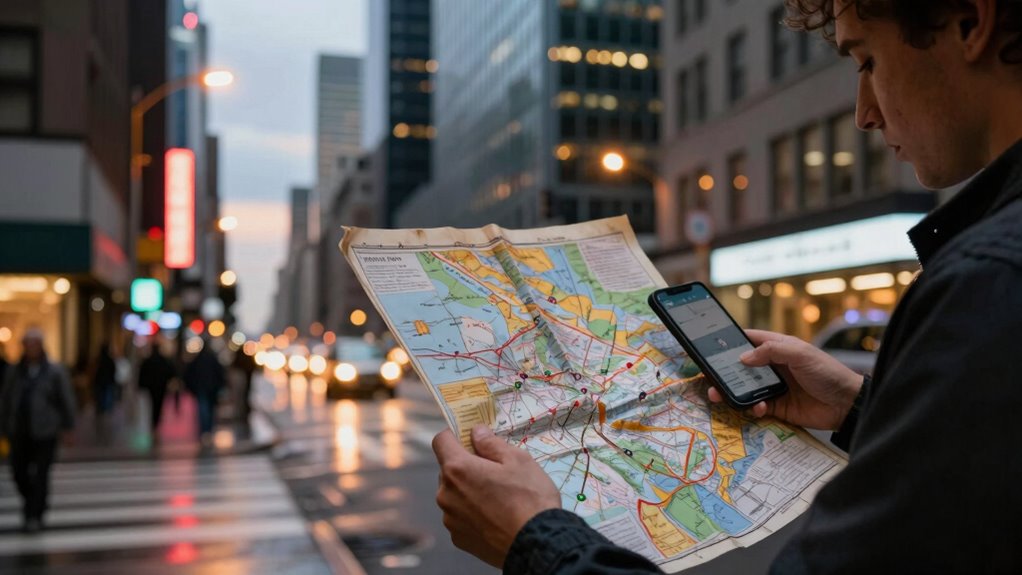
Even with smartphones everywhere, navigation skills remain essential because digital tools can fail, especially indoors or in remote areas. Relying solely on screens can lead to disorientation or getting lost when signals weaken or batteries die. Traditional methods like using landmarks or a compass build a stronger sense of space and confidence. By mastering these skills, you’ll become more independent in unfamiliar environments. Keep exploring to discover how blending old and new navigation techniques can improve your adventures.

Get garden gear delivered free with Prime
- Fast, free delivery on millions of items
- Prime Video, Amazon Music and more included
- Member-only deals all year
Key Takeaways
- Digital maps can be unreliable indoors or in areas with weak signals, making traditional skills essential.
- Traditional navigation methods foster a deeper understanding and connection to the environment.
- Skills like reading maps and using compasses increase independence in remote or technology-limited settings.
- Maintaining navigation skills enhances adaptability and confidence in unexpected or complex situations.
- Combining both methods offers a comprehensive approach for safer, more memorable exploration.
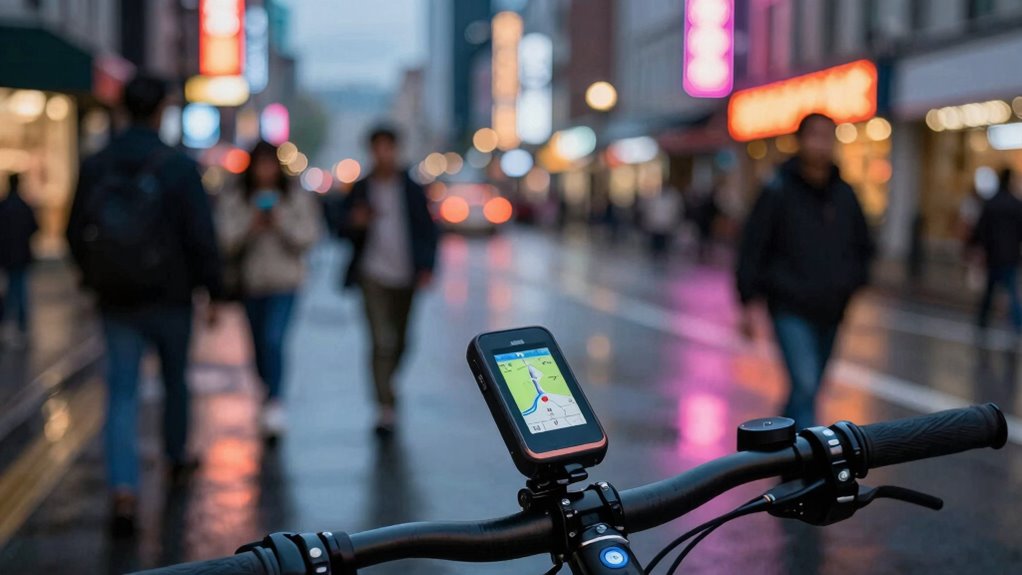
Despite the widespread reliance on smartphones for navigation, traditional methods still hold value. While digital maps can guide you through city streets or rural paths, they often fall short when you’re exploring complex environments like museums, shopping malls, or historic sites. That’s where indoor mapping comes into play. It helps you navigate through indoor spaces with precision, showing you the shortest routes to exhibits, restrooms, or exits. Many cultural landmarks now incorporate detailed indoor maps to help visitors find their way around without frustration. Relying solely on your phone can sometimes leave you disoriented, especially when signals weaken or the battery dies. Having a physical map or a basic understanding of the layout can be a lifesaver in these moments.
Traditional navigation methods remain valuable, especially in complex environments where digital maps may fall short.
Cultural landmarks, like ancient temples, castles, and museums, are rich with history but often confusing to navigate without guidance. Digital tools can provide directions, but they can’t replicate the experience of physically exploring a site with a sense of orientation. When you use traditional navigation methods—such as signage, guidebooks, or asking locals—you gain a deeper connection to the place. These methods also ensure you don’t miss out on hidden details or lesser-known exhibits tucked away from the main tourist paths. For example, a well-placed sign or a printed map can lead you to a secret courtyard or a rare artifact that might be overlooked on a digital map. Developing a familiarity with traditional navigation techniques can also make your exploration more engaging and memorable.
Moreover, understanding traditional navigation techniques enhances your overall awareness and spatial skills. You learn to recognize landmarks, street patterns, and architectural features, making you less dependent on technology. This is especially useful in remote areas or during travel where internet access is limited. Cultural landmarks often have their own unique layouts that aren’t always captured in digital maps, making physical maps or local guidance invaluable. Even in the age of smartphones, knowing how to read a map, use a compass, or follow directional signs keeps you prepared for unexpected situations. These skills foster confidence, allowing you to explore unfamiliar environments more freely without the constant need for digital confirmation. Additionally, indoor mapping is evolving as a crucial component of modern navigation, bridging the gap between digital convenience and traditional exploration methods. Developing these skills can also help you navigate complex environments more effectively, reducing reliance on technology and increasing your overall adaptability. Furthermore, practicing these traditional skills can deepen your appreciation for the history and architecture of a place, enriching your overall experience.
As an affiliate, we earn on qualifying purchases.
Frequently Asked Questions
How Do Traditional Navigation Tools Compare to Smartphone Apps?
Traditional navigation tools, like paper maps and compasses, rely less on technology and more on landmark reliance, helping you develop a better sense of direction. Smartphone apps often provide real-time updates and high map accuracy, but they depend on batteries and signals. You might find that using both methods together offers a backup plan, ensuring you stay oriented even if your phone fails or signals drop.
What Are the Privacy Concerns With Using Phone Navigation?
When you use phone navigation, you’re sharing your location, raising privacy concerns around data security and location tracking. Your movements might be stored or shared without your knowledge, risking misuse or breaches. To protect yourself, use apps with strong security policies, limit location sharing, and regularly review permissions. Staying aware helps you enjoy the convenience without compromising your privacy.
Can Navigation Skills Be Lost With Smartphone Reliance?
Like a forgotten knight in shining armor, your navigation skills can fade if you rely solely on smartphones. Over time, cognitive decline and skill deterioration happen as your brain becomes accustomed to digital directions, making it harder to find your way without tech help. This reliance weakens your natural sense of direction, risking a loss of valuable navigation skills and increasing your dependence on devices, even in familiar places.
How Do Navigation Tools Perform in Remote or Offline Areas?
Navigation tools with offline map capabilities perform well in remote or offline areas because they don’t rely on signal dependency. You can access detailed maps and directions without internet, making them reliable when you’re out of coverage. However, you should still update offline maps regularly and carry a physical map as a backup. This guarantees you stay on track even when digital tools are limited or unavailable.
Are There Environmental Impacts of Using Digital Navigation Devices?
Back in the day, folks relied on paper maps, but now digital navigation devices have environmental impacts. You might wonder about sustainability concerns, like energy consumption and electronic waste. These devices require electricity, often from non-renewable sources, and frequent upgrades add to e-waste. While they improve convenience, it’s crucial to take into account their environmental footprint and aim for greener, more sustainable tech solutions to lessen their impact on the planet.
As an affiliate, we earn on qualifying purchases.
Conclusion
Even with phones everywhere, navigation remains essential. Imagine you’re hiking in a remote area, and your phone’s GPS suddenly fails. Without traditional maps or local knowledge, you could easily get lost. Navigation skills give you confidence and independence, especially when tech isn’t reliable. So, keep learning and practicing these skills. They’re your backup plan, ensuring you stay safe and find your way, no matter how advanced our devices become.
As an affiliate, we earn on qualifying purchases.
As an affiliate, we earn on qualifying purchases.
Fall Picks
fall essentials
As an affiliate, we earn on qualifying purchases.