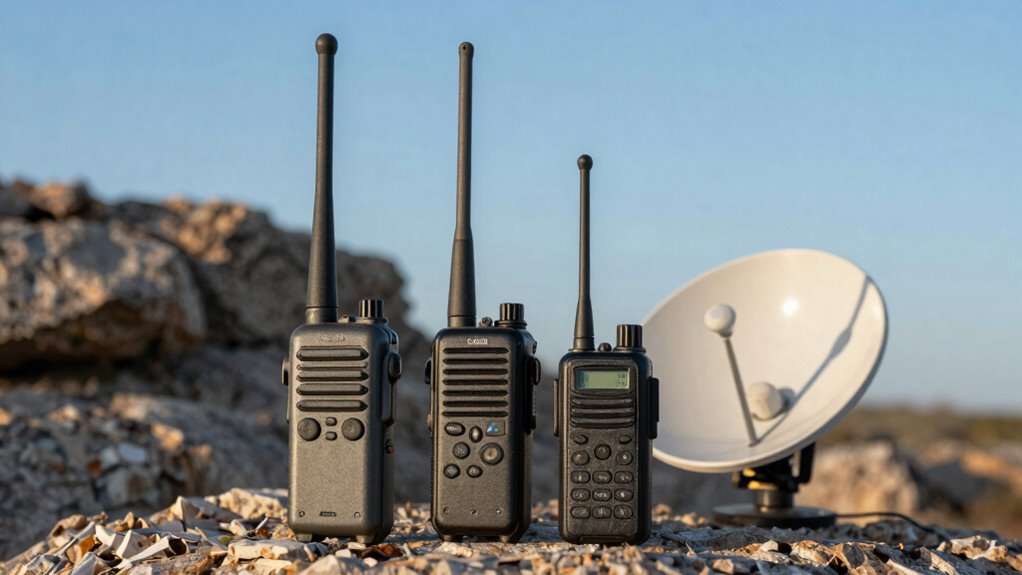

To stay connected during everyday activities and emergencies, you rely on layered radio systems like GMRS, satellite, and local backup communication. GMRS offers short to medium-range coverage for groups, while satellite communication provides global reach when terrestrial signals fail. Local backup systems, like walkie-talkies and mesh networks, add extra resilience for immediate response. Understanding how these layers work together helps you guarantee reliable communication even in challenging situations—exploring the details can help you optimize your setup.

Get garden gear delivered free — and shop member deals
- Fast, free delivery on millions of items
- Access to Prime Big Deal Days deals on October 6–7
- Prime Video, Amazon Music and more included
Key Takeaways
- GMRS provides reliable short to medium-range terrestrial communication for everyday and emergency use.
- Satellite communication offers global coverage, bypassing terrestrial obstacles and infrastructure failures.
- Local backup systems like walkie-talkies and mesh networks ensure quick, short-range connectivity during emergencies.
- Proper spectrum management prevents interference among GMRS, satellite, and local backup systems.
- Layered communication systems enhance overall resilience, ensuring continuous connectivity during disruptions.
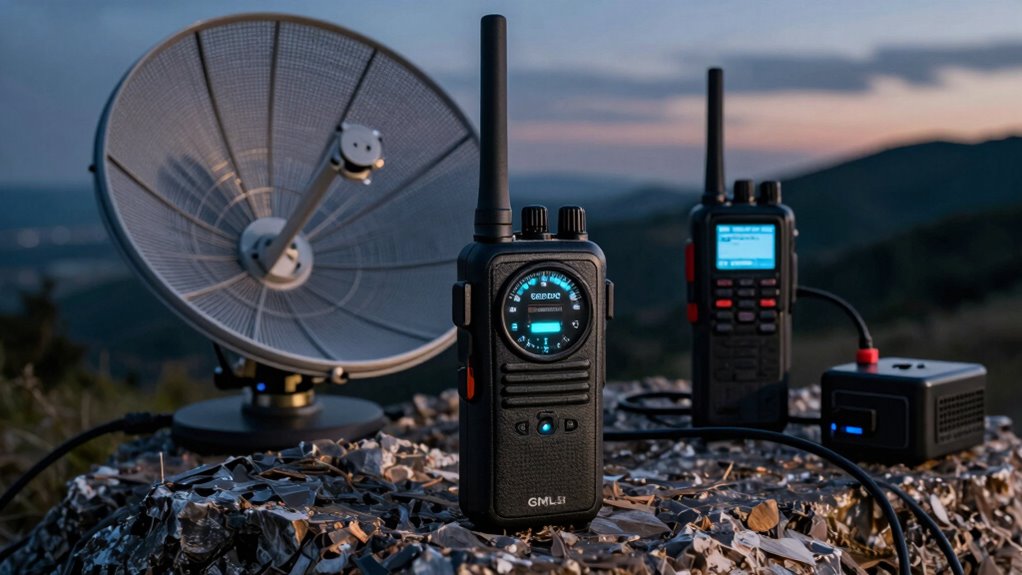
Have you ever wondered how radio signals travel across different environments? It’s fascinating how multiple layers of communication come into play to keep you connected during emergencies or everyday activities. These layers—such as GMRS, satellite, and local backup systems—work together to make sure that your message gets through, no matter the circumstances. Understanding these layers helps you grasp the importance of emergency preparedness and how frequency coordination keeps everything running smoothly. When disaster strikes, traditional radio signals can be blocked by terrain, buildings, or interference, which is why having multiple layers of communication is essential. GMRS (General Mobile Radio Service) is one of the primary terrestrial options, offering reliable short to medium-range communication for families, groups, or emergency teams. Its effectiveness depends on proper frequency coordination, which prevents overlapping signals that could cause confusion or interference. This coordination makes certain that each user has a clear channel, especially during critical moments when clear communication can make a difference.
Satellite communication adds a global layer, especially valuable when local infrastructure is damaged or unavailable. You can rely on satellite phones and devices that communicate directly with orbiting satellites, bypassing terrestrial obstacles entirely. This layer becomes indispensable during large-scale disasters or remote expeditions, where traditional networks might fail. It offers a backup for emergency preparedness, making sure that you stay connected to emergency services or loved ones regardless of where you are. Meanwhile, local backup systems—like walkie-talkies, mesh networks, or dedicated emergency channels—are designed for quick, short-range communication within a specific area. These systems often operate on different frequency bands, providing an additional layer of redundancy. They are particularly useful during immediate response efforts, where rapid coordination is essential, and infrastructure might be compromised. Additionally, understanding frequency spectrum management is crucial to ensure all these systems operate without interference, maintaining reliable communication across layers. Properly managing the radio frequency spectrum helps prevent disruptions and ensures optimal performance of each communication layer. Moreover, integrating these systems effectively can significantly improve overall communication resilience. It is also important to regularly test and update these systems to adapt to changing radio environment conditions and ensure their reliability.
Having multiple radio layers enhances your overall communication resilience. It’s important to understand how each layer complements the others, especially when planning for emergencies. Proper frequency coordination across different systems prevents interference that could hinder message delivery. Effective spectrum management ensures that each layer can operate simultaneously without disrupting the others, which is vital during emergency situations. Whether you’re in a remote wilderness, a disaster-stricken city, or simply trying to stay connected during a power outage, these layered communication strategies ensure your safety and coordination. By familiarizing yourself with how these layers work together, you can better prepare yourself for any situation, making sure that you always have a reliable backup plan when seconds count.
GMRS radio for emergency communication
As an affiliate, we earn on qualifying purchases.
As an affiliate, we earn on qualifying purchases.
Frequently Asked Questions
How Do I Choose the Best Radio Layer for My Needs?
You should choose the radio layer based on your communication range, frequency coordination, and power regulations. For local, short-distance needs, GMRS offers reliable, license-free options within regulated power limits. If you require worldwide coverage, satellite communication is ideal, but consider the costs and regulations. For backup, local radios with strong signals work well. Always check frequency coordination rules and power regulations to guarantee legal, effective communication tailored to your specific needs.
What Are the Legal Regulations for GMRS and Satellite Radios?
Getting a GMRS or satellite radio isn’t just a walk in the park; it’s like maneuvering a maze of rules! You need to follow strict regulatory compliance and meet licensing requirements for GMRS radios, which often include obtaining a license from the FCC. Satellite radios usually have fewer restrictions, but you still need to check local laws. Ignoring these rules can lead to hefty fines or equipment confiscation. Stay informed and compliant!
Can I Use Multiple Radio Layers Simultaneously?
Yes, you can use multiple radio layers simultaneously, but you need to ensure antenna placement and battery life. Proper antenna placement guarantees clear communication across all layers, especially when switching between GMRS, satellite, and local backups. Keep an eye on your battery life, as using multiple layers can drain power faster. Planning your antenna setup and conserving battery life helps maintain reliable multi-layer communication during your activities.
How Reliable Are Satellite Communications in Remote Areas?
Satellite communications can be quite reliable in remote areas, but they do have some limitations. You might experience satellite latency, which causes delays in communication, especially during data transfers. Signal interference from weather conditions or obstacles like dense foliage can also affect the connection quality. Overall, while satellites provide essential coverage where other options fail, you should be prepared for occasional disruptions due to latency or interference.
What Backup Methods Complement Radio Communication Systems?
Imagine you’re hiking in a remote area, and your radio system fails. To guarantee emergency preparedness, you can rely on backup methods like signal encryption-enabled mobile apps that work offline or a satellite messenger device. These methods provide secure communication channels, ensuring you stay connected during emergencies, even if radio signals are compromised or unavailable. Using multiple backup options enhances safety and communication reliability in critical situations.
satellite phone for remote areas
As an affiliate, we earn on qualifying purchases.
As an affiliate, we earn on qualifying purchases.
Conclusion
In the world of wireless wonders, layering your radios offers reliability and resilience. By blending GMRS, satellite, and local backups, you build a brilliant barrier against communication breakdowns. Stay strong, swift, and secure with this strategic setup. Remember, whether you’re managing emergencies or maintaining everyday connections, a well-woven web of radio layers keeps your lines live and your links lasting. Lock in your communication, and let your signals shine through any storm.
walkie-talkies for disaster response
As an affiliate, we earn on qualifying purchases.
As an affiliate, we earn on qualifying purchases.
mesh network communication devices
As an affiliate, we earn on qualifying purchases.
As an affiliate, we earn on qualifying purchases.
Fall yard work Picks
leaf blowers
As an affiliate, we earn on qualifying purchases.