
A layered backup power system offers you greater reliability by combining multiple methods such as renewable sources, energy storage, and backup generators. This approach guarantees your critical devices stay operational during various outages, from short blackouts to extended failures. Relying on one solution leaves you vulnerable to specific risks, but a multi-layered setup provides flexibility, resilience, and quicker response times. Keep exploring to discover how a layered system can better safeguard your power needs.

Get garden gear delivered free with Prime
- Fast, free delivery on millions of items
- Prime Video, Amazon Music and more included
- Member-only deals all year
Key Takeaways
- Layered backup systems provide multiple redundancy levels, increasing overall reliability during diverse outage scenarios.
- Combining renewable sources, energy storage, and generators ensures continuous power, unlike a single solution that may fail.
- Multi-layered setups adapt better to short-term blackouts and extended outages, enhancing resilience.
- Automated and smart controls optimize system response and coordination, reducing downtime risks.
- Relying on various backup methods minimizes vulnerabilities and promotes sustainability.
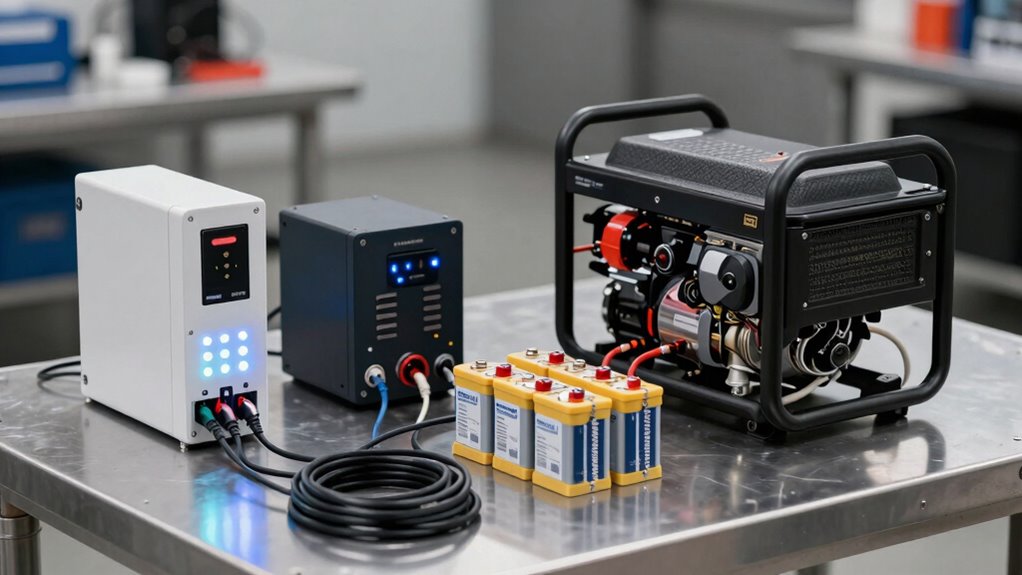
When your main power source fails, having a layered backup power system guarantees your essential devices stay operational without interruption. Relying on just one backup solution leaves you vulnerable—if it fails or runs out of fuel, you’re left in the dark. Instead, a layered approach combines multiple backup methods, ensuring continuous power regardless of circumstances. This strategy recognizes that no single solution can cover every scenario, so integrating various methods creates a resilient, reliable power system.
A layered backup system ensures uninterrupted power by combining multiple solutions for maximum resilience and reliability.
One critical aspect of this layered setup is renewable integration. By incorporating solar panels or wind turbines, you harness renewable energy sources to supplement your backup power. These sources can recharge your energy storage units during normal operation, reducing dependency on fuel-based generators and lowering overall costs. Renewable integration also makes your system more sustainable, aligning with eco-friendly practices and decreasing your carbon footprint. When the grid goes down, your renewable-powered energy storage continues to provide power, ensuring your essential devices stay online without interruption.
Energy storage plays a crucial role within this layered system. High-capacity batteries or other storage solutions act as the central hub, storing excess energy generated from renewables or the grid during normal operation. When power fails, these batteries discharge to keep your critical devices running smoothly. Energy storage isn’t just about backup; it also helps balance supply and demand, smoothing out fluctuations in renewable generation and increasing overall system efficiency. With proper energy storage, you gain a dependable source of power that can be tapped into instantly, minimizing downtime and preventing disruptions.
Having multiple layers means you’re prepared for different types of outages—short-term blackouts, extended power failures, or unpredictable renewable energy variability. For instance, during a brief outage, your energy storage might handle the load. In longer outages, renewable sources and backup generators work together, providing sustained power. This redundancy ensures there’s no single point of failure, making your system more robust and adaptable. Utilizing diverse backup methods helps further enhance your system’s resilience by addressing various failure scenarios. Implementing automated switching systems can also improve response time and reduce manual intervention during outages. Additionally, integrating smart controls can optimize the coordination between different power sources, improving overall system performance.
A layered backup power system isn’t just about avoiding inconvenience; it’s about creating resilience. By combining renewable integration with energy storage and other backup options, you build a flexible, self-sufficient network that can withstand diverse challenges. Incorporating energy storage can also help optimize overall system performance and efficiency. Additionally, using multiple backup sources ensures that your system remains operational even if one method encounters issues. This approach reduces your reliance on one-size-fits-all solutions, empowering you to maintain control over your power needs. In the end, a multi-layered setup offers peace of mind, knowing that your essential devices remain powered no matter what happens to the main grid.
As an affiliate, we earn on qualifying purchases.
Frequently Asked Questions
How Do Layered Backup Systems Differ From Traditional Single-Source Backups?
Layered backup systems differ from traditional single-source backups by providing multiple layers of redundancy planning, which enhances system resilience. Instead of relying on just one backup source, you create diverse backup options that activate if one fails. This approach guarantees continuous operation, reduces downtime, and protects against various failure scenarios, making your system more robust. You actively manage and test these layers, keeping your backup strategy adaptable and reliable under different conditions.
What Are the Initial Costs of Implementing Layered Backup Power?
Imagine building a multi-layered fortress instead of a single wall. You’ll face initial costs for battery redundancy, ensuring each layer has backup power, and for power scalability, allowing your system to grow. These investments protect you from costly outages later. While upfront expenses are higher, you gain resilience and flexibility, reducing long-term risks and maintenance costs. This layered approach provides a sturdy, adaptable shield for your critical operations.
How Often Should Layered Backup Systems Be Tested?
You should test your layered backup systems at least twice a year to guarantee reliability. Regular testing helps you identify issues before emergencies occur, considering battery lifespan and maintenance schedules. By conducting these tests periodically, you maintain peak performance, extend battery life, and ensure your backup power remains ready when needed. Consistent testing is a proactive step that minimizes downtime and protects your systems effectively.
Can Layered Backup Power Solutions Be Integrated With Existing Infrastructure?
Imagine fitting a new puzzle piece seamlessly—layered backup power solutions can easily integrate with your existing infrastructure. You can connect renewable energy sources and incorporate smart grid technology smoothly, enhancing reliability without overhauling your system. Many businesses have successfully added layered backups, leveraging existing wiring and controls, ensuring a resilient power network. This approach minimizes disruption, maximizes efficiency, and makes your infrastructure future-ready with adaptable, scalable solutions.
What Are Common Challenges Faced When Deploying Layered Backup Power?
You’ll face challenges like ensuring redundant systems work seamlessly together and avoiding unnecessary complexity. It’s essential to develop effective maintenance strategies to keep all backup layers reliable and ready. Coordinating different power sources can be tricky, especially when integrating with existing infrastructure. Regular testing and clear protocols help prevent failures, but balancing costs and complexity remains a common hurdle in deploying layered backup power solutions.
As an affiliate, we earn on qualifying purchases.
Conclusion
Remember, relying on a single backup power solution is like putting all your eggs in one basket. Layered backup power systems give you resilience, ensuring that if one fails, others kick in to keep you running. By diversifying your approach, you’re better prepared for unexpected outages. As the saying goes, “Don’t put all your eggs in one basket.” Embrace layered backup power to protect your operations and stay a step ahead of disruptions.
portable generator for backup power
As an affiliate, we earn on qualifying purchases.
As an affiliate, we earn on qualifying purchases.
As an affiliate, we earn on qualifying purchases.
Fall yard work Picks
leaf blowers
As an affiliate, we earn on qualifying purchases.