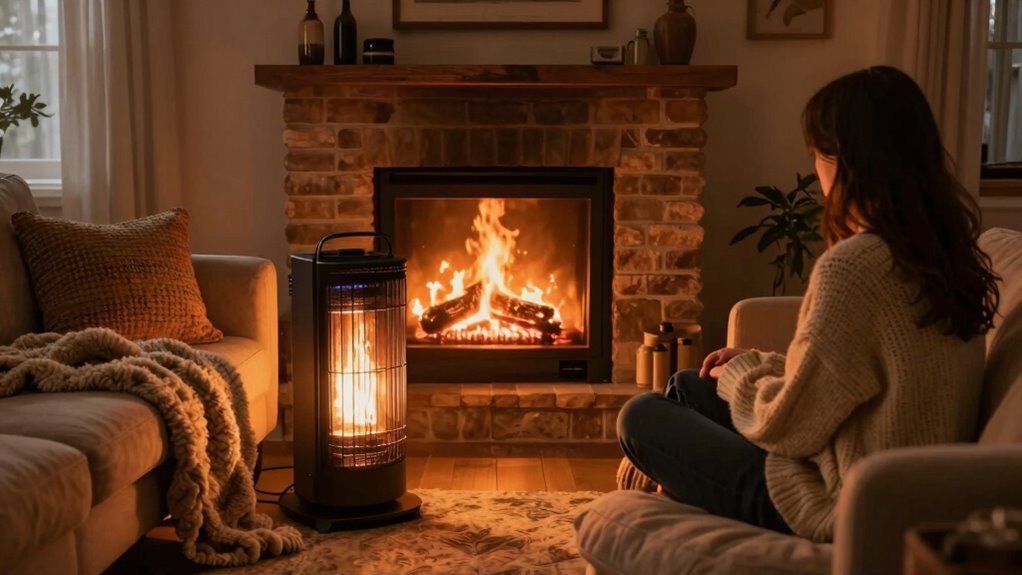

When it comes to heat retention, warming people isn’t the same as heating a space. Proper insulation traps warmth inside, preventing heat from escaping, while thermal mass helps retain that heat over time. Combining high-quality insulation with materials that store heat creates a stable and cozy environment. You can’t just focus on individual comfort—you need to think about how well your space keeps heat in. Keep going to discover how balancing insulation and thermal mass makes all the difference.

Get garden gear delivered free with Prime
- Fast, free delivery on millions of items
- Prime Video, Amazon Music and more included
- Member-only deals all year
Key Takeaways
- Warming people focuses on individual comfort, while heating space aims to raise overall room temperature.
- Effective heat retention involves insulation and thermal mass, not just personal heating methods.
- Insulation minimizes heat loss, maintaining a stable environment, unlike localized personal warmth.
- Thermal mass stores and gradually releases heat, stabilizing room temperature beyond individual heating efforts.
- Proper space heating requires balancing insulation, thermal mass, and heating systems, not just personal warmth.

Ever wondered how some materials keep heat in better than others? It all comes down to how well they manage heat transfer, which is where insulation efficiency and thermal mass come into play. When you’re trying to retain warmth, the goal isn’t just about making people feel cozy; it’s about understanding how the space itself holds onto heat. Insulation efficiency determines how effectively a material prevents heat from escaping, while thermal mass influences how well a space retains that heat over time.
Think of insulation as the barrier that keeps warmth from seeping out. High-quality insulation minimizes heat loss through walls, floors, and ceilings, so your space stays warmer longer without constantly running the heater. But insulation alone doesn’t tell the whole story. If the building’s thermal mass is low, the space heats up quickly but also cools down just as fast. Materials with high thermal mass—like concrete, brick, or stone—absorb and store heat during the day, then slowly release it when the temperature drops. This creates a more stable indoor environment, reducing the need for constant heating. Additionally, understanding the thermal conductivity of materials helps you select the right options for optimal heat retention. Recognizing the heat transfer mechanisms involved can further optimize your approach to energy efficiency. Incorporating appropriate materials effectively can make a notable difference in how well your space retains warmth.
High-quality insulation keeps warmth in, but thermal mass stabilizes indoor temperatures for long-lasting comfort.
You need to *ponder* both aspects when aiming for effective heat retention. Good insulation traps heat inside, but if the space’s thermal mass is too low, you might experience rapid temperature swings. Selecting the right combination of insulation and thermal mass is key to achieving optimal energy efficiency. Incorporating thermal mass thoughtfully can enhance your space’s ability to maintain consistent temperatures over time. Conversely, a high thermal mass can keep a room warm long after the heating turns off, but only if the insulation is also sufficient. Without proper insulation, heat will escape before the thermal mass can do its job, making your efforts less effective. The interaction between insulation and thermal mass is essential for designing energy-efficient spaces for different climates.
Understanding how these two elements interact helps you create a more energy-efficient space. For example, in colder climates, combining high insulation efficiency with materials that have substantial thermal mass can lead to significant energy savings and a more comfortable environment. You’ll find that the right balance between insulation and thermal mass can prevent unnecessary heat loss, maintain consistent temperatures, and reduce your reliance on heating systems.
In essence, warming people isn’t just about personal comfort; it’s about controlling the environment around you. You want to focus on insulation efficiency to trap heat and leverage thermal mass to store and gradually release that warmth. When these two work together, you get a space that stays warm longer, uses energy wisely, and provides a more stable, cozy atmosphere—making a noticeable difference in how effectively you retain heat in your space.
As an affiliate, we earn on qualifying purchases.
Frequently Asked Questions
How Can I Improve Personal Heat Retention Effectively?
To improve personal heat retention, focus on proper body layering with thermal insulation. Wear multiple layers of moisture-wicking and insulating fabrics to trap heat effectively. Use a thermal base layer next to your skin, add insulating layers, and top with a waterproof shell if needed. Adjust layers as needed, and make sure your clothing fits well without restricting movement, maximizing heat retention and keeping you warmer in cold environments.
Does Clothing Choice Impact Overall Heat Retention?
Think of your clothing as a fortress against the cold, much like a knight’s armor. Yes, your clothing choice impacts heat retention considerably. Opt for garments with good insulation and layer wisely; layering traps heat better, creating a barrier against the chill. Proper garment layering and selecting clothing with quality insulation are essential for maintaining warmth and maximizing your body’s heat retention during cold days.
Are There Health Risks Associated With Over-Heating a Space?
Overheating a space can pose health risks, such as thermal discomfort, dehydration, and even heat exhaustion. You might experience dizziness, headaches, or difficulty breathing if the temperature gets too high. Overheating risks increase when the environment lacks proper ventilation or humidity control. To stay safe, aim for a comfortable, moderate temperature and monitor the space regularly, ensuring it doesn’t become uncomfortably warm or stuffy.
How Does Humidity Affect Heat Retention Indoors?
Imagine you’re in a medieval castle—humidity levels dramatically influence how warm you feel indoors. Higher humidity traps heat, making the space feel cozier, while low humidity can cause drafts and make it harder to retain warmth. Managing indoor comfort involves balancing humidity levels because they directly impact heat retention. Proper humidity guarantees you stay warm without over-relying on heating, making your space both comfortable and energy-efficient.
Can Heat Retention Methods Save Energy Costs?
Yes, heat retention methods can save you energy costs. By improving thermal insulation, you minimize heat loss, making your heating system more efficient. Better insulation keeps warmth inside, reducing the need for constant heating and lowering energy consumption. This boosts your overall energy efficiency, saving you money on utility bills. Investing in effective insulation and sealing drafts guarantees you preserve more heat, ultimately cutting costs and making your home more comfortable.
As an affiliate, we earn on qualifying purchases.
Conclusion
Remember, warming people isn’t the same as heating a space. While a cozy blanket or heated seat directly impacts your comfort, it doesn’t change the room’s overall temperature. Think of it like wearing a raincoat in a storm versus fixing the leak—one offers immediate relief, the other addresses the bigger problem. By understanding this difference, you can choose smarter ways to stay warm, making comfort both personal and efficient. Stay warm, inside and out.
energy efficient home insulation
As an affiliate, we earn on qualifying purchases.
As an affiliate, we earn on qualifying purchases.
As an affiliate, we earn on qualifying purchases.
Fall yard work Picks
leaf blowers
As an affiliate, we earn on qualifying purchases.