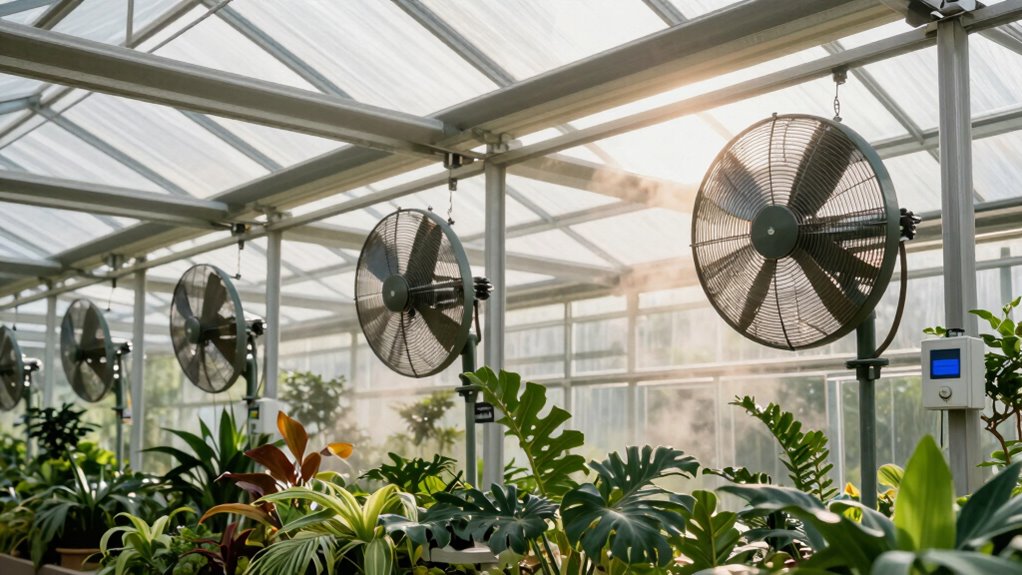

To control your greenhouse climate effectively, focus on strategic ventilation and fan placement. Use exhaust fans to remove excess heat and intake fans to bring in fresh air, keeping humidity levels balanced. Position fans near vents or along walls to promote even airflow and prevent hot spots. Combining natural and mechanical methods helps maintain consistent temperatures and healthy humidity, reducing the risk of disease. Continue exploring to discover how ideal setup can boost your greenhouse’s performance.
Key Takeaways
- Proper fan placement ensures even airflow, reduces hot spots, and promotes healthy plant growth.
- Natural ventilation utilizes vents and open sides to regulate temperature cost-effectively, supplemented by mechanical systems if needed.
- Exhaust fans remove excess heat and humidity automatically, maintaining optimal climate conditions inside the greenhouse.
- Strategic airflow reduces mold and disease risk by preventing excess moisture and promoting moisture escape.
- Combining natural and mechanical ventilation optimizes energy use, stabilizes temperature and humidity, and enhances plant health.

Have you ever wondered how greenhouse growers keep plants healthy and productive regardless of outside weather conditions? The secret lies in effective climate control, especially through proper ventilation strategies. Ventilation isn’t just about letting fresh air in; it’s about maintaining the right environment inside your greenhouse to promote healthy growth and prevent issues like mold, disease, or heat stress. To do this effectively, you need to pay close attention to fan placement. Properly positioned fans help circulate air evenly throughout the space, reducing hot spots and ensuring fresh, CO2-rich air reaches every part of your plants. When planning fan placement, consider the layout of your greenhouse, the location of vents, and the natural airflow patterns. Placing fans near intake vents can help draw in cool air, while positioning them at strategic points along the ceiling or sidewalls ensures even distribution. The goal is to create a continuous, gentle airflow that refreshes the environment without causing drafts that could damage delicate plants.
In addition to fan placement, understanding how to implement various ventilation strategies enhances your control over the climate. Natural ventilation, which uses vents, windows, or open sides, is cost-effective and energy-efficient. However, it relies heavily on outside weather conditions, so it’s often combined with mechanical systems for more consistent results. Mechanical ventilation involves exhaust fans and intake fans working together to manage airflow, especially during extreme weather or when natural ventilation isn’t sufficient. You can set exhaust fans to activate automatically when temperatures rise too high, pulling hot air out and drawing in cooler air. Intake fans, meanwhile, can be used to introduce fresh air at controlled rates, helping to maintain optimal humidity and CO2 levels. Combining these strategies allows you to fine-tune your greenhouse environment, minimizing temperature fluctuations and ensuring your plants remain in their ideal growing conditions.
Fan placement and ventilation strategies also influence humidity levels, which are just as critical as temperature. Proper airflow helps prevent excess moisture, reducing the risk of fungal diseases and mold. By positioning fans to promote cross-ventilation, you can encourage moisture to escape and keep the air dry enough for healthy plant development. Remember, the key is to balance airflow—too much can cause drafts and stress plants, while too little can lead to stagnation and disease. Regularly inspecting and adjusting fan placement, along with integrating different ventilation strategies, gives you control over your greenhouse’s climate. This not only improves plant health but also boosts productivity and reduces energy costs, making your greenhouse more sustainable and profitable.
Frequently Asked Questions
How Do I Balance Humidity and Temperature Simultaneously?
To balance humidity and temperature, you should use humidification strategies like misting or ultrasonic humidifiers to increase humidity when it’s too low. When humidity is too high, employ dehumidification techniques such as exhaust fans or dehumidifiers to remove excess moisture. Adjust ventilation to regulate both factors simultaneously, ensuring proper airflow. Regular monitoring with a hygrometer and thermometer helps you fine-tune these systems for ideal greenhouse conditions.
What Are the Best Practices for Energy-Efficient Ventilation?
To achieve energy-efficient ventilation, focus on airflow optimization by using properly sized fans and strategically placed vents. Implement ventilation strategies like exhaust fans during the hottest parts of the day and passive vents when outdoor conditions are suitable. Regularly monitor temperature and humidity levels to avoid unnecessary fan operation. This approach reduces energy use while maintaining a healthy, balanced greenhouse environment.
How Can I Automate Climate Control Systems Effectively?
Getting your climate control systems to run like clockwork is key. You should automate watering and ventilation based on real-time data from well-calibrated sensors, ensuring plants get just what they need without guesswork. Regularly calibrate your sensors and set up automated triggers for ventilation and watering. This way, you’re in the driver’s seat, maintaining ideal conditions efficiently and letting technology do the heavy lifting.
What Tools Are Needed to Monitor Greenhouse Climate Conditions?
To monitor greenhouse climate conditions effectively, you need reliable sensors for temperature, humidity, and CO2 levels. Regular sensor calibration guarantees accurate readings, preventing costly mistakes. Data logging tools are essential for tracking climate trends over time, helping you make informed adjustments. Combine these tools with a user-friendly interface to monitor and analyze data easily, securing ideal growing conditions without guesswork.
How Does External Weather Influence Internal Greenhouse Climate?
External weather considerably influences your greenhouse climate by affecting temperature, humidity, and airflow. When weather conditions vary, your internal environment experiences climate variability that can impact plant health. You need to monitor external factors like wind, sunlight, and rainfall to adjust ventilation, fans, and heating accordingly. By understanding this relationship, you can better maintain ideal growing conditions, ensuring your plants thrive despite changing external weather patterns.
Conclusion
Don’t worry if managing greenhouse climate feels overwhelming at first. With a good understanding of ventilation, fans, and heat control, you’ll quickly gain confidence. Remember, it’s all about finding the right balance—start simple, monitor your plants, and adjust as needed. Even if you hit a few bumps, it’s part of the learning process. Before you know it, you’ll create a thriving environment where your plants can flourish, no guessing required.