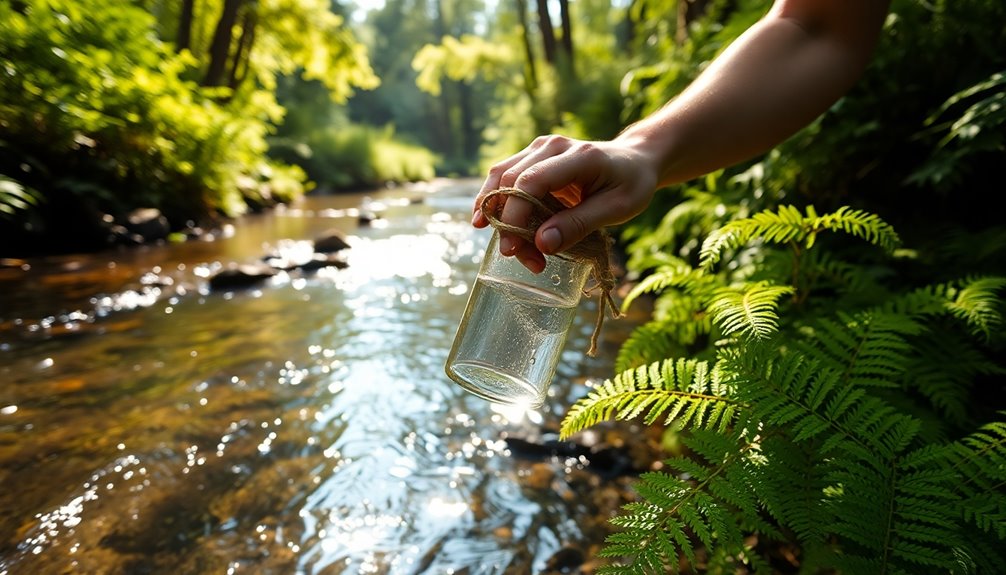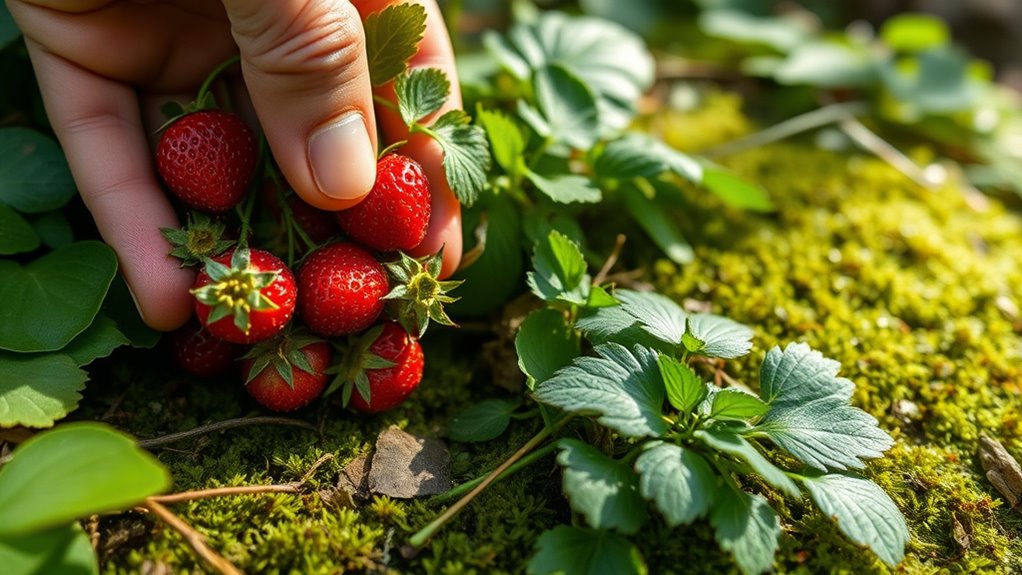
To forage for survival quick-energy wild foods, focus on identifying safe options like berries, nuts, and roots. Recognize key features such as leaf shape, growth patterns, and environment to distinguish edible plants from toxic lookalikes. Always verify the safety of plants before tasting, and learn to identify common poisonous species first. Developing your skills in quick identification can make a big difference; continue exploring to discover more about safe and nutritious wild foods.
Key Takeaways
- Learn to quickly identify edible wild foods like berries, roots, and nuts, focusing on distinguishing features from toxic lookalikes.
- Prioritize safety by verifying plant identification with reliable guides and understanding local poisonous plants.
- Harvest energy-rich foods such as blackberries, wild carrots, and acorns, ensuring proper preparation to remove toxins.
- Recognize ideal growth environments for quick-energy foods to optimize foraging efficiency in survival situations.
- Continuously practice and refine identification skills to boost confidence and ensure safe, effective wild food collection.
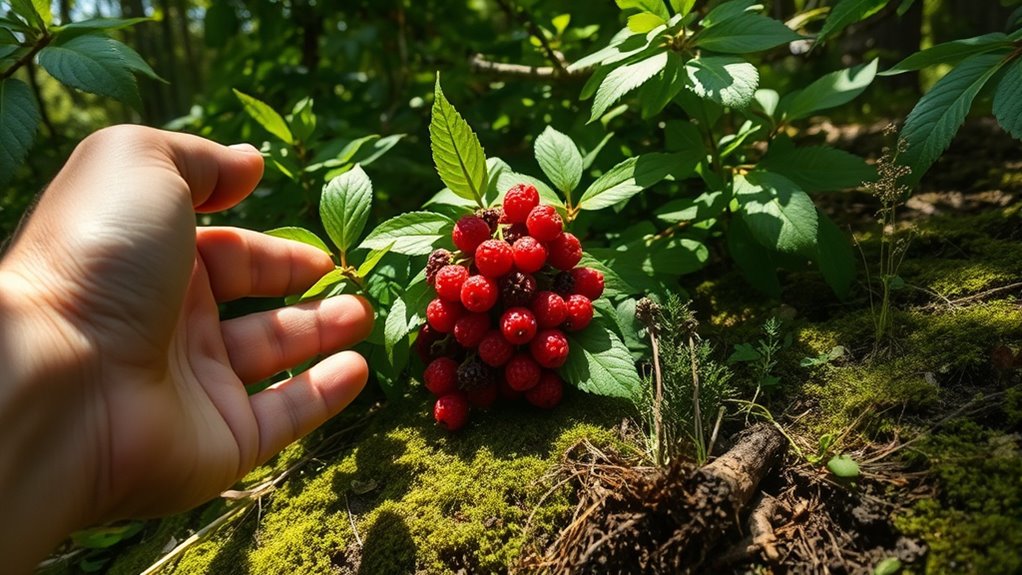
When survival is on the line, foraging becomes an essential skill that can mean the difference between life and death. Knowing how to identify edible plants quickly and accurately is critical. Edible plant identification isn’t just about recognizing a few common herbs; it’s about understanding the subtle differences that distinguish safe foods from potentially deadly lookalikes. In a survival situation, you won’t have time for guesswork or mistakes. You need to be confident in your ability to spot plants that provide quick energy without risking your health. This means studying key features like leaf shape, plant color, growth patterns, and the environment where they thrive. The more familiar you are with local flora, the faster you can gather nutritious wild foods under pressure. Developing a comprehensive understanding of plant features is crucial for safe foraging in survival scenarios.
Wild food safety is paramount. Many plants that appear edible can be toxic if misidentified or prepared improperly. For example, some wild berries are indistinguishable from poisonous varieties, and certain roots or leaves may contain harmful compounds. Before consuming any wild plant, you must verify its safety through reliable sources or field guides. Always test new foods in small amounts initially, especially if you’re unsure. If possible, learn about common poisonous plants in your area and their distinguishing features to avoid accidental ingestion. Remember, even edible plants can cause stomach upset if not prepared correctly, so proper identification and processing are key to safe foraging.
Wild food safety is critical; verify plants with reliable guides and test small amounts before consuming.
Quick-energy wild foods are often rich in carbohydrates and natural sugars, making them ideal for an emergency. Wild edibles like berries, nuts, and certain roots can restore energy rapidly. Berries such as blackberries or raspberries are packed with antioxidants and vitamins, but you must be certain they are safe to eat before consuming them. Nuts like acorns require proper leaching to remove tannins, but once prepared, they offer a dense source of calories. Roots like wild carrots or radishes also provide quick energy, but only if you’re confident in their identification. Knowing where and how these plants grow helps you harvest efficiently and safely.
In survival scenarios, your ability to quickly identify edible plants and assess their safety influences your chances of survival. This knowledge allows you to tap into wild food sources confidently, ensuring you get the energy you need without risking poisoning. Continuous learning and practice improve your skills, making you more adept at recognizing safe, nutritious wild foods under pressure. Remember, the key to effective foraging for survival is precision—know what you’re eating, understand the risks, and always prioritize wild food safety. With the right knowledge, you’ll turn the wild into a valuable resource to keep you alive when it matters most.
Frequently Asked Questions
What Are the Safest Wild Foods to Consume Without Prior Experience?
You should start with safe wild berries like blackberries, strawberries, or raspberries, which are easy to identify and generally safe. Edible mushrooms such as morels and chanterelles are also good options, but only if you’re confident in your identification skills. Always double-check these foods against reputable guides or consult experienced foragers, as misidentification can be dangerous. When in doubt, avoid consuming unknown wild foods.
How Can I Identify Edible Versus Poisonous Plants Accurately?
You can accurately identify edible plants by practicing plant identification skills and consulting reliable field guides. Always perform toxicity testing by testing a small amount and waiting to see if you experience any adverse reactions before consuming more. Use multiple identification methods, such as examining leaf shapes, flower patterns, and growth habits, to avoid poisonous plants. When in doubt, avoid consumption until you’re completely sure of the plant’s safety.
What Tools Are Essential for Efficient Foraging in the Wild?
Think of yourself as a seasoned explorer, equipped with the right tools for the journey. Your essential foraging gear includes a sharp knife, a portable plant identification guide, and a container for samples. These tools help you quickly spot, harvest, and verify edible plants. With accurate plant identification at your fingertips, you can confidently gather wild foods, turning the wilderness into a reliable source of sustenance.
How Do Seasonal Changes Affect Wild Food Availability?
Seasonal changes directly impact wild food availability through shifting plant cycles and wildlife migration patterns. As seasons change, you’ll notice certain plants flourish while others fade, so timing your foraging is essential. Wildlife migration also affects food sources; some animals become easier to find at specific times. By understanding these patterns, you can optimize your foraging efforts and gather the most energy-rich, seasonal wild foods available.
Are There Any Legal Restrictions on Foraging in Public Lands?
Legal considerations on public land regulations can feel like charting a maze, but they’re there to protect nature and you. You might face restrictions on foraging in national parks, wildlife refuges, or designated wilderness areas. Always check local rules before gathering wild foods, as some lands prohibit or limit foraging. Ignoring these regulations risks fines or penalties, so stay informed and respect the land to enjoy foraging responsibly.
Conclusion
As you gather wild foods, remember that nature’s abundance can be both a gift and a challenge. While these quick-energy sources sustain you in times of need, they also demand respect and knowledge. Imagine yourself amidst lush greenery, the sun warming your back as you harvest life’s hidden treasures. In this dance with nature, survival hinges on your awareness—embracing its beauty and respecting its power, you’ll find resilience in every foraged bite.