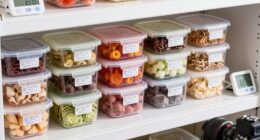
To effectively store food for emergencies, focus on keeping supplies in a cool, dark, and dry place to extend their shelf life. Use airtight containers or vacuum-sealed bags to prevent moisture, pests, and air from damaging your food. Include a variety of nutritious options like canned goods, dried fruits, and grains to stay balanced. Regularly check expiration dates and rotate your stock to ensure freshness. Continue exploring to learn more about building a resilient food storage system.
Key Takeaways
- Store a variety of long-lasting, nutrient-dense foods like canned, dried, and freeze-dried items for balanced nutrition.
- Keep supplies in cool, dark, dry environments to maximize shelf life and prevent spoilage.
- Use airtight containers, vacuum sealing, and proper packaging to protect against moisture, pests, and air damage.
- Regularly rotate stock, check expiration dates, and replace items to maintain freshness and safety.
- Organize your storage system with tracking tools to ensure easy access and efficient management during emergencies.

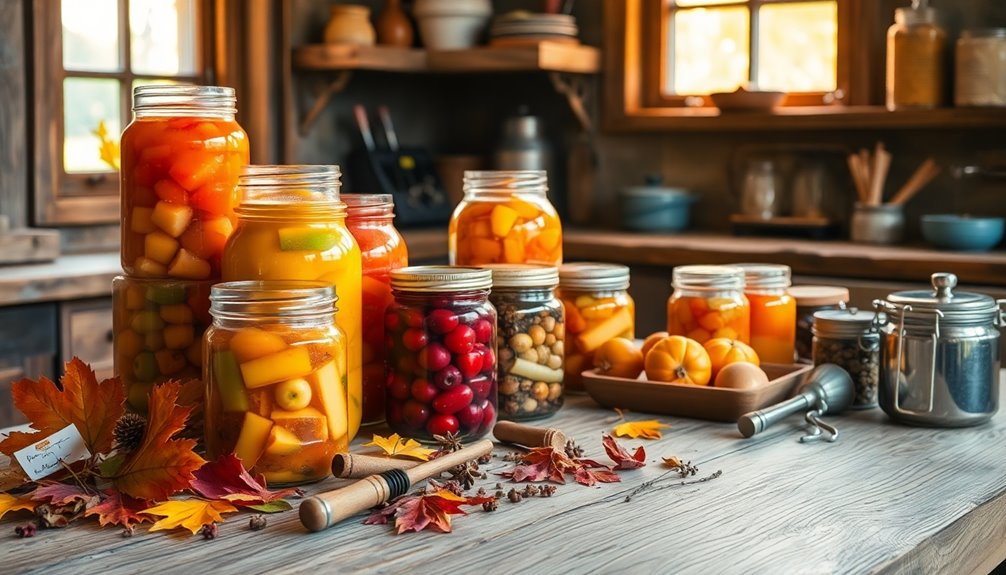
Proper food storage is fundamental to keep your supplies fresh, safe, and ready whenever you need them. When it comes to emergency preparedness, understanding how to store food effectively can make a considerable difference in your ability to sustain yourself during challenging times. One of the most important aspects is long term preservation, which involves choosing the right foods and storage methods to guarantee they remain edible and nutritious for extended periods. You want to avoid spoilage and waste, so selecting foods with a long shelf life—such as canned goods, dried grains, and freeze-dried items—is indispensable. Proper packaging, like airtight containers and vacuum sealing, helps prevent moisture, pests, and air from degrading your supplies over time. Additionally, rotating your stock regularly ensures that older items are used first, maintaining the freshness and quality of your stored foods.
Maintaining nutritional balance is equally paramount when stockpiling for emergencies. You need a variety of foods that provide essential nutrients to keep you healthy and energized during stressful situations. Relying solely on comfort foods or high-calorie items can lead to nutritional deficiencies or fatigue. Incorporate a mix of proteins, carbohydrates, healthy fats, vitamins, and minerals. Canned beans, lean meats, whole grains, dried fruits, and nuts are excellent options that can be stored easily and offer a balanced diet. Keep in mind that some nutrients, like vitamin C and certain B vitamins, can degrade over time, so consider including supplements or foods rich in these vitamins that can withstand long storage periods. Planning for a diverse range of foods also helps prevent menu fatigue, so you’re more likely to stick with your storage plan during extended emergencies.
Another key to successful long-term preservation and nutritional balance is proper storage conditions. Store your supplies in a cool, dark, and dry place—temperature fluctuations, humidity, and light can accelerate food spoilage. Using temperature-controlled environments, like a basement or cellar, can markedly extend the shelf life of your food. Keep track of expiration dates and regularly check your inventory to guarantee everything remains safe and nutritious. Additionally, utilizing food storage apps can help you organize and monitor your supplies efficiently. When you understand how to combine effective preservation techniques with smart nutritional planning, you create a resilient food storage system. This approach not only safeguards your supplies but also supports your health during difficult times, giving you peace of mind that you’re prepared for any emergency.
Frequently Asked Questions
How Long Can Stored Food Realistically Last Without Spoiling?
Stored food can last anywhere from a few months to several years, depending on expiration dates and storage conditions. You should keep items in a cool, dry, and dark place to maximize shelf life. Canned and dried goods often last longer, but always check expiration dates regularly. Proper storage conditions help prevent spoilage, ensuring your emergency supplies stay safe and edible when you need them most.
What Are the Best Types of Containers for Long-Term Storage?
You might think all containers work equally, but airtight containers truly preserve your food best. Look for BPA-free options to avoid harmful chemicals. Glass or heavy-duty plastic containers with secure seals keep moisture and pests out, ensuring your supplies stay fresh longer. These choices also prevent cross-contamination and are easy to clean, making them ideal for long-term storage. Trust quality airtight containers to safeguard your emergency food supply effectively.
How Do I Prevent Pests From Contaminating Stored Food?
To prevent pests from contaminating your stored food, use pest-proof containers made of metal or thick plastic with airtight seals. Keep your storage area clean and dry, and regularly inspect for signs of pests. You can also use natural repellents like bay leaves or dried herbs around your containers. These steps create a barrier, keeping pests out and your food safe for long-term storage.
What Are the Signs of Food Spoilage or Contamination?
Spot spoilage swiftly by spotting subtle signs like sour smells, mold growth, or strange textures. Look for expiration dates to determine freshness; if food surpasses these dates or shows mold, discard it immediately. Discoloration or slimy surfaces signal contamination. Trust your senses—if it smells off, looks unusual, or tastes different, don’t risk it. Staying vigilant keeps your emergency food supply safe and sound.
How Should I Rotate My Emergency Food Supply?
You should regularly rotate your emergency food supply by checking expiration dates and following a consistent rotation schedule. Use the oldest items first to guarantee nothing expires unused. Mark dates on packaging or create a schedule to remind you when to replace items. This helps maintain a fresh, reliable stock, reduces waste, and ensures you’re always prepared with safe, edible food in an emergency.
Conclusion
By mastering these food storage fundamentals, you’re building a safety net that’s as steady as a lighthouse in a storm. Imagine your pantry as a fortress, ready to shield you and your loved ones when times get tough. Don’t wait for the storm to hit—prepare now, and turn uncertainty into confidence. Remember, a well-stocked supply isn’t just food; it’s peace of mind, shining brightly in the darkness of an emergency.