
Fishing without rods uses traditional methods like handlines, nets, and weirs to catch fish sustainably. Handlines involve baited hooks with direct control, while nets such as gillnets or seine nets are placed strategically to minimize environmental impact. Weirs guide fish into traps with little disturbance to habitats. These methods promote responsible fishing, help conserve aquatic ecosystems, and support local communities’ traditions. Keep exploring to discover how these techniques help protect fish populations and promote harmony with nature.
Key Takeaways
- Handlines, nets, and weirs are traditional fishing methods that promote sustainability and minimal environmental impact.
- Handlines allow precise catch control with baited hooks, reducing bycatch and habitat disturbance.
- Nets such as gillnets and seine nets, when responsibly managed, support healthy fish populations and prevent overfishing.
- Weirs are natural barriers that guide fish into traps, enabling selective harvesting with minimal ecological disruption.
- These methods foster sustainable fishing practices, conserve aquatic ecosystems, and preserve traditional community livelihoods.
Fishing without rods might sound impossible, but innovative techniques and tools have made it a viable option for anglers seeking a different experience. Instead of relying on modern fishing rods, you can explore methods like handlines, nets, and weirs that have been used for centuries. These traditional methods often align with sustainable practices, allowing you to harvest fish with minimal environmental impact. By understanding and respecting the natural balance of aquatic ecosystems, you can fish responsibly and preserve resources for future generations.
Using a handline involves a simple setup: a single line with baited hooks that you hold or attach to a stationary object. It offers precise control and reduces bycatch, making it a sustainable choice. Handlines are especially effective in small-scale fishing and are often employed by local communities with deep roots in traditional methods. They require patience and skill but provide a close connection to the environment that modern gear often lacks. This method minimizes habitat disturbance because it doesn’t involve large equipment or invasive techniques.
Using a handline offers precise, sustainable fishing with minimal habitat disturbance and a deep connection to traditional methods.
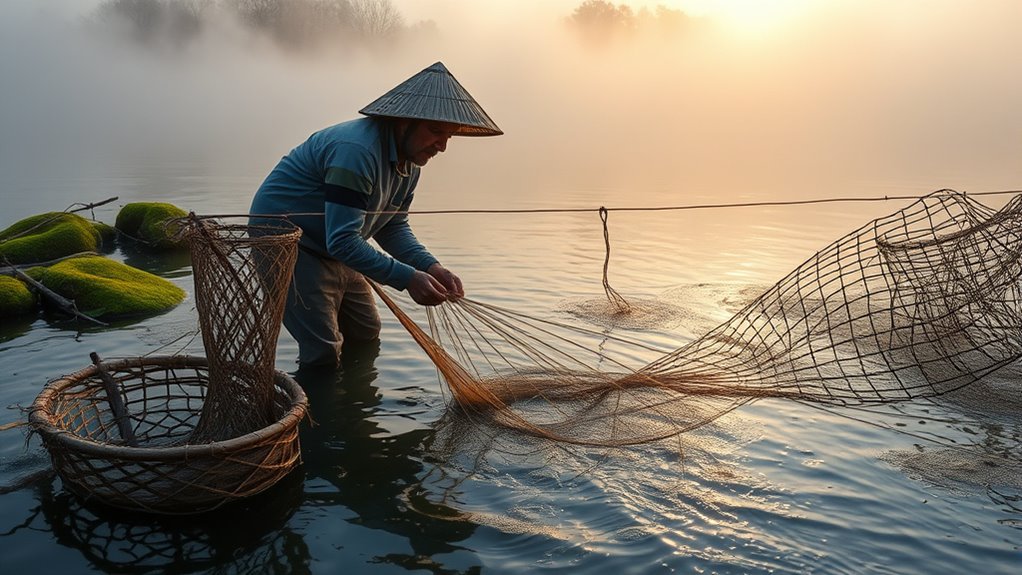
Nets present another way to fish without rods, and their design varies from simple gillnets to more complex trammel or seine nets. When used responsibly, nets can be part of sustainable practices, especially if you adhere to local regulations regarding mesh size and fishing seasons. Properly managed nets help prevent overfishing by targeting specific species and sizes, ensuring healthier fish populations. Nets can also be deployed in strategic locations, such as along riverbanks or near estuaries, to catch fish efficiently without disrupting the broader ecosystem.
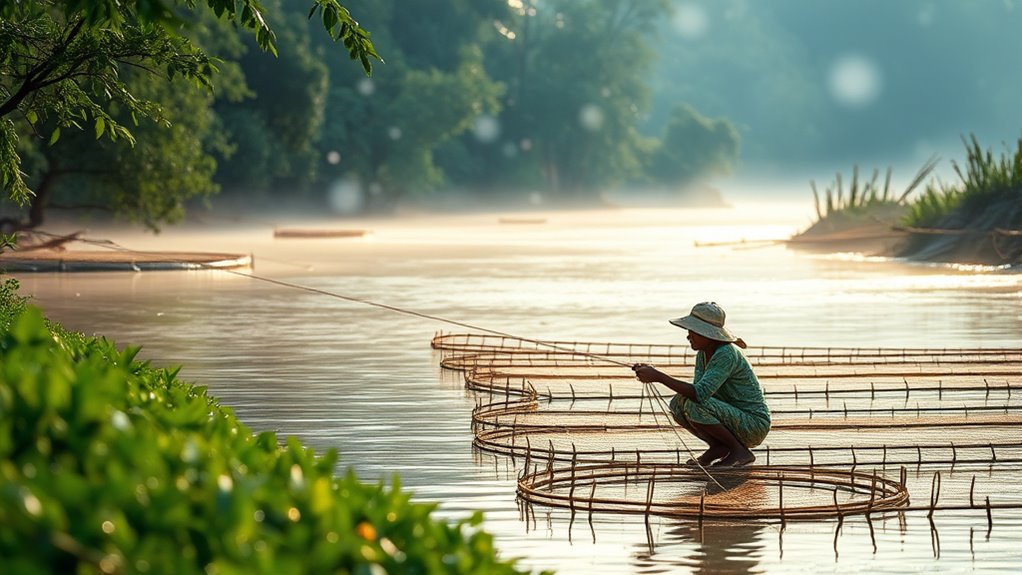
Weirs, which are traditional barriers built across streams or river mouths, guide fish into traps or enclosures. These structures are often crafted from natural materials, blending seamlessly into the environment. Weirs allow you to manage fish passage and harvest with minimal ecological footprint, especially when maintained and used according to traditional practices. They support sustainable fishing by allowing fish to pass freely during spawning seasons and preventing overharvesting. Using weirs fosters a harmonious relationship with the environment, respecting the lifecycle of aquatic species.
Frequently Asked Questions
What Are the Legal Regulations for Handline and Net Fishing?
You need a license to fish with handlines and nets, and regulations vary by location. You must follow rules on prohibited gear, like certain types of nets or traps that are banned to protect fish populations. Always check local regulations before fishing, as violating license requirements or using prohibited gear can lead to fines or penalties. Staying informed helps you fish legally and responsibly.
How Do I Choose the Right Type of Net for Specific Fish?
To choose the right net for specific fish, consider their behavior and preferred habitat. Use a net with a mesh size that matches the size of the fish you target, ensuring they don’t escape. For fast-moving or schooling fish, choose a net with a finer mesh and a design that allows quick, efficient capture. Matching your net type to fish behavior increases your catch success while minimizing bycatch.
What Safety Precautions Should I Take When Setting Weirs?
When setting weirs, you should wear safety gear like gloves and sturdy boots to protect yourself from cuts and slips. Always check for clear, safe water conditions and keep an emergency plan in mind in case of accidents. Make sure someone knows your location, and carry a communication device. Stay alert, avoid overloading the weir, and be cautious of sharp tools and tangled nets to stay safe.
Are There Sustainable Practices for Non-Rod Fishing Methods?
Yes, you can practice sustainable non-rod fishing by using eco-friendly gear that minimizes habitat damage and by supporting community-based management. These approaches encourage responsible fishing, reduce overfishing, and promote healthy aquatic ecosystems. When you choose eco-friendly equipment and participate in local management efforts, you help guarantee that fish populations remain healthy for future generations while maintaining your fishing traditions.
How Can I Identify the Best Fishing Locations Without a Rod?
You can spot the best fishing spots by paying attention to biodiversity hotspots and seasonal migration patterns. Look for areas teeming with diverse aquatic life, especially during migration seasons when fish gather in predictable spots. Local knowledge, observing water currents, and noting where fish are actively feeding are key. Keep your ear to the ground and your eyes open—sometimes, the best spots are where nature’s call is loudest.
Conclusion
So, next time you think of fishing, remember there’s more than just rods. With handlines, nets, and weirs, you become a quiet explorer, weaving through water like a gentle breeze. These methods let you connect with nature’s rhythm, turning each catch into a story written in ripples. Embrace these ancient techniques, and you’ll find yourself part of a timeless dance beneath the surface, where patience and skill turn water into your own secret garden.