
In emergencies, choose safe heating options like electric heaters designed for indoor use, but always use them with proper ventilation to prevent carbon monoxide buildup. Keep heaters away from flammable objects, never leave them unattended, and avoid overloading electrical outlets. If you opt for fuel-powered units, ensure the area is well-ventilated and install a carbon monoxide detector nearby. Following these guidelines helps you stay safe while staying warm—learn more to safeguard yourself and loved ones.
Key Takeaways
- Use electric heaters rated for indoor use and ensure outlets can handle the wattage safely.
- Always maintain at least three feet distance between heaters and flammable objects.
- Ventilate indoor spaces by cracking windows or doors when using fuel-powered or kerosene heaters.
- Install carbon monoxide detectors in rooms with fuel-based heaters for early hazard detection.
- Keep children and pets away from heaters and avoid leaving heaters unattended to prevent accidents.

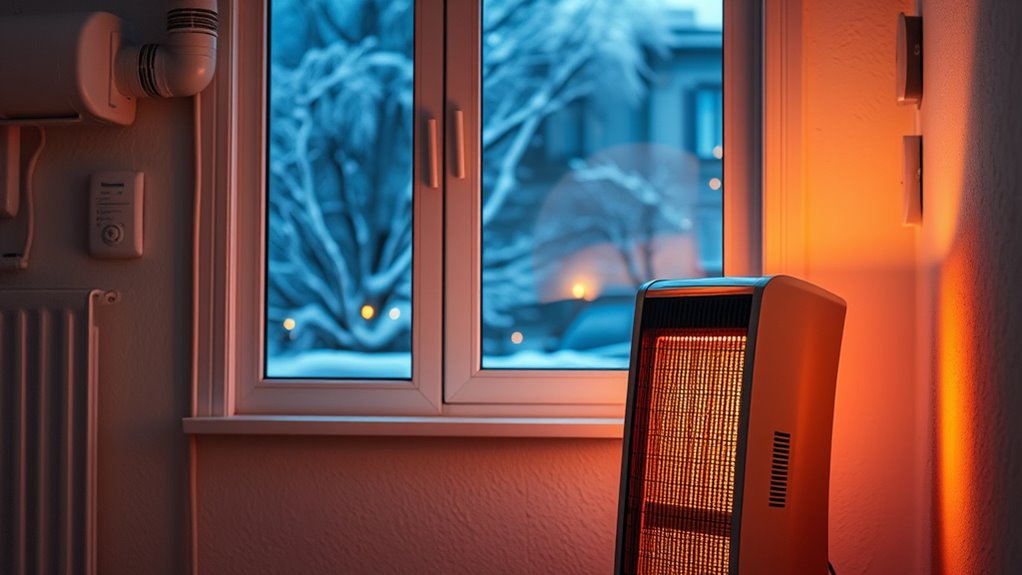
Have you ever found yourself freezing during a sudden heating outage? It’s a jarring experience that leaves you searching for quick solutions to stay warm. In such moments, portable heaters can be a lifesaver, providing instant warmth when your central heating system fails. But before you crank one up, it’s essential to be aware of safety precautions to prevent accidents or health hazards. Portable heaters come in various styles—electric, propane, or kerosene—and each has specific safety tips you should follow. For electric models, ensure they are plugged directly into outlets capable of handling their wattage, and never overload extension cords. Keep heaters at least three feet away from anything flammable, including curtains, furniture, or paper, to reduce fire risks. If you’re using fuel-powered heaters, make absolutely sure you operate them in well-ventilated areas. These units produce carbon monoxide, a colorless, odorless gas that can be deadly if it accumulates indoors. Always install a carbon monoxide detector nearby, and never leave a fuel-powered heater unattended. Remember that proper ventilation is vital to prevent dangerous gas buildup and ensure indoor air quality. Ventilation plays a crucial role in safe emergency heating. Proper airflow helps reduce the buildup of dangerous gases and prevents indoor air quality from deteriorating. When using portable heaters, crack a window or door open slightly, especially if the space is enclosed or poorly ventilated. This simple step ensures fresh air enters and prevents carbon monoxide from reaching dangerous levels. It’s equally important to avoid using open flames or candles as primary heat sources because they can quickly become fire hazards, especially if left unattended. Instead, rely on safe heating devices like portable electric heaters designed for indoor use, which are generally safer if operated correctly. Monitoring the environment around your portable heater is essential. Never leave the device unattended for extended periods, and turn it off when you go to sleep or leave the room. Keep children and pets away from hot surfaces to avoid burns or accidental tip-overs. Regularly inspect your portable heater for signs of damage, such as frayed cords or scorch marks, and replace or repair units as needed. Remember, safety precautions aren’t just for the moment; they’re about maintaining a secure environment until your main heating system is restored. By combining the use of portable heaters with proper ventilation and safety awareness, you can stay warm without risking fire or poisoning. When handled responsibly, these devices are effective emergency solutions, giving you peace of mind during unexpected outages.
Frequently Asked Questions
What Are the Signs My Heating System Is Unsafe?
If your heating system is unsafe, you’ll notice signs like a strange smell, persistent soot, or yellowish flames instead of blue, which could indicate a carbon monoxide leak. You might also hear unusual noises or see flickering lights, suggesting electrical hazards. Feeling dizzy, nauseous, or experiencing headaches near your heater are serious signs. Always evacuate and call a professional if you suspect carbon monoxide or electrical issues, ensuring your safety.
How Often Should I Inspect My Emergency Heating Device?
You should perform maintenance checks and safety inspections on your emergency heating device at least once a month during cold months. Regular inspections help you catch potential issues early, ensuring safe operation. Always look for signs of wear, unusual smells, or strange noises. If you notice anything concerning, turn off the device and schedule a professional safety inspection promptly. Consistent checks keep your heating safe and reliable when you need it most.
Can I Use Outdoor Heating Sources Indoors Safely?
Using outdoor heating sources indoors is unsafe; about 20% of carbon monoxide poisoning cases are linked to indoor use of outdoor heaters. Outdoor heating devices aren’t designed for indoor ventilation, risking deadly gas buildup. For indoor safety, stick to approved heating options, ensure proper ventilation, and never use outdoor heaters inside. Always prioritize safety to prevent accidents and health hazards.
What Are the Best Portable Heaters for Emergency Use?
You should consider portable heaters like ceramic or propane models for emergency heating options. These are easy to move, quick to warm up space, and widely available. Always choose heaters with safety features like automatic shut-off and tip-over protection. Make certain of proper ventilation, especially with propane options, to prevent carbon monoxide buildup. Keep flammable items away and never leave portable heaters unattended during use for safe, effective emergency heating.
How Do I Ventilate My Home During a Heating Emergency?
Think of your home as a breathing creature that needs fresh air to survive. To ventilate during a heating emergency, open windows and doors briefly to let in fresh air and improve indoor air quality. Use exhaust fans or create cross-ventilation by opening opposite windows. This helps remove indoor pollutants, reduce carbon monoxide risk, and keep air fresh. Remember, quick, controlled ventilation keeps your home safe and breathable.
Conclusion
So, next time your heater decides to take a vacation, remember there are safer ways to stay warm—no need to turn your home into a fire hazard or a gas chamber. Ventilate, choose your emergency heat source wisely, and maybe keep some blankets handy. After all, nothing says “cozy” like risking your life for a little warmth. Stay safe, stay smart, and avoid becoming a living experiment in indoor survival.