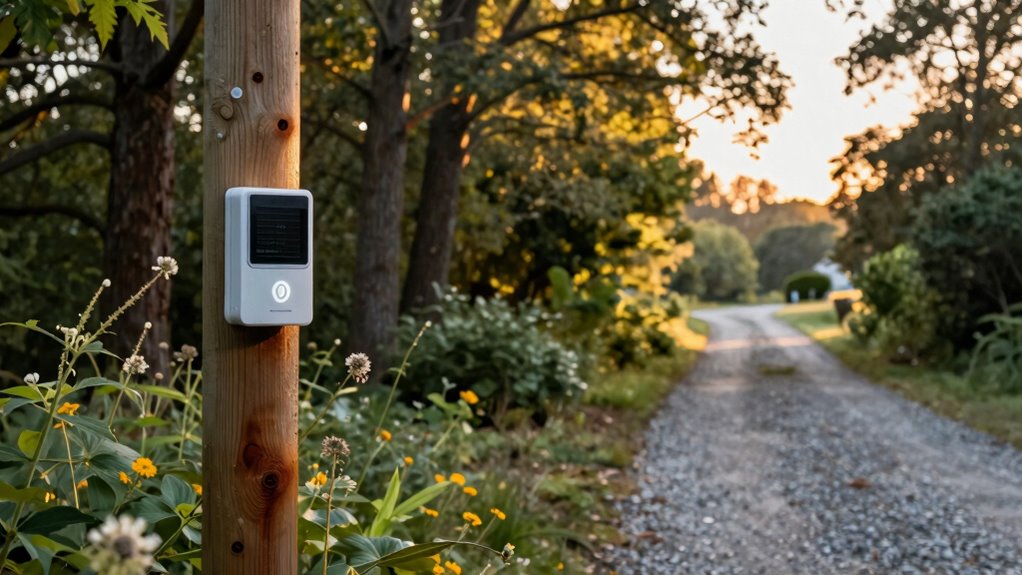

Wireless driveway alarms are an excellent early warning tool for rural properties. They’re easy to install without extensive wiring and can be positioned strategically to cover large areas. These alarms use radio signals, ensuring reliable alerts even in tough weather conditions. With features like remote notifications and motion detection, you can stay informed no matter where you are. If you want to make your property safer and more secure, exploring these options further will give you valuable insights.

Get garden gear delivered free with Prime
- Fast, free delivery on millions of items
- Prime Video, Amazon Music and more included
- Member-only deals all year
Key Takeaways
- Wireless driveway alarms provide quick, reliable alerts to detect unauthorized access or wildlife movement on rural properties.
- Easy to install and reposition, they offer flexible coverage tailored to the property’s layout.
- Weather-resistant sensors ensure year-round operation despite extreme outdoor conditions.
- Remote alert features enable property monitoring from anywhere, enhancing security when off-site.
- Adjustable sensitivity settings reduce false alarms caused by animals or environmental factors.
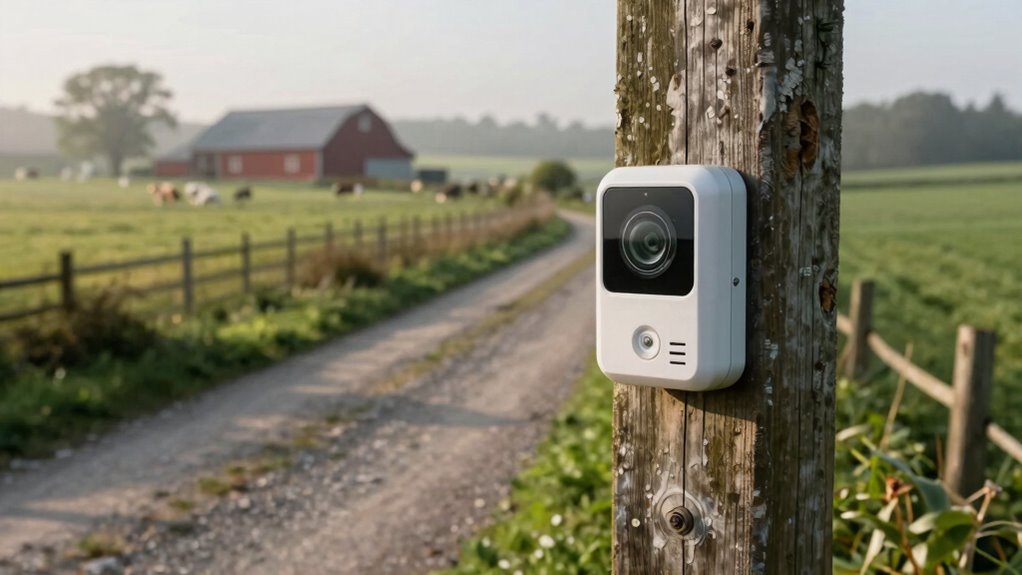
If you own a rural property, a driveway alarm can be an essential security tool. It provides that critical early warning when someone approaches your property, giving you the time to respond appropriately. Modern driveway alarms often come with wireless connectivity, making installation and operation much easier compared to traditional wired systems. Wireless models eliminate the need to run cables across long distances, which can be both time-consuming and costly. Instead, they use radio signals to connect sensors at the driveway with a central receiver inside your home or outbuilding. This setup allows for flexible placement, guaranteeing you can position sensors in the most strategic spots without worrying about wiring constraints.
Wireless driveway alarms simplify installation and placement, offering flexible, cost-effective security for rural properties.
When considering installation, you’ll want to think about the terrain and environmental conditions of your property. Wireless driveway alarms typically operate on batteries or rechargeable power sources, so you’ll need to select units with long-lasting batteries or easy access for maintenance. Placement is key—install sensors where they can clearly detect vehicles or pedestrians yet remain protected from false triggers caused by animals, wind, or falling leaves. Make sure the sensors are mounted securely at the correct height, usually a few inches above ground, and are oriented to cover the widest possible area of your driveway. Additionally, wireless connectivity can be affected by obstacles and interference, so testing the signal strength during installation can help ensure reliable operation. Choosing a system with interference resistance can further improve performance in challenging environments.
Another important aspect of installation considerations involves the range of the wireless connectivity. Check the specifications of the alarm system to guarantee the wireless signal can reliably reach from the sensor to your receiver, especially if your property spans a large area. Some systems feature adjustable sensitivity settings, so you can fine-tune the detection zone to avoid false alarms. This is particularly useful in rural settings where wildlife activity could otherwise trigger false alerts. Also, consider the weather resistance of the sensors, as they’ll need to withstand harsh conditions like rain, snow, and extreme temperatures without malfunctioning. Properly assessing environmental factors ensures your system remains functional year-round. Moreover, understanding wireless signal range and how environmental elements impact it helps you better plan the placement of your sensors for optimal coverage.
Once installed, these alarms can typically be configured to alert you in various ways—such as chimes, notifications on your smartphone, or even alarms that activate lights or security cameras. The convenience of wireless connectivity means you can often monitor your driveway remotely, giving you peace of mind even when you’re away. Proper installation and choosing a system with reliable wireless features guarantee you get the most out of your driveway alarm, making it an effective early warning tool that enhances your property’s security. By taking the time to assess your setup carefully, including the wireless signal strength, you can create a dependable, low-maintenance system that alerts you to visitors or intruders promptly.
As an affiliate, we earn on qualifying purchases.
Frequently Asked Questions
Do Driveway Alarms Work During Heavy Rain or Snow?
Driveway alarms can work during heavy rain or snow, but their weather resilience and sensor accuracy depend on the model. High-quality alarms are designed to withstand harsh conditions, ensuring reliable alerts even in bad weather. However, if the sensors aren’t weatherproof or are affected by snow buildup or heavy rain, their accuracy may decrease. Regular maintenance and choosing weather-resistant options improve performance during extreme weather.
How Long Do Battery-Powered Driveway Alarms Last?
Think of your battery-powered driveway alarm as a vigilant guardian, quietly watching over your property. Its battery lifespan varies, typically lasting 1 to 3 years depending on power consumption. If it’s a high-sensitivity model with frequent alerts, it drains faster. To keep your guardian alert, check the battery regularly and swap it out when needed. Proper maintenance ensures your alarm continues to stand guard, day and night.
Can Driveway Alarms Be Integrated With Existing Security Systems?
Yes, driveway alarms can be integrated with your existing security system. You just need to check the alarm compatibility with your current setup. Many modern driveway alarms offer security system integration, allowing you to receive alerts directly on your security panel or smartphone. This seamless connection enhances your property’s safety by providing real-time notifications and a unified security approach, making it easier to monitor your rural property effectively.
Are Wireless Driveway Alarms More Reliable Than Wired Ones?
Wireless driveway alarms are like nimble dancers, more flexible but sometimes distracted by wireless interference. Their reliability depends on careful sensor placement to avoid signal disruptions. You might find them more convenient to install, but interference from nearby devices can cause false alarms or missed detections. Wired alarms, like steadfast guardians, tend to be more dependable in rural settings, where interference is less of an issue, offering consistent protection.
What Is the Typical Range of Driveway Alarm Sensors?
The typical range of driveway alarm sensors varies, usually between 50 to 300 feet, depending on sensor sensitivity and alarm placement. You should position sensors strategically, considering the environment and potential obstructions, to maximize range. Adjusting sensor sensitivity helps improve detection distance, making certain you’ll be alerted early. Proper alarm placement guarantees reliable coverage, giving you peace of mind, especially in rural settings where early warnings are essential.
As an affiliate, we earn on qualifying purchases.
Conclusion
A driveway alarm acts as your vigilant guardian, a quiet sentinel standing guard at your rural gates. It whispers warnings like a watchful owl in the night, awakening your senses to approaching visitors or unwelcome intruders. With each chime, it becomes a heartbeat, pulsating safety through the quiet countryside. Embrace this symbol of protection—a steady rhythm guiding you home, where peace and security flourish amid the open land’s gentle song.
battery-operated driveway sensor
As an affiliate, we earn on qualifying purchases.
As an affiliate, we earn on qualifying purchases.
weather-resistant driveway alarm
As an affiliate, we earn on qualifying purchases.
As an affiliate, we earn on qualifying purchases.
Halloween Picks
halloween
As an affiliate, we earn on qualifying purchases.