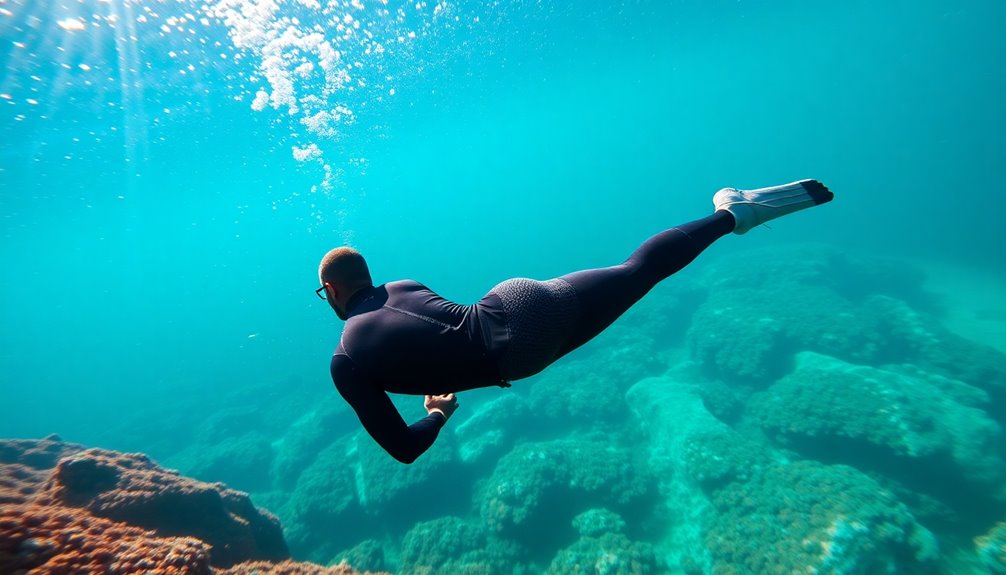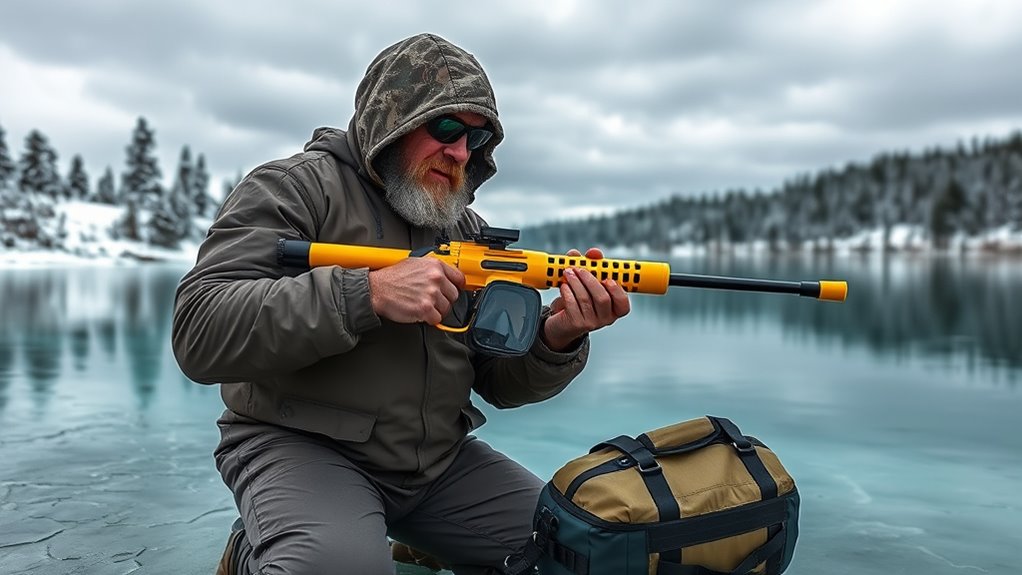

To prepare for winter spearfishing, focus on choosing a high-quality, well-insulated wetsuit with appropriate thickness, and layer with hood, gloves, and booties to stay warm. Equip yourself with safety gear like a dive light, signaling device, and buoyancy compensator, and plan your dive carefully by checking weather, water conditions, and your environment. Maintain physical and mental readiness, stay flexible with plans, and guarantee your gear is in top shape; more tips await if you keep going.
Key Takeaways
- Use a well-insulated wetsuit with appropriate thickness, layered with hood, gloves, and booties for full-body warmth.
- Check weather and water conditions beforehand, and plan your dive with a buddy for safety.
- Carry essential safety gear such as dive light, signaling device, buoyancy compensator, and cutting tools.
- Enhance visibility with high-contrast underwater lights and familiarize yourself with local environment features.
- Warm up, stay hydrated, review safety protocols, and prepare for weather changes to ensure mental and physical readiness.
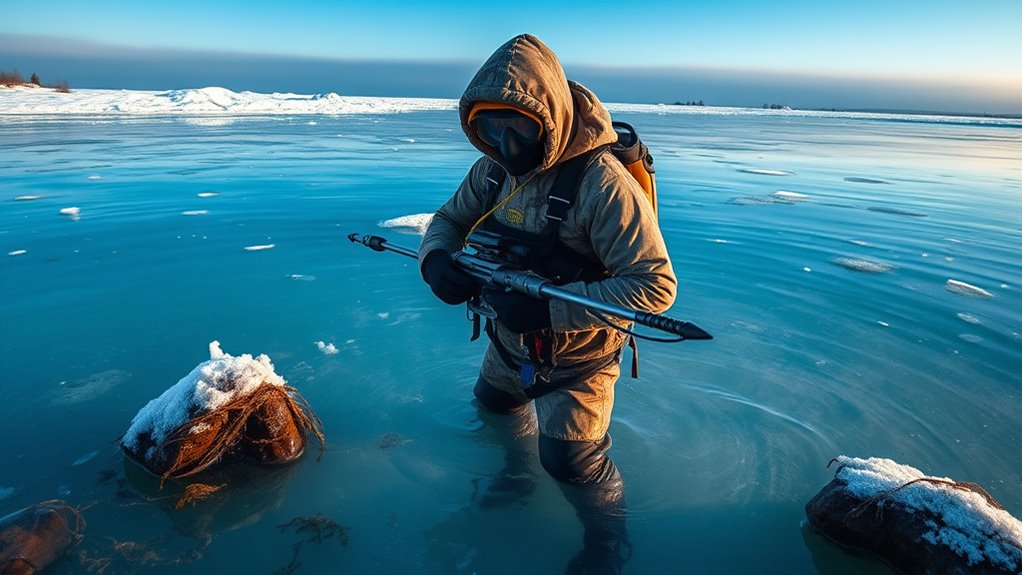
Winter spearfishing presents unique challenges that require careful preparation to guarantee safety and success. Cold water temperatures can quickly sap your body heat, making wetsuit insulation a top priority. When choosing your wetsuit, prioritize thickness and material designed specifically for low temperatures. A well-insulated wetsuit helps maintain your core temperature, reducing the risk of hypothermia and fatigue. Consider layering with a hood, gloves, and booties to further protect your extremities, as these areas are most vulnerable to cold. A high-quality wetsuit with good insulation properties ensures you stay warm longer, allowing you to focus on your dive rather than shivering or worrying about getting cold.
Proper wetsuit insulation is essential for safe, warm winter spearfishing.
Equally important are your safety gear essentials. In winter conditions, visibility often drops due to poor weather or murky water, so carrying a reliable dive light can make all the difference. A whistle or signaling device is essential in case you need to alert someone if you get into trouble. Always wear a buoyancy compensator with an integrated safety harness, which provides both flotation and a secure attachment point for your gear. A dive knife or cutting tool is another safety essential, especially if you get snagged or tangled in fishing line or kelp. Additionally, a thermal waterproof bag or container to keep your valuables dry and an emergency blanket can come in handy if you need to wait out bad weather or cold water conditions ashore.
Preparation extends beyond gear; you need to plan your dive thoroughly. Check weather conditions and water temperatures beforehand, and never push your limits. It’s wise to dive with a buddy, especially in winter, when cold water increases risks. Make sure your dive plan includes a clear entry and exit strategy, and communicate it with your partner. Familiarize yourself with the local marine environment; understanding tides, currents, and potential hazards helps you avoid dangerous situations. Remember, winter conditions can change swiftly, so always carry extra safety gear and be ready to adapt your plans. Additionally, choosing a high contrast projector can improve underwater visibility and navigation, making your dive safer and more enjoyable.
Finally, physical and mental readiness are vital. Warm up before diving, stay hydrated, and avoid alcohol or drugs that impair judgment. Confidence comes from preparation, so double-check your gear and review safety protocols. The more you prepare, the safer and more enjoyable your winter spearfishing experience will be. With the right wetsuit insulation and safety gear essentials, you’ll be better equipped to face the cold water and make the most of your dive, no matter how challenging the winter conditions may seem.
Frequently Asked Questions
What Are the Best Safety Precautions for Winter Spearfishing?
To stay safe while winter spearfishing, always follow cold water safety tips and dive buddy protocols. Never dive alone—your buddy can assist if emergencies happen. Wear proper thermal gear to prevent hypothermia, and keep communication devices handy. Monitor your air supply and limit dive time to avoid cold water shock. Stay aware of your surroundings and weather conditions, and always plan your dives with safety as a top priority.
How Do I Prevent Hypothermia During Cold Water Dives?
Did you know that hypothermia can set in after just 10 minutes in cold water? To prevent it, prioritize hypothermia awareness and practice cold water acclimatization. Wear a high-quality wetsuit, ideally with a wetsuit hood, gloves, and boots. Limit your dive time, stay close to the surface, and always dive with a buddy. Staying aware and prepared keeps you safer and more comfortable during winter spearfishing.
What Type of Wetsuit Offers the Best Insulation?
The best insulation comes from a wetsuit with the right thickness and neoprene selection. Opt for a wetsuit with at least 7mm to 9mm thickness for cold waters, ensuring maximum warmth. Choose high-quality neoprene, like closed-cell or super-stretch varieties, to improve flexibility and insulation. Proper fit is vital—make sure it snugly seals your body without restricting movement, keeping you warm and comfortable during your dive.
How Should I Plan My Dive Schedule in Winter Conditions?
You should plan your dive schedule by choosing dive sites with calm, accessible waters and favorable tide timing, ideally during high slack tide for minimal current. Check local tide charts and weather forecasts to optimize your timing, and avoid rough conditions or low visibility. Early mornings or late afternoons often offer better conditions, giving you a safer, more enjoyable winter spearfishing experience.
What Emergency Gear Is Essential for Winter Spearfishing?
Think of your emergency gear like a lifeboat in a storm — essential for survival. You should always carry thermal gloves to stay warm and prevent hypothermia. Emergency signaling devices, like whistles or waterproof flares, can be lifesavers if you get lost or injured. Last winter, a fellow diver’s signaling device helped rescuers find him quickly after an unexpected current pulled him off course. Don’t leave these behind.
Conclusion
As you gear up for winter spearfishing, remember that these cold waters are like a challenging mountain climb—demanding your best skills and preparation. Stay warm, stay alert, and respect the environment. With the right mindset and equipment, you’ll navigate these icy depths like a seasoned explorer, uncovering hidden treasures beneath the winter waves. Embrace the chill, and let your passion for the sport be the torch guiding you through the frosty adventure ahead.