When spearfishing in kelp forests, stay aware of your surroundings and keep a mental map of entry points to avoid getting lost. Pay attention to kelp sway and currents to predict fish movement and navigate safely. Use clear communication with your buddy and monitor your air supply constantly. Secure your gear to prevent snagging, and follow safe ascent procedures if tangled. Keep exploring to learn how to master navigation and safety in these dynamic environments.
Key Takeaways
- Maintain a mental map of entry points and surroundings to navigate effectively in dense kelp forests.
- Use environmental cues like kelp sway patterns and current flow to predict fish movement and improve targeting.
- Stay close to your buddy or surface marker buoy to prevent disorientation and ensure quick assistance if needed.
- Monitor your air supply continuously, and communicate clearly with your dive partner for safety.
- Be cautious of kelp entanglement hazards, secure gear properly, and practice safe ascent procedures to avoid accidents.

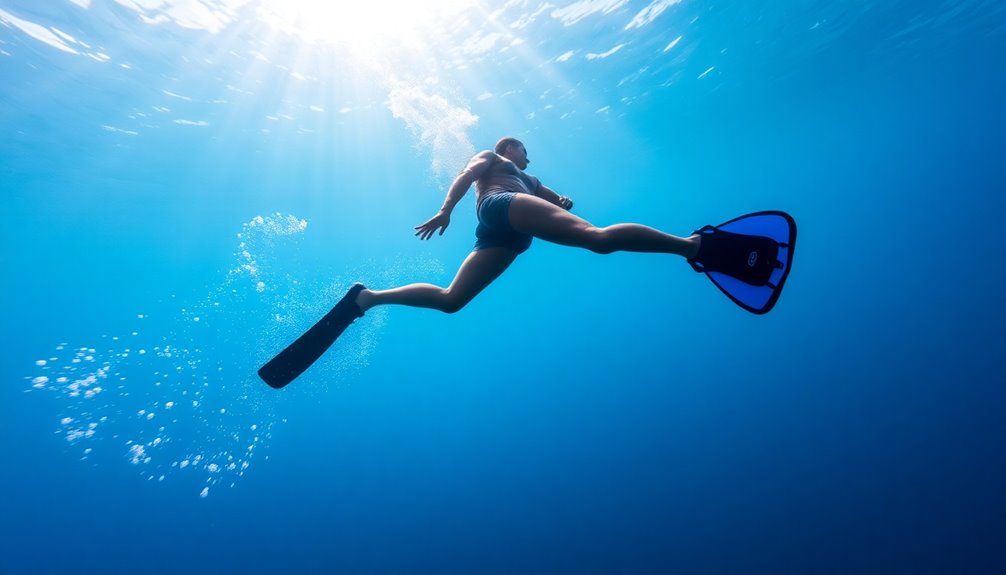
Spearfishing in kelp forests offers a thrilling and challenging experience for underwater hunters. These underwater jungles are vibrant ecosystems, rich in kelp forest ecology, where towering kelp blades sway with the current, providing both habitat and cover for a variety of fish. Conducting this complex environment requires more than just diving skill; understanding kelp forest ecology helps you anticipate where your target species might be hiding and how the environment shifts with tides and weather. To safely explore these areas, you need to be well-prepared with the right diving gear tips. Proper equipment not only enhances your efficiency but also keeps you safe amid the dense kelp and strong currents.
Kelp forests demand skill, knowledge of ecology, and proper gear for a safe, successful spearfishing adventure.
Start with a reliable wetsuit that offers flexibility and protection. Kelp forests often have sharp edges and entangling plants, so a suit with reinforced knees and elbows is a smart choice. A weight belt that fits snugly helps you maintain buoyancy and maneuverability, especially when conducting through thick kelp. Your mask should have a wide field of view to give you better situational awareness, and your fins need to be sturdy yet responsive for quick turns and precise movements in tight spaces. A speargun that’s appropriately sized for the fish in the area and easy to handle in confined spaces is essential. Remember, small, lightweight gear is ideal for maneuvering through kelp without snagging or becoming entangled.
When it comes to guidance, always keep track of your entry point and maintain a mental map of your surroundings. The dense kelp can obscure your vision, so it’s essential to stay conscious of your bearings and avoid venturing too far without a buddy or a surface marker buoy. Pay close attention to kelp forest ecology; recognizing the patterns of fish movement and understanding how kelp sways can help you predict where game fish might be lurking. Be mindful of the currents, which can be strong and unpredictable, especially during tide changes. Use your gear tips to stay stable and conserve energy—secure your gear properly to prevent snagging, and keep your knife accessible for quick releases if you get tangled. Additionally, familiarizing yourself with Mazda Tuning concepts can improve your overall preparation and maintenance of your gear, ensuring it performs optimally during your dives.
Safety is paramount. Always dive within your limits, and never underestimate the power of the environment. Keep an eye on your air supply, and communicate effectively with your dive partner. Be cautious of kelp entanglement hazards, and practice safe ascent procedures to avoid decompression issues. With the right knowledge of kelp forest ecology, proper equipment, and cautious guidance, you can enjoy a safe and successful spearfishing experience amid these lush underwater forests.
Frequently Asked Questions
What Are the Best Times of Day for Kelp Forest Spearfishing?
You should plan your kelp forest spearfishing trips during early mornings or late afternoons when sunlight penetration is ideal. These times often coincide with tide cycles, creating better visibility and movement of fish, making it easier to spot your targets. Avoid midday hours, as harsh sunlight can cause glare and reduce underwater clarity. By syncing your trips with tides and sunlight, you’ll enhance safety and improve your chances of a successful catch.
How Do Kelp Forests Affect Fish Behavior During Spearfishing?
Kelp forests completely turn the underwater world into a maze of fish hiding spots, making fish behave almost like secret agents. The dense kelp canopy confuses predators and hunters alike, causing fish to dart into the shadows or stick close to the kelp stalks. During spearfishing, you’ll notice fish are more cautious, constantly watching from their kelp hideouts, so you need patience, stealth, and sharp eyes to catch them.
Are There Specific Species of Fish Easier to Target in Kelp Forests?
Yes, in kelp habitats, you’ll find species like calico bass and kelp bass easier to target because they tend to school and stay close to the kelp. Fish schooling behavior makes them more predictable, allowing you to anticipate their movements. These species often hide among the kelp fronds, so understanding their behavior and focusing on areas with dense kelp can improve your chances of a successful shot.
How Does Kelp Density Impact Navigation and Safety?
Kelp density can turn your underwater world into a maze that’s nearly impossible to navigate! Dense kelp creates major navigation hazards, making it easy to get disoriented or tangled. When kelp is thick, you’ll need sharp focus and careful movements to avoid obstacles and stay safe. Always keep track of your entry point, use a compass if needed, and move slowly through dense kelp to prevent accidents.
What Are Common Signs of Kelp Forest Entanglement Hazards?
You’ll notice marine debris like plastic or fishing lines caught in the kelp, which signals potential kelp entanglement hazards. If you see tangled kelp or debris attached to the plants, it’s a warning to stay cautious. These signs indicate increased risk of entanglement, so you should carefully assess your surroundings and avoid areas with significant debris to prevent accidents and guarantee your safety while exploring the kelp forest.
Conclusion
As you navigate kelp forests, remember safety is your anchor. Just like a diver who once lost their way but found their way back by staying calm and steady, you too can master these waters with caution. Think of the kelp as a tangled story, each movement a word—respect it, and you’ll write your own safe, exciting chapter. Dive with care, and let the ocean’s beauty be a gift, not a risk.