Recording your catches with detailed logs and clear photos helps you track patterns, improve your skills, and contribute valuable data to citizen science efforts. Accurate identification of species and noting environmental conditions make your records even more useful. Sharing your findings supports conservation and sustainable fishing practices, ensuring healthier fish populations for everyone. Keep going—there’s lots more to learn about turning your catches into meaningful contributions for the community.
Key Takeaways
- Maintaining detailed logs of catches, including species, size, and conditions, enhances personal tracking and community data accuracy.
- Using photos as visual verification helps ensure correct species identification and supports citizen science initiatives.
- Recording environmental details like weather and water conditions provides context for patterns and ecosystem understanding.
- Sharing catch data responsibly fosters conservation, sustainable fishing practices, and collective knowledge within the angling community.
- Integrating logs and photos into citizen science platforms contributes valuable information for research and fishery management.
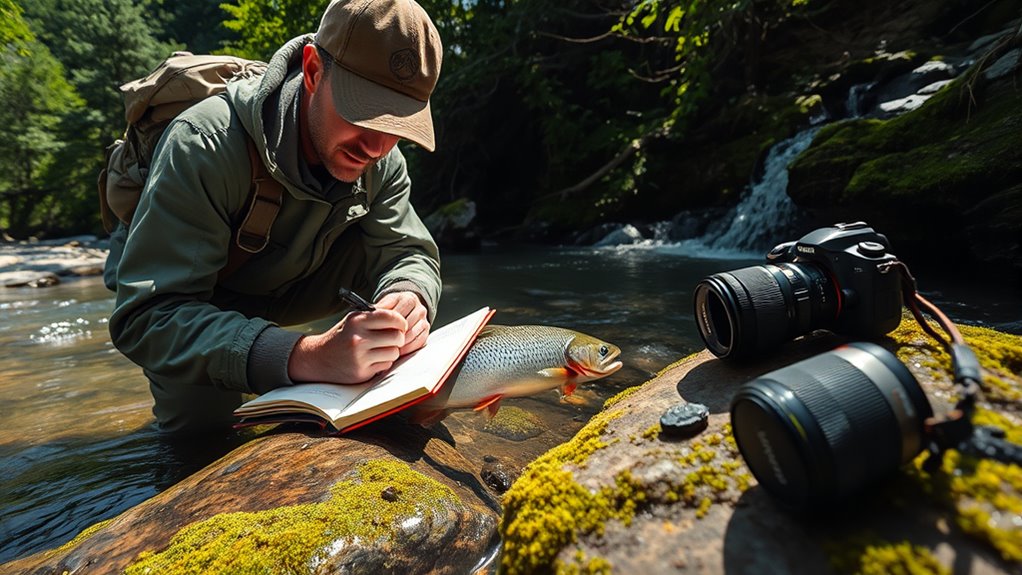
Have you ever wondered how anglers keep track of their fishing success? It’s not just about recalling how many fish you caught last weekend; it’s about creating a detailed record that can be useful for yourself and others. Many anglers use logs, photos, and citizen science platforms to document their catches. These methods help you track patterns, improve your skills, and contribute valuable data to the broader fishing community.
When you record your catches, species identification becomes key. Accurately identifying the fish you catch ensures your records are reliable. It involves noting details like size, color, markings, and habitat. Proper species identification isn’t just for bragging rights; it’s essential for understanding local ecosystems and tracking fish populations over time. When you share your data—whether through personal logs or online platforms—you’re helping to build a larger picture of fish distribution and abundance. This sharing of data can influence conservation efforts and inform sustainable fishing practices. It’s a way of giving back to the community and the environment, making your personal fishing experience part of a bigger effort.
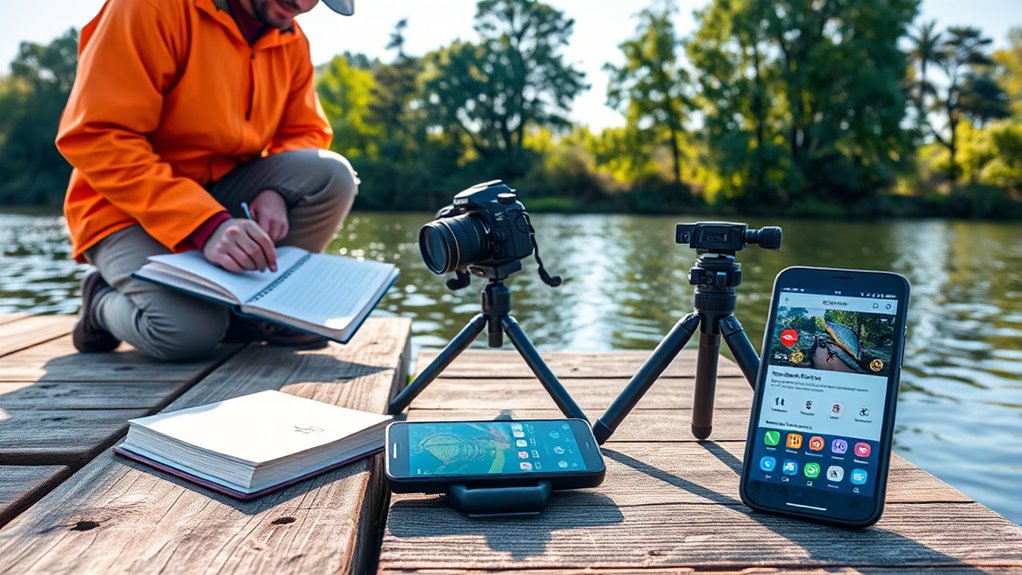
Using photos is an effective way to verify your catch and provide visual evidence. With today’s smartphones, capturing clear images of your fish, including distinguishing features, is quick and easy. Photos also serve as a visual record that can be revisited later or shared with friends. Many citizen science programs encourage anglers to upload their catch photos, which can be used to validate species identification and gather data on fish sizes and conditions. When you upload photos along with details like location and date, you’re contributing to a collective database that benefits researchers, conservationists, and fellow anglers alike. Incorporating high-precision projectors into your recording setup can enhance your ability to analyze and compare your catch data visually.
Keeping detailed logs doesn’t have to be complicated. You can jot down notes about the weather, water conditions, bait used, and successful techniques. Over time, these records reveal patterns—such as which species bite more during certain seasons or in specific spots. Sharing this information with other anglers or through citizen science initiatives creates a communal resource that enhances everyone’s fishing experience. Your records add valuable data points that support fishery management and conservation efforts.
In essence, recording your catches with accurate species identification and sharing your data helps you become a more responsible angler. It transforms individual outings into meaningful contributions to the broader fishing community and ecosystem. Whether you’re keeping a simple log, snapping photos, or uploading to citizen science platforms, your efforts help ensure healthy fish populations and enjoyable fishing for years to come.
Frequently Asked Questions
How Can I Ensure the Privacy of My Location Data?
To guarantee your location data privacy, start by reviewing privacy settings on your device and apps, limiting sharing options. Be mindful of privacy concerns when uploading photos or logs online, and avoid sharing precise locations. Use tools like VPNs or anonymized accounts to protect your identity. Always read data sharing policies, and opt out of unnecessary data collection. Staying cautious helps you maintain control over your location information and guards against misuse.
What Equipment Is Best for Photographing Catches?
Think of your photography gear as a toolkit for capturing nature’s secrets. To photograph catches effectively, use a good camera with macro capabilities for detailed shots, a waterproof housing to protect your gear, and a stable tripod for sharp images. Proper lighting, like a ring light or natural light, helps highlight key features for species identification. This setup guarantees you record clear, informative photos that support accurate identification and data collection.
How Do I Identify Rare or Unfamiliar Species?
To identify rare or unfamiliar species, start by closely examining your photos and notes. Use detailed field guides specific to your region or species group, comparing physical features carefully. If you’re unsure, seek advice from local experts or online citizen science communities. Document key details like size, color, markings, and habitat. This collaborative approach helps guarantee accurate species identification and enriches your understanding of local biodiversity.
Can I Participate in Citizen Science Projects Without Internet Access?
Yes, you can participate in citizen science projects without internet access by using offline data logging methods. You’ll record field identification details on paper or digital devices that don’t require an online connection. Later, you can upload your data when you have internet access. This approach allows you to contribute valuable observations, especially in remote areas, and helps guarantee your data is accurate and useful for scientific research.
How Should I Handle and Release Captured Species Ethically?
You should handle captured species ethically by minimizing stress and avoiding unnecessary harm. Use gentle techniques, support their body, and keep them in appropriate conditions if needed. When ready to release, do so responsibly by choosing a suitable habitat and ensuring the animal is healthy and alert. Always prioritize their well-being, and if unsure, consult local wildlife guidelines to guarantee an ethical handling and responsible release.
Conclusion
As you log your catches—whether through photos or notes—you become part of a living tapestry, each entry a thread woven into a broader story. Imagine the gentle ripple of a pond, each movement captured and preserved, whispering tales of discovery. Your efforts help paint a vivid portrait of nature’s fleeting moments, inviting others to see, record, and protect. Together, your recordings create an intricate mosaic, echoing the pulse of the wild long after you’ve moved on.