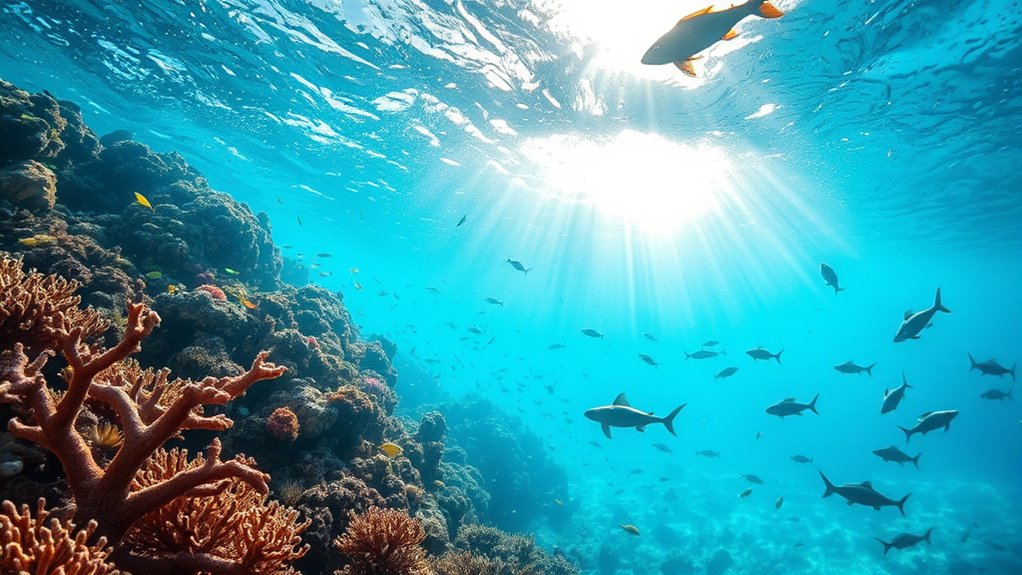

Before you visit a marine protected area, understand its goal: safeguarding crucial habitats like coral reefs and supporting marine life by limiting activities such as fishing, anchoring, and collecting marine life. Respect all rules, including no-take zones and gear restrictions, to help conserve these ecosystems. Responsible behavior ensures these areas continue to thrive for future generations. Stay informed of conservation guidelines, and you’ll discover even more about why MPAs are essential for healthy oceans.
Key Takeaways
- Respect designated no-take zones and follow local regulations to protect marine ecosystems.
- Avoid anchoring on reefs and collecting marine life to prevent damage.
- Adhere to fishing restrictions and gear rules to support fish population recovery.
- Observe and support conservation efforts by practicing responsible snorkeling and diving behaviors.
- Educate yourself about MPAs’ purpose to help preserve biodiversity and ensure long-term protection.
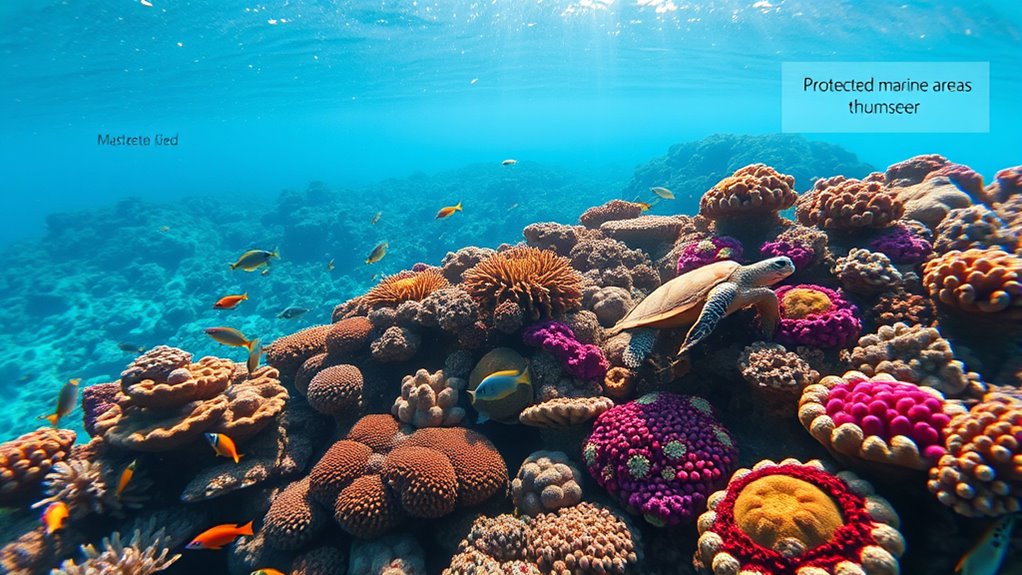
Have you ever wondered how we can safeguard our oceans’ most vulnerable ecosystems? One key way is through establishing Marine Protected Areas (MPAs). These zones serve as safe havens where marine life can thrive without constant human disturbance. When visiting an MPA, you’ll notice that coral conservation plays a vital role. Many MPAs focus on protecting coral reefs because they support a rich diversity of species and are essential for the health of the entire marine ecosystem. By limiting activities that damage corals, like destructive fishing methods and anchoring, MPAs help maintain the delicate balance of these vibrant underwater landscapes.
Marine Protected Areas safeguard coral reefs and support marine life by limiting damaging activities and promoting ecosystem health.
Fishing regulations are also a cornerstone of effective marine protection. Within MPAs, fishing is often restricted or entirely prohibited, giving fish populations a chance to rebound. This isn’t just about preserving individual species; it’s about maintaining the overall health of the ocean. When fish stocks are healthy, they help control algae growth on coral reefs, which in turn supports coral health and resilience. As a visitor, you might notice signs indicating no-take zones or specific rules about fishing gear and catch limits. These regulations are carefully designed to prevent overfishing, which is a major threat to marine biodiversity worldwide. By respecting these rules, you’re directly contributing to the recovery and sustainability of marine populations.
Understanding the importance of coral conservation and fishing regulations can deepen your appreciation when you explore MPAs. These areas are not just protected patches of ocean; they are active, living laboratories for conservation efforts. When you snorkel or dive in these zones, you’re witnessing firsthand the benefits of well-planned protections. Healthy corals and abundant fish populations are signs of a thriving ecosystem that benefits local communities as well as global ecological health. Additionally, marine protected areas often serve as sites for scientific research, helping us improve conservation strategies based on real-world data.
Moreover, supporting MPAs and the policies behind them encourages responsible behavior and sustainable practices. It’s essential to follow guidelines set by authorities—like avoiding anchoring on reefs, refraining from collecting marine life, and adhering to fishing restrictions. Your participation as a responsible visitor helps guarantee these protected areas can fulfill their purpose for generations to come. In essence, MPAs are crucial tools in our collective effort to conserve marine biodiversity, and understanding the role of coral conservation and fishing regulations helps you become a more informed and conscientious traveler of the ocean.
Frequently Asked Questions
Are There Any Hidden Restrictions in Marine Protected Areas?
Yes, there could be hidden restrictions in marine protected areas. You should verify the specific marine zone regulations before you go, as some areas have fishing regulations that restrict or prohibit certain activities, even if it’s not obvious. These restrictions help protect marine life and habitats. Always stay informed by consulting local authorities or signage to avoid unintentional violations and ensure responsible enjoyment of these protected environments.
Can I Fish Legally in All Zones Within an MPA?
You can’t fish legally in all zones within an MPA because each zone has specific regulations. Some areas are designated for conservation and prohibit fishing entirely, while others allow limited activities. Enforcement challenges can make it difficult to monitor every zone effectively, so it is crucial to check local rules before you fish. Always verify the specific fishing zones and restrictions to avoid fines or penalties, ensuring responsible enjoyment of the marine environment.
What Penalties Exist for Violating MPA Regulations?
Think of marine conservation as a fragile tapestry, easily torn by neglect. Violating MPA regulations can lead to hefty fines, license suspensions, or even criminal charges, depending on the offense. Enforcement challenges often make penalties necessary to deter violations. By respecting these rules, you protect ocean ecosystems and avoid legal consequences, ensuring the marine environment stays healthy for future generations. Your responsible actions uphold the delicate balance of marine life.
How Are MPAS Funded and Maintained?
Marine Protected Areas are funded through a mix of government budgets, grants, and sometimes private donations, ensuring sustainable conservation maintenance. You can often see marine funding allocated for enforcement, research, and habitat restoration efforts. By supporting policies that prioritize marine conservation, you help maintain these protected areas, ensuring they thrive for future generations. Your awareness and advocacy play a crucial role in sustaining the marine environment and its preservation initiatives.
Are MPAS Effective in Restoring Marine Biodiversity?
Like a carefully tended garden, MPAs foster ecological recovery, making them highly effective in restoring marine biodiversity. When you visit these protected zones, you support habitats where marine life thrives, replenishing populations and biodiversity. Over time, MPAs act as sanctuaries, helping ecosystems rebound from overfishing and pollution. Your participation boosts conservation efforts, ensuring that marine biodiversity flourishes for generations to come, turning fragile waters into vibrant, thriving undersea worlds.
Conclusion
Before you plunge into Marine Protected Areas, remember they’re like underwater sanctuaries, crucial for conserving marine life. Knowing the rules helps protect these fragile ecosystems, ensuring they thrive for generations to come. So, when you visit, treat them like treasures in your own backyard—handle them with care. By respecting these havens, you’re helping to keep our oceans vibrant and alive, like a beating heart beneath the waves. Immerse yourself responsibly, and let the ocean’s magic unfold.