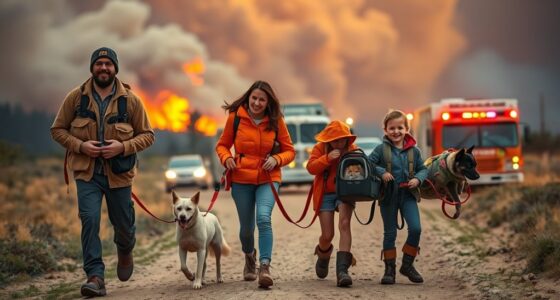
During wildfire evacuations, protect your pets from smoke and poor air quality by preparing carriers, leashes, and masks in advance. Monitor air quality reports and plan evacuation routes that avoid smoky areas. Keep pets confined in well-ventilated carriers during travel and consider dampening their noses with cloths or using pet-safe smoke masks if available. After evacuating, observe your pets for signs of respiratory distress and seek veterinary help if needed—knowing more can help keep them safe.

Get garden gear delivered free with Prime
- Fast, free delivery on millions of items
- Prime Video, Amazon Music and more included
- Member-only deals all year
Key Takeaways
- Keep pets in well-ventilated carriers or crates to limit smoke inhalation during evacuation.
- Monitor air quality reports and evacuate early when air quality becomes unhealthy.
- Use damp cloths or pet-safe masks to protect pets’ noses from smoke exposure.
- Prepare an emergency kit with water, food, medications, and masks for pets before evacuation.
- Post-evacuation, provide a clean, ventilated space and watch for signs of respiratory distress.
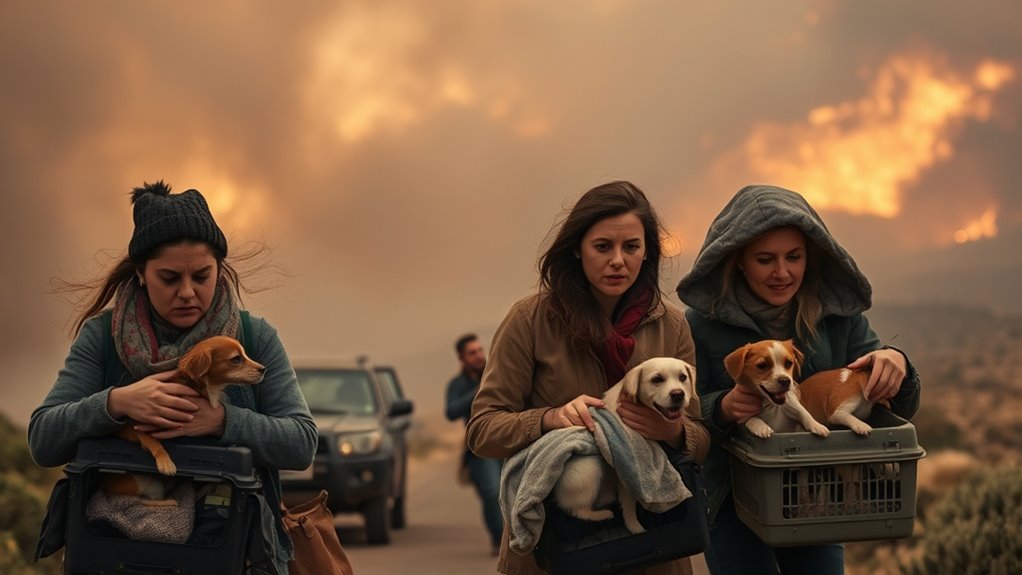
When wildfires threaten your home, evacuating quickly becomes a priority—especially if you have pets. Smoke and poor air quality can pose serious health risks for your furry companions, so it’s essential to include pet safety in your evacuation planning. The moment you hear about a nearby wildfire, you should be prepared to act swiftly, ensuring your pets are protected from harmful smoke inhalation and other hazards.
Start by understanding that smoke can spread quickly and cause respiratory distress in animals just as it does in humans. During an evacuation, your pets may become stressed or frightened, which can make them harder to manage if they’re not used to being in carriers or confined spaces. To improve pet safety, keep carriers, leashes, and harnesses ready and easily accessible. Train your pets to enter their carriers calmly, so during an emergency, you don’t waste precious time. If your pets are uncomfortable or anxious, speak softly and remain calm yourself—your demeanor influences their behavior and helps keep everyone safe.
Prepare your pets by training them to enter carriers calmly and keep safety supplies accessible.
Planning your evacuation route is critical, especially considering smoke and air quality. Choose routes that avoid heavily wooded areas or regions with dense smoke plumes, and have multiple options ready in case roads are blocked. Keep an emergency kit for your pets with essentials like water, food, medications, and masks or cloths to cover their noses if the smoke intensifies. If you know the wildfire’s direction, monitor local air quality reports constantly. When air quality drops to unhealthy levels, it’s better to evacuate sooner rather than later, even if you don’t see immediate danger. The goal is to prevent your pets from inhaling toxic fumes, which can cause long-term health issues. Additionally, consider vehicle air filtration systems to help reduce smoke intake during travel.
During evacuation, keep your pets confined in well-ventilated carriers or crates to minimize their exposure to smoke. If possible, place a damp cloth over their noses or use pet-safe masks designed for smoke inhalation protection. Avoid letting your pets roam freely in smoky environments, as they might inhale more pollutants, worsening their health. Once you reach a safe location, set up a clean, ventilated area for your pets to recover and breathe fresh air. If you suspect your pet has inhaled smoke, seek veterinary attention immediately.
Frequently Asked Questions
How Can I Prepare My Pet for Sudden Wildfire Evacuations?
You should prepare your pet for sudden evacuations by keeping current Pet identification on them at all times, including collar tags and microchips. Familiarize yourself with local evacuation routes and plan multiple options. Pack an emergency kit with essentials like food, water, and medications. Practice quick evacuations to make certain your pet stays calm. Being prepared helps you both stay safe and reduces stress during a wildfire emergency.
What Are the Signs of Smoke Inhalation in Pets?
Ever wonder if your pet’s showing signs of smoke inhalation? Look for signs of distress like coughing, wheezing, or difficulty breathing. Respiratory symptoms such as rapid breathing, nasal discharge, or bluish gums are serious indicators. If you notice these symptoms, act quickly by moving your pet to fresh air and seeking veterinary care immediately. Recognizing these signs can save your pet’s life during wildfire smoke exposure.
Are There Specific Shelters Accommodating Pets During Wildfires?
Yes, many areas have pet shelter options during wildfires. You should check local animal evacuation plans ahead of time to find designated shelters that accept pets. These shelters often provide food, water, and space for your animals, ensuring their safety while you evacuate. It’s vital to have a plan in place and know where these shelters are located, so you’re prepared to act quickly if a wildfire threatens your area.
How Do I Protect My Pet’s Respiratory Health During Smoke Events?
You can protect your pet’s respiratory health during smoke events by using air purifiers with HEPA filters recommended for pet owners. Keep your pet indoors, minimizing exposure to smoky air, and create a clean, well-ventilated space. Follow pet respiratory health tips like providing plenty of fresh water and avoiding strenuous activity. Remember, reducing smoke exposure helps prevent respiratory issues and keeps your pet safer during wildfires.
What Emergency Kit Essentials Should I Include for Pets?
You should include pet safety essentials like enough food, water, and medications to last several days. Pack a leash, harness, and a favorite toy for comfort. Don’t forget emergency supplies such as a first aid kit, extra collars, and copies of vaccination records. Also, carry a sturdy carrier for safe transportation. These items guarantee your pet’s safety and help you stay prepared during wildfire evacuations.
Conclusion
When wildfires rage and smoke chokes the air, your pets depend on you more than ever. Evacuate swiftly, keep them close, and never underestimate the power of preparedness. Remember, a calm, quick response can be the difference between survival and tragedy—your pet’s life hangs in the balance! Stay vigilant, stay safe, and treat every second like it’s the most precious thing you have. Because in these moments, you’re their hero, and every move counts!
Evergreen bestsellers Picks
bestsellers
As an affiliate, we earn on qualifying purchases.