When hiking with your dog in the wilderness, stay alert to temperature changes and terrain challenges. Provide regular water breaks, use protective gear like boots for hot or rough surfaces, and monitor for signs of dehydration or cold stress. Keep your dog on a leash, watch their paws and behavior, and carry essential safety supplies. Understanding these tips will help you keep your furry friend safe on every adventure, ensuring you’re prepared for all conditions ahead.
Key Takeaways
- Provide fresh water regularly and watch for signs of dehydration or heat exhaustion.
- Avoid hot surfaces; walk during cooler hours and consider paw protection on hot or rough terrain.
- Monitor for cold stress; dress dogs appropriately and watch for shivering or lifting paws.
- Use leashes and proper gear to maintain control and prevent injuries on steep or uneven terrain.
- Carry a first aid kit and stay vigilant for injuries or emergencies in unpredictable wilderness conditions.
Hiking with your dog can be a rewarding experience, but it also requires careful planning to guarantee their safety in the wilderness. One of the most important aspects is ensuring your dog stays properly hydrated. Dogs lose water quickly, especially during strenuous activity or in hot weather, so bring enough fresh water for both of you. Regularly offer your dog water breaks, and keep an eye out for signs of dehydration, such as excessive panting, drooling, or lethargy. If you’re unsure about water sources along the trail, carry a portable water bowl or collapsible cup to make it easy for your dog to drink. Remember, never force water into your dog’s mouth; instead, encourage them gently to drink, and always provide clean, fresh water at regular intervals. Proper tuning of your dog’s gear, such as harnesses or boots, can also improve comfort and safety during the hike.
Another crucial factor is understanding trail etiquette. Respect other hikers and wildlife by keeping your dog under control. Use a leash when necessary, especially in crowded or sensitive areas, to prevent your dog from disturbing wildlife or scaring other hikers. Be mindful of your dog’s behavior and ensure they don’t bark excessively or chase after animals. Keep your dog on designated trails to minimize environmental impact and avoid damaging fragile ecosystems. Cleaning up after your dog is essential—bring waste bags and pack out all droppings to maintain trail cleanliness. Proper trail etiquette not only promotes safety but also helps ensure that everyone can enjoy the outdoors responsibly.
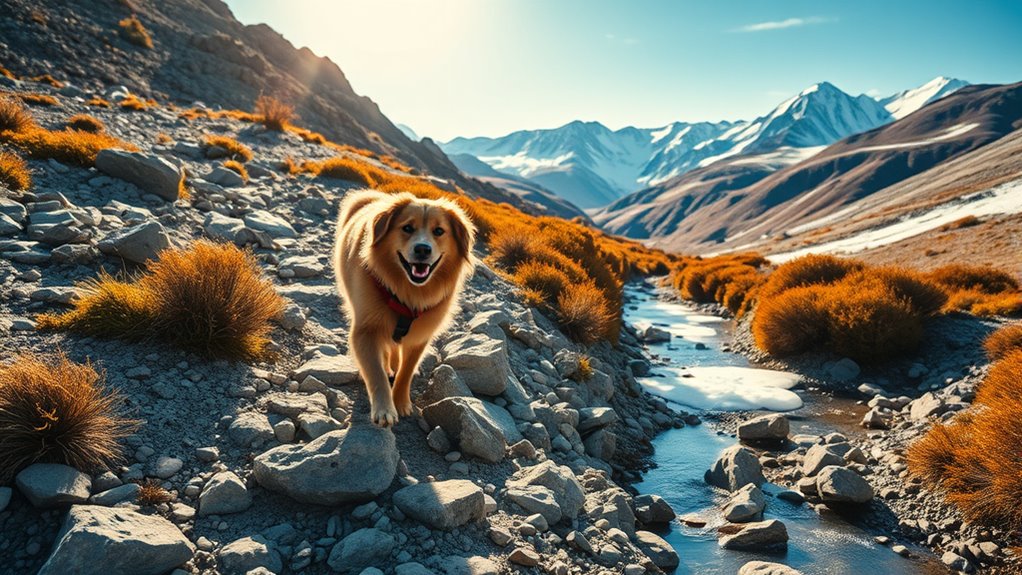
Terrain can be unpredictable and challenging, so prepare accordingly. Be aware of the trail’s difficulty level and your dog’s physical condition. Hot surfaces like asphalt or rocky paths can burn paw pads, so consider booties or avoid walking during the hottest parts of the day. In cold weather, watch for signs of cold stress, such as shivering or lifting paws off the ground, and carry extra gear if needed. When crossing streams or maneuvering uneven terrain, keep your dog close to prevent slips or falls. Watch their paws for cuts or signs of discomfort, especially after rough terrain. If you encounter steep ascents or descents, help your dog navigate safely, and avoid pushing them beyond their limits. Always carry a basic first aid kit for emergencies, and know how to treat common injuries.
Frequently Asked Questions
How Can I Tell if My Dog Is Overheating During a Hike?
You can tell if your dog is overheating during a hike by watching for heat exhaustion signs like excessive panting, drooling, weakness, or disorientation. If these appear, use dog cooling methods such as wetting their coat or offering cool water. Don’t wait—promptly rest your dog in a shaded area, keep them hydrated, and monitor their behavior closely to prevent heat stroke.
What Are Signs of Hypothermia in Hiking Dogs?
You’ll spot hypothermia symptoms in your dog if they start shivering uncontrollably, seem sluggish, or curl up like a tiny burrito in cold exposure. They might also have cold ears or paws, pale gums, and slow, shallow breathing. If you notice these signs, it’s time to act fast—warm them up with dry blankets, keep them moving gently, and seek veterinary help immediately before hypothermia worsens.
How Should I Prepare My Dog for Rugged Terrain?
To prepare your dog for rugged terrain, start with a dog-friendly trail that matches their fitness level. Make sure they’re well-trained in terrain navigation, so they’re confident and safe. Bring plenty of water, a sturdy harness, and protective gear if needed. Practice short hikes beforehand to build endurance. Keep a close eye on your pup, watch for signs of fatigue, and adjust your pace to keep the hike enjoyable and safe.
Are There Specific Gear Recommendations for Hiking Dogs?
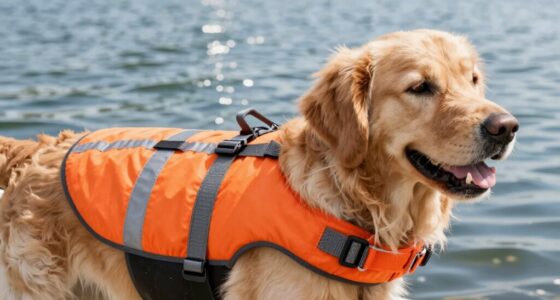
While the thrill of adventure calls, your dog needs the right gear for safety. Invest in dog-specific footwear to protect paws from rough terrain and sharp rocks. A hydration pack ensures your pup stays well-hydrated during long hikes, preventing exhaustion. These essentials balance adventure with caution, letting you explore confidently while your dog remains comfortable and protected every step of the way.
How Often Should I Give My Dog Water on a Trail?
You should give your dog water frequently, roughly every 20-30 minutes, based on your hydration schedule and trail conditions. Always carry enough water and have access to water sources along the way, such as streams or lakes. Watch for signs of dehydration like excessive panting or lethargy, and offer water regularly to keep your dog hydrated and safe during your hike. Adjust the frequency if it’s hot or your dog is very active.
Conclusion
By staying alert to your dog’s needs and the environment, you become their guardian in the wild. Remember, the trail isn’t just a path—it’s a test of your bond and your preparedness. With careful planning for heat, cold, and terrain, you guarantee every adventure ends with wagging tails and happy memories. After all, isn’t the greatest journey one where safety guides your every step and your dog’s joy leads the way?