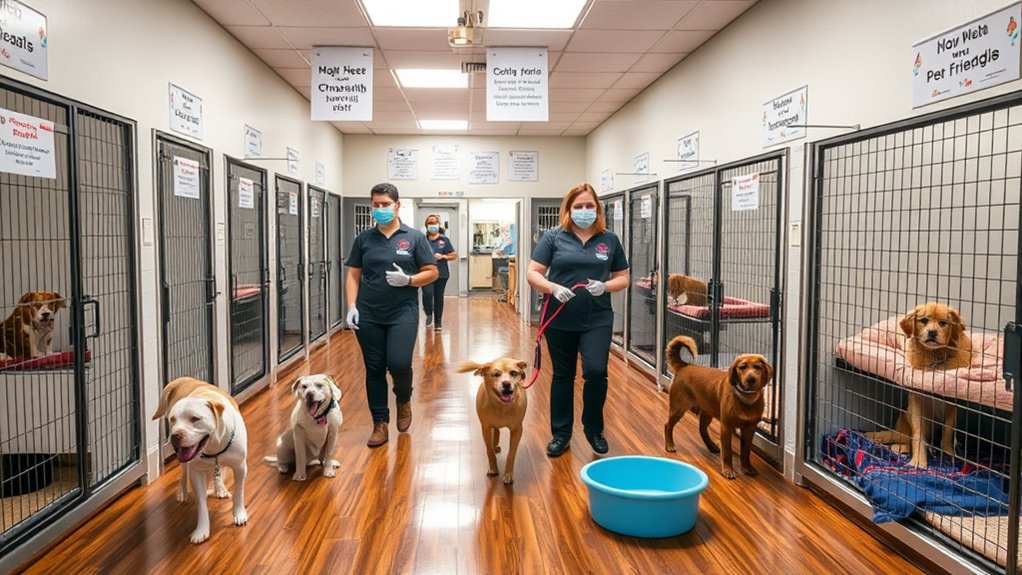

To guarantee a safe, comfortable environment at a pet-friendly shelter, follow proper etiquette and health protocols. Keep pets on a secure leash, avoid forcing them into interactions, and observe their behavior for signs of stress or aggression. Respect shelter rules, such as limits on pet interactions, and always handle pets gently. Maintaining cleanliness and hygiene helps prevent the spread of illness. Stick to these guidelines, and you’ll learn more about creating a positive experience for everyone involved.
Key Takeaways
- Keep pets on a secure, properly fitted leash at all times to ensure safety and control within the shelter.
- Ensure pets are well-behaved and calm, avoiding barking, growling, or jumping to maintain a safe environment.
- Follow shelter-specific health protocols, including vaccination requirements and hygiene practices, to prevent disease transmission.
- Respect other animals’ boundaries and social cues, removing pets from stressful or aggressive situations promptly.
- Use positive reinforcement and consult staff for guidance on managing pet behavior and adhering to shelter etiquette.
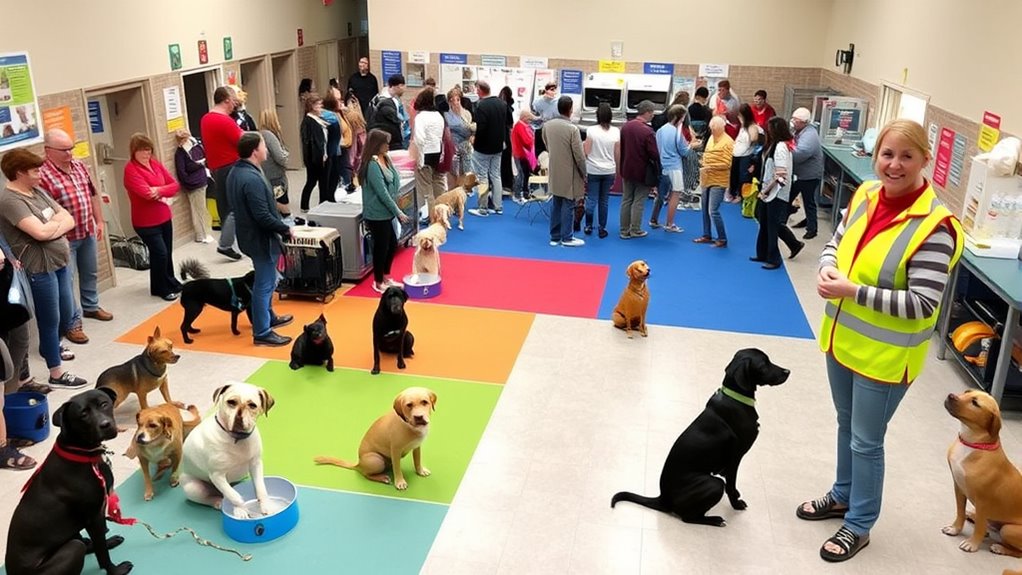
When visiting a pet-friendly shelter, it’s important to remember that your pet’s behavior can impact others around you. Shelters are shared spaces where animals and people coexist, so practicing good pet manners isn’t just courteous—it’s essential for everyone’s safety and comfort. Before entering, make sure your pet is well-behaved and comfortable around unfamiliar surroundings and new animals. This means keeping your pet calm, avoiding unnecessary barking or growling, and respecting their boundaries. Good pet manners also involve not jumping on people or other animals, which can cause discomfort or even injuries. Being attentive to your pet’s reactions and managing their behavior helps create a positive environment for everyone involved. Properly addressing pet behavior ensures a safe and welcoming atmosphere for all visitors and animals.
Leash rules are another critical aspect of shelter etiquette. Most shelters require pets to be on a leash at all times, and it’s your responsibility to follow this rule strictly. Using a secure, properly fitting leash keeps your pet close and under control, reducing the risk of sudden escapes or unwanted interactions. Keep a firm grip on the leash without pulling or jerking, which can stress your pet and others around you. If your pet is nervous or reactive, consider using a calming harness or head collar to maintain better control. Always check the shelter’s specific leash policies before you arrive, but err on the side of caution by bringing a sturdy leash and collar or harness. This not only ensures compliance but also demonstrates respect for the shelter’s rules and the safety of everyone present.
In addition to leash rules and pet manners, be mindful of your pet’s social cues. Observe how your pet interacts with other animals and people. If they show signs of stress or aggression, it’s best to remove them from the situation calmly and promptly. Never force your pet into interactions they’re uncomfortable with, and always ask staff for guidance if you’re unsure about your pet’s behavior. Respect others’ comfort levels too; not everyone is comfortable around animals, especially those with anxiety or past trauma. Keep your pet’s behavior predictable and controlled, and use positive reinforcement to reward calm, polite conduct.
Frequently Asked Questions
Can I Bring Multiple Pets to the Shelter at Once?
You can usually bring multiple pets to the shelter if they meet the shelter policies. Check with the shelter beforehand, as some may have limits on the number of pets per visit or require separate appointments. Make sure all pets are up-to-date on vaccinations and comfortable around other animals. Following the shelter policies guarantees a smooth experience for everyone and helps keep all pets safe and healthy.
Are There Breed Restrictions for Animals Admitted?
Yes, breed restrictions may apply at the shelter, especially for certain aggressive or restricted breeds. You’ll need to verify the specific policies, as some shelters limit breeds like Pit Bulls or Rottweilers. Also, guarantee your pets meet vaccination requirements before admission. Keeping your animals up-to-date on vaccines helps protect everyone’s health and makes the process smoother. Always call ahead to confirm breed restrictions and vaccination documentation needed.
How Should I Handle My Pet’s Unexpected Health Issue During Stay?
When your pet faces an unexpected health concern, don’t hesitate to seek emergency veterinary care; staff can assist with urgent needs. Keep your pet’s health insurance details handy to streamline the process. Notify shelter personnel immediately, and they’ll coordinate with veterinary professionals. Staying calm and proactive helps guarantee your pet receives the best care possible, easing their discomfort and giving you peace of mind during this unforeseen situation.
Is There a Limit on the Length of Time My Pet Can Stay?
You can usually keep your pet at the shelter for the duration of the adoption process, but time limits vary. Some shelters offer extended stays while you complete paperwork or volunteer opportunities to help care for other animals. It’s best to verify with the shelter staff about specific time limits and any requirements. This way, you can ensure your pet stays comfortable while supporting the shelter’s mission.
What Items Should I Bring to Ensure My Pet’s Comfort?
To guarantee your pet’s comfort, bring pet comfort essentials like their favorite blanket, food, and toys. Include shelter supplies such as a leash, water bowl, and any medications they need. Don’t forget their ID tags and a familiar item that smells like home. These items help your pet feel secure and comfortable during their stay, making the experience less stressful for both of you.
Conclusion
By following these simple pet-friendly shelter etiquette and health protocols, you help create a welcoming space where everyone feels comfortable. Your kindness and consideration gently foster a harmonious environment, allowing both pets and people to find comfort and safety. Remember, every small gesture contributes to a smoother experience for all. Together, with patience and care, we can turn what might be a busy day into a more peaceful, supportive gathering where everyone, furry friends included, feels valued.