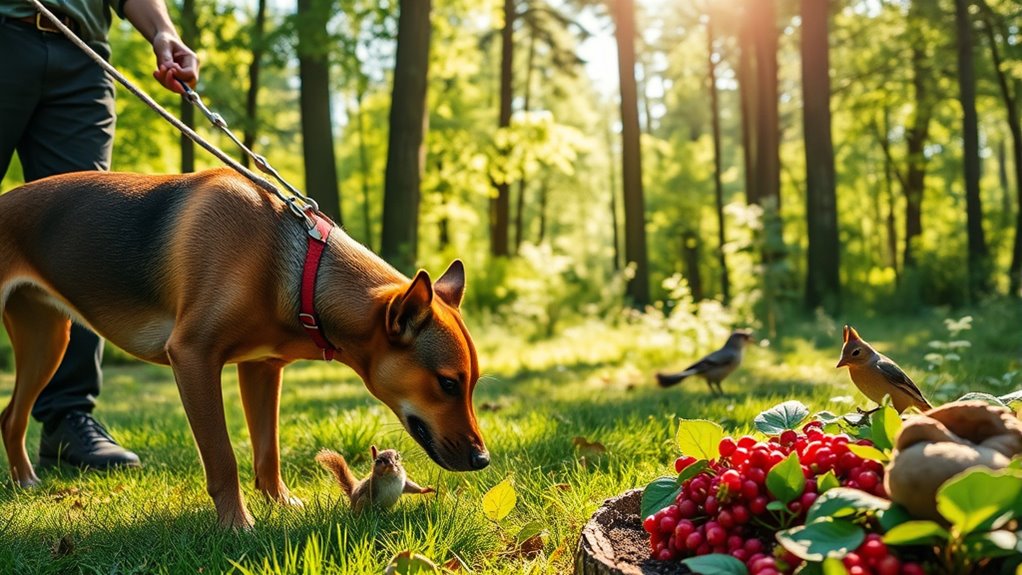

Training your pet to track edible plants on command can be a crucial skill during emergencies. Use positive reinforcement and familiarizing them with the scent of specific plants to build their tracking instincts. Start in controlled environments and gradually increase difficulty by hiding plants in different terrains. Consistent, short practice sessions will boost your pet’s reliability when it really counts. Keep practicing, and you’ll discover more techniques that can turn your pet into a food-searching companion when needed.
Key Takeaways
- Teach pets to recognize and associate specific edible plant scents with positive reinforcement.
- Use controlled environment training to introduce the scent before progressing to outdoor terrains.
- Incorporate commands like “find food” or “search for edibles” during regular practice sessions.
- Gradually increase difficulty by hiding plants in diverse terrains to develop tracking skills.
- Maintain consistency and patience to ensure reliable performance in emergency scenarios.

Have you ever wondered how to guarantee your safety and comfort during an emergency evacuation? One of the most valuable skills you can develop is teaching your pet to assist you in survival situations. Specifically, training your pet to track edible plants on command can make a significant difference when supplies run low, and you need every advantage to stay nourished. This kind of training combines essential survival skills with pet obedience, turning your furry companion into a reliable partner in the wild. It’s not just about obedience for the sake of good behavior; it’s about creating a tool that expands your chances of survival during unpredictable emergencies.
To start, you need to understand that training your pet to track edible plants requires patience and consistency. You’ll want to use positive reinforcement, rewarding your pet whenever they successfully identify or follow the scent of a safe, edible plant. This training involves familiarizing your pet with the smell of specific plants, such as berries, herbs, or roots, and teaching them to respond to commands like “find food” or “search for edibles.” You can do this by first introducing your pet to the scent in a controlled environment, then gradually increasing the difficulty by hiding the plant in different terrains. As your pet becomes more proficient, they’ll start associating the command with actively seeking out the plants, which is essential for survival skills in a real emergency. Additionally, understanding the importance of high-quality training methods can improve your pet’s ability to reliably perform these tasks under stress.
Consistency is key. Practice regularly, keeping training sessions short but frequent, so your pet remains engaged and doesn’t become overwhelmed. Incorporate commands into your daily routine, reinforcing your pet’s obedience and responsiveness. This way, your pet learns to distinguish between casual sniffing and purposeful searching. Over time, with repetition, your pet will develop an instinct to track edible plants on command, making them an invaluable asset in situations where food is scarce. Remember, patience is crucial—some pets pick up these skills faster than others, but persistence will pay off.
Frequently Asked Questions
Can Any Dog Be Trained to Track Edible Plants?
You might wonder if any dog can be trained to track edible plants. While many dogs can learn plant identification, success depends on their breed, temperament, and motivation. Using effective training techniques like positive reinforcement helps teach your dog to recognize specific plants. Consistent practice and patience are key. Not all dogs will excel equally, but with the right approach, most can develop useful tracking skills for edible plants.
How Long Does It Typically Take to Train a Pet?
Oh, just a weekend and your dog’s obedience training will be complete, right? Not quite! Typically, it takes several weeks to months to master scent detection skills, depending on the dog’s age, breed, and motivation. Consistent practice is key. You’ll need patience and dedication to teach your pet to reliably track edible plants on command, but with persistence, you’ll be amazed at how quickly they pick up the skills.
Are There Specific Plants That Are Dangerous for Pets?
You should be aware that some plants are toxic flora for pets, so it’s essential to learn plant identification. Certain common plants, like azaleas, lilies, or sago palms, can be dangerous if ingested. By recognizing these toxic flora, you can prevent your pet from consuming harmful plants. Always stay vigilant and educate yourself on which plants pose risks to keep your furry friend safe during outdoor adventures.
What Equipment Is Needed for Tracking Training?
To start tracking training, you’ll need essential tracking gear like a sturdy leash, a harness, and a scent article for your pet to follow. Use training techniques that involve positive reinforcement, gradually increasing the difficulty of the trails. Keep sessions short and consistent, rewarding your pet for progress. With the right equipment and techniques, your pet can learn to follow scents effectively and safely during tracking exercises.
How Do I Prevent My Pet From Foraging Harmful Plants?
Did you know that training your pet to avoid poisonous plants can save their life? Start by teaching them poisonous plant identification and reinforce commands to steer clear of harmful flora. Use safe foraging tips, like rewarding them when they ignore suspicious plants, and supervise outdoor adventures closely. Consistent training helps your pet distinguish edible from unsafe plants, ensuring they forage safely and confidently, even when you’re not around.
Conclusion
Now that you know how to train your pets to track edible plants, you’re better prepared for outdoor emergencies. Did you know that over 60% of survival situations involve foraging for food? Having a furry companion trained to find edible plants can make all the difference. With patience and practice, you can turn your pet into a reliable bug-out buddy, giving you peace of mind and a new skill that could help keep you nourished when it matters most.