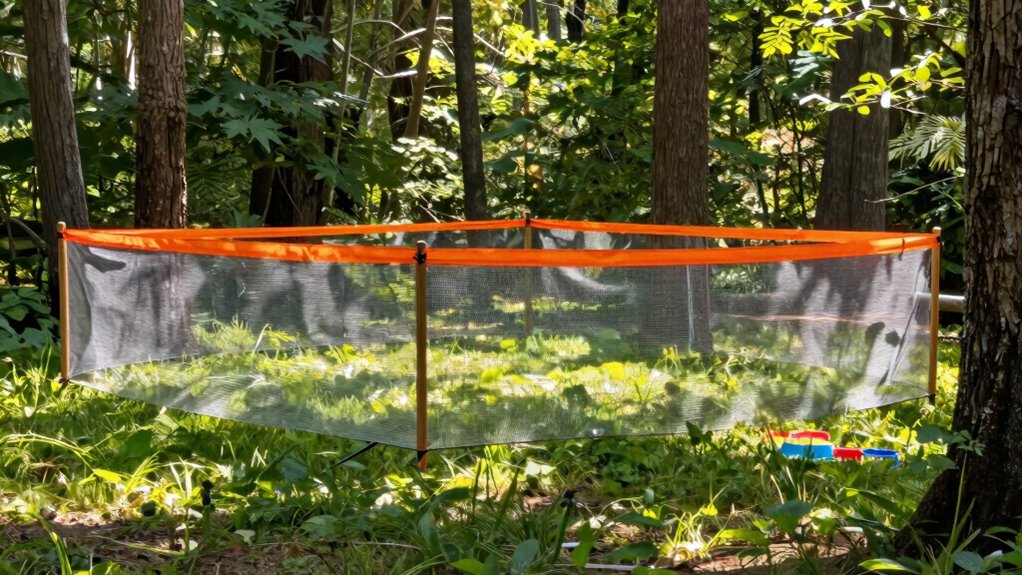

To build a safer campsite boundary, choose weather-resistant fencing that’s tall enough to prevent your pet from jumping over and bury the bottom edge underground to stop digging. Use portable options like wire mesh or lightweight fabric, or install sturdy permanent fencing if possible. Regularly inspect and repair the fence, add visual markers for visibility, and consider extra security features like inward-facing overhangs or electric wires. Want tips on designing effective boundaries and keeping your pet safe? Keep exploring to learn more.

Get garden gear delivered free with Prime
- Fast, free delivery on millions of items
- Prime Video, Amazon Music and more included
- Member-only deals all year
Key Takeaways
- Use weather-resistant, tall fencing with no gaps, and bury edges underground to prevent digging under.
- Incorporate wildlife considerations into fencing design to protect pets and prevent wildlife encounters.
- Add visual markers like flags or reflective tape for visibility during low-light conditions.
- Regularly inspect and maintain fencing for damage, especially after storms or adverse weather.
- Train pets with commands and positive reinforcement to stay within boundaries and ensure safety.
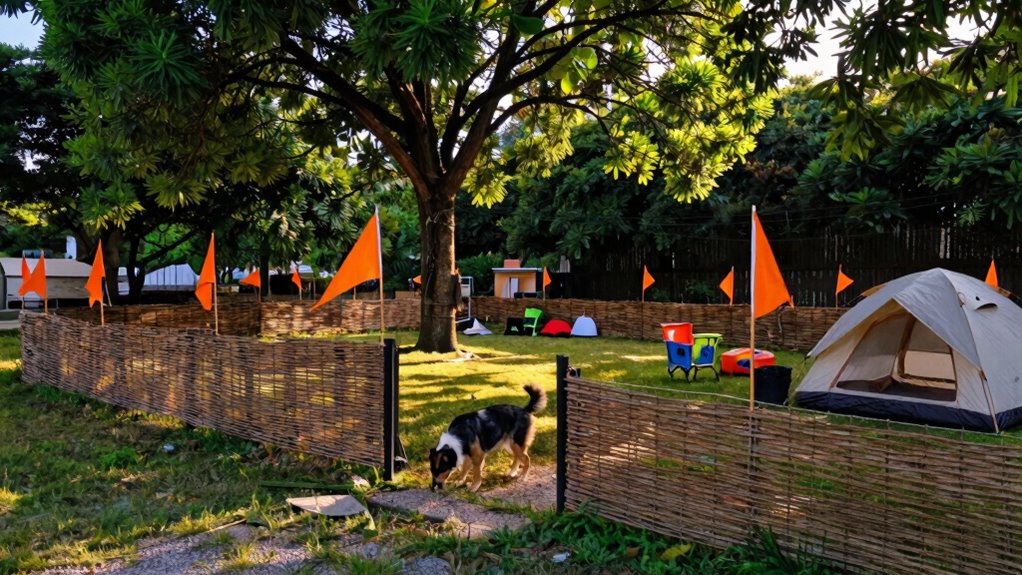
When camping with pets, creating a secure boundary around your campsite is essential to keep them safe and prevent them from wandering off. A sturdy boundary helps protect your pet from unexpected wildlife encounters, which can be dangerous for both animals. Many wild animals are curious or territorial, and even normally friendly wildlife can become aggressive if they feel threatened. By establishing a reliable boundary, you reduce the risk of your pet chasing after or startling wildlife, which can lead to injuries or stressful encounters. It’s also important to contemplate weather conditions when building your boundary. Heavy rain, strong winds, or extreme heat can weaken certain fencing materials or make your boundary less effective. Choose weather-resistant options and ensure your boundary is secure enough to withstand the elements.
You can start by selecting a fencing type suited to your environment and your pet’s size. Portable options like wire mesh or lightweight fabric fences work well for temporary setups, while more permanent solutions involve sturdy wood or metal fencing. Whichever you choose, make sure it’s tall enough to prevent your pet from jumping over and that there are no gaps where they could squeeze through. When setting up, double-check the ground to ensure there are no loose sections or weak spots that wildlife could exploit. Burying the bottom edge of the fence slightly underground prevents animals from digging underneath. If your pet is particularly adventurous, you might consider adding an inward-facing overhang or an electric wire for extra security. Incorporating wildlife considerations into your fencing design can further enhance safety. Additionally, understanding local wildlife behavior can help you anticipate potential risks and adapt your boundary accordingly. Regular inspections not only help identify damage but also allow you to maintain fencing integrity, ensuring it remains effective over time. An understanding of native species can help you select the most appropriate fencing options for your area. Furthermore, using visual markers can improve the boundary’s visibility, especially during dusk or dawn when wildlife activity is often higher.
In addition to physical barriers, use visual markers like bright flags or reflective tape to make the boundary more noticeable for your pet, especially in low-light conditions. Training your pet to recognize the boundary is equally important; use commands and positive reinforcement to teach them to stay within the designated area. Keep in mind that weather considerations also include ensuring your boundary doesn’t become a trap during storms or high winds, which could cause damage or make escape more likely. Regularly inspect your boundary for signs of wear or damage, especially after rough weather.
Ultimately, building a boundary that takes wildlife encounters and weather considerations into account creates a safer environment for your pet. It allows you to relax and enjoy your camping trip, knowing your furry friend is protected. By choosing the right materials, securing the perimeter, and training your pet, you’ll establish a safe, reliable barrier that keeps your pet secure regardless of wildlife or weather challenges.
As an affiliate, we earn on qualifying purchases.
Frequently Asked Questions
What Materials Are Safest for Campsite Boundary Fences?
You should choose lightweight, non-toxic materials like mesh or fabric for your campsite boundary fence, as they’re safe for pets and wildlife deterrents. Portable fencing made from durable plastic or nylon works well, offering easy setup and removal. Avoid sharp or toxic materials to prevent injuries or harm. Make sure your fencing is sturdy enough to contain your pets while allowing wildlife to pass safely, creating a secure and wildlife-friendly boundary around your campsite.
How High Should a Campsite Boundary Fence Be for Pets?
You should build your campsite boundary fence at least 4 to 6 feet high for effective pet containment. A taller fence prevents curious pets from jumping over, especially if they’re active or enthusiastic explorers. Consider your pet’s size and jumping ability when choosing the fence height. Ensuring the right fence height helps keep your pets safe, secure, and prevents them from wandering off, giving you peace of mind during your camping trip.
Can Existing Natural Barriers Replace Fences Effectively?
Did you know that over 60% of pets escape due to ineffective boundaries? Natural barriers like dense bushes or rivers can sometimes replace fences, but wildlife interference remains a concern. They’re not always reliable, especially if animals push through or around them. Regular boundary maintenance is vital to guarantee these natural features stay effective. Ultimately, natural barriers can help, but they often need reinforcement to keep your pets safe.
How Do I Prevent Pets From Digging Under the Boundary?
To prevent pets from digging under the boundary, focus on boundary maintenance and pet training. Burying a sturdy wire mesh or wire apron underground discourages digging. Consistently reinforce boundary rules during pet training, rewarding good behavior and redirecting digging urges with toys or commands. Regularly inspect and repair any breaches, and make sure your pet understands the limits. This combined approach keeps your pet safe and respects your campsite boundary effectively.
Are There Portable Boundary Options for Different Campsites?
Yes, portable fencing is a great option for camping boundaries, giving you flexibility across different campsites. You can easily set up and take down these fences, ensuring your pets stay safely contained no matter where you camp. Look for lightweight, durable materials that are easy to transport. Portable fencing provides adjustable boundaries, making it simple to customize your pet’s safe zone, no matter the campsite layout.
portable wire mesh fence for camping
As an affiliate, we earn on qualifying purchases.
As an affiliate, we earn on qualifying purchases.
Conclusion
Creating a secure campsite boundary is like planting a sturdy fence around a treasured garden—you protect what matters most. With careful planning and simple materials, you can turn your campsite into a safe haven where your pets can explore freely without worry. Remember, a well-built boundary isn’t just a barrier; it’s a shield that keeps your furry friends safe and happy, allowing everyone to enjoy the great outdoors together. Your pet’s safety is worth every effort.
reflective campsite boundary markers
As an affiliate, we earn on qualifying purchases.
As an affiliate, we earn on qualifying purchases.
electric pet fence for outdoor camping
As an affiliate, we earn on qualifying purchases.
As an affiliate, we earn on qualifying purchases.
Columbus Day / Indigenous Peoples' Day Picks
long weekend sales
As an affiliate, we earn on qualifying purchases.