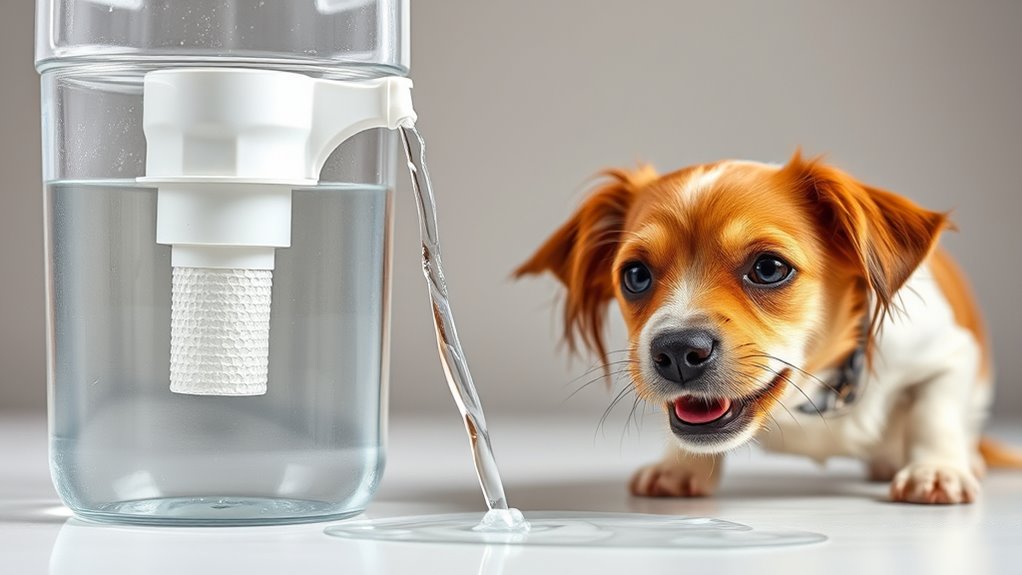

In emergency situations, ensuring your pet has safe water is essential. Use portable filtration devices with activated carbon or similar media to remove bacteria, chemicals, and debris from questionable water sources. These devices are lightweight, easy to operate, and often come with replaceable cartridges for extended use. Always test water, and consider boiling if possible. To learn more about effective methods and best practices, continue exploring options that keep your pet healthy during emergencies.
Key Takeaways
- Use portable filtration devices with activated carbon to remove bacteria, chemicals, and debris from water for pets during emergencies.
- Ensure the filtration system is lightweight, easy to operate, and has replaceable cartridges for ongoing safety.
- Test water for turbidity, odors, or discoloration before filtration, and consider boiling if possible for additional safety.
- Supplement filtration with purification tablets when necessary, especially in highly contaminated water sources.
- Follow best practices by understanding filtration limits and prioritizing clean, safe water sources to protect pet health.
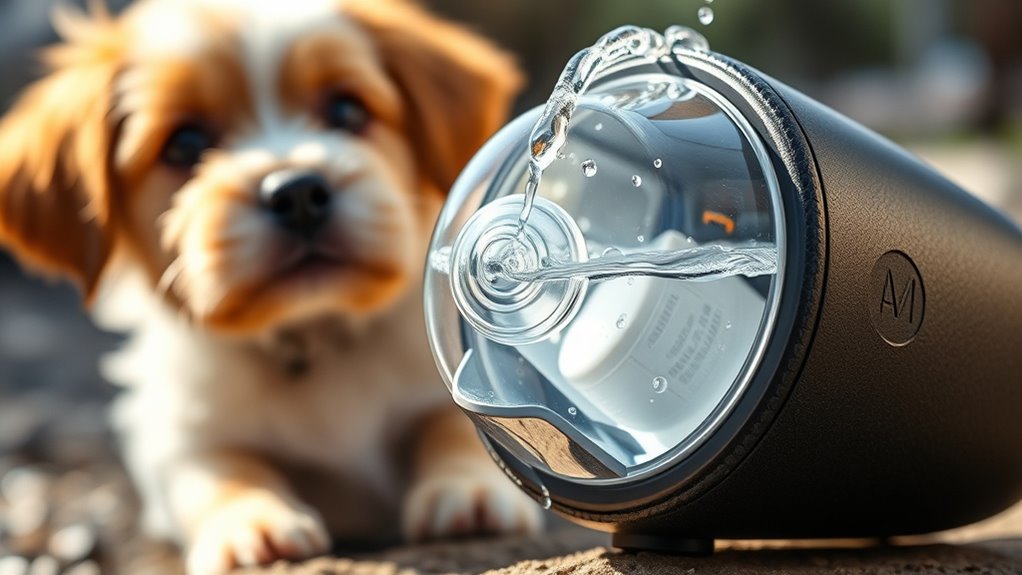
When you’re faced with an emergency situation and clean water isn’t available, ensuring your pet stays hydrated becomes a top priority. In these moments, knowing how to quickly purify water can make all the difference. Water filtration plays an essential role here, not just in removing dirt and debris but also in eliminating harmful toxins that could jeopardize your pet’s health. A portable water filter or purification device can be a lifesaver, especially when you’re on the move or in a situation where access to fresh water is limited. These devices typically use activated carbon or other media to trap contaminants, ensuring that the water your pet drinks is safer and more palatable. Generally, portable water filters are designed to be lightweight and easy to operate, making them ideal in emergencies. Toxin removal is a critical aspect of emergency water purification because contaminated water can contain bacteria, chemicals, pesticides, or other pollutants. If ingested, these toxins can cause illness or worse. That’s why selecting a device that effectively targets toxin removal is essential. Many portable filters are designed to reduce or eliminate bacteria, protozoa, and other pathogens, providing an extra layer of safety. Boiling water is another option, but it’s not always practical in emergency scenarios. When boiling isn’t feasible, relying on a reliable water filtration system becomes even more important. Some filters are designed to remove heavy metals and chemical contaminants, giving you peace of mind that your pet won’t be exposed to unseen dangers. You should also consider the ease of use and maintenance of your purification system. In an emergency, you won’t have time for complicated setups or frequent maintenance. Compact, user-friendly filters with replaceable cartridges are ideal because they’re quick to operate and don’t require extensive cleaning. If you’re using a portable device, always carry extra filter cartridges or purification tablets, so you’re prepared for longer periods without access to clean water. Remember that even the best filtration systems have limits; they don’t turn dirty water into pristine drinking water but considerably improve safety by removing most toxins and pathogens. It’s also important to understand that tiny house design principles prioritize space efficiency, which can be beneficial when selecting portable or compact purification systems. Lastly, it’s essential to test the water before giving it to your pet, if possible. Look for signs of turbidity, strange odors, or discoloration. When in doubt, treat the water with a filtration device designed for toxin removal, boil if you can, or find an alternative water source. Your pet depends on you to make safe hydration choices during emergencies, so understanding the importance of water filtration and toxin removal can help you protect their health when it matters most.
Frequently Asked Questions
Can Homemade Water Purifiers Effectively Remove All Contaminants?
Homemade water purifiers can help with contaminant removal, but they don’t effectively eliminate all contaminants. DIY filtration methods like charcoal, sand, or cloth can reduce sediments and some chemicals, but they often miss bacteria, viruses, and heavy metals. For your pet’s safety, it’s best to use commercial filters designed for extensive contaminant removal or boil water thoroughly. Relying solely on homemade methods might leave harmful substances in the water.
How Long Does a Pet Water Purifier Filter Typically Last?
Think of your pet’s water filter like a trusty sword—its sharpness fades with use. Typically, a pet water purifier filter lasts about 1 to 3 months, depending on water quality and usage. To keep your pet safe, follow the replacement schedule recommended by the manufacturer. Regularly check the filter’s condition, and don’t wait until it’s visibly dirty—timely replacements guarantee clean, safe water for your furry friend.
Are Portable Water Purification Devices Safe for All Pet Species?
Portable water purification devices are generally safe for most pet species, but you should always check their specific pet water safety guidelines. Device reliability varies, so choose a reputable brand and regularly maintain it to guarantee safe, clean water. Some devices may not be suitable for certain animals or water sources, so consult your vet if you’re unsure. Always prioritize your pet’s health by using reliable, well-maintained purification devices.
What Are Signs of Water Poisoning in Pets After Purification?
When it comes to signs of water poisoning in your pet, don’t let the grass grow under your feet. Look for symptoms of poisoning like vomiting, diarrhea, or tremors, and watch for signs of dehydration such as dry gums or lethargy. If you notice these, seek vet care immediately. Properly purified water should keep your pet healthy; if not, quick action can prevent serious issues.
Is Boiling Water Sufficient for Pet Water Purification During Emergencies?
Boiling water is generally sufficient for pet water purification during emergencies, as it kills bacteria and viruses. However, it doesn’t remove chlorine or other chemicals, nor does it retain essential minerals. To improve safety, consider letting boiled water sit to allow chlorine to dissipate or use a filtration method designed to remove chemicals. This guarantees your pet drinks clean, safe water without losing crucial minerals.
Conclusion
In an emergency, ensuring your pet’s water is safe can make all the difference. For instance, imagine your dog drinking from a contaminated pond after a storm; using a portable purifier can turn murky water into safe hydration. Always have a simple purification method on hand, like boiling or filtering, so your furry friend stays healthy even in tough situations. Being prepared means your pet stays safe and hydrated, no matter what emergency arises.