During stressful days, managing your dog’s nutrition with simple calorie math helps guarantee they stay healthy despite limited options. Start by calculating your dog’s daily calorie needs based on their weight, age, and activity level. Then, check the calorie content of available foods and portion accordingly to meet these needs without overfeeding. Staying consistent with feeding times and monitoring your dog’s response will keep them balanced. If you want more tips, continue exploring how to optimize their emergency diet.
Key Takeaways
- Determine your dog’s daily caloric needs based on weight, age, and activity level using veterinary guidelines.
- Calculate the calorie content of available emergency foods to match your dog’s daily energy requirements.
- Measure portions accurately with a scale or measuring cup to ensure proper rationing and avoid overfeeding.
- Adjust portion sizes gradually when introducing new or alternative foods to prevent digestive upset.
- Monitor your dog’s response and health, and modify feeding quantities as needed during stressful situations.
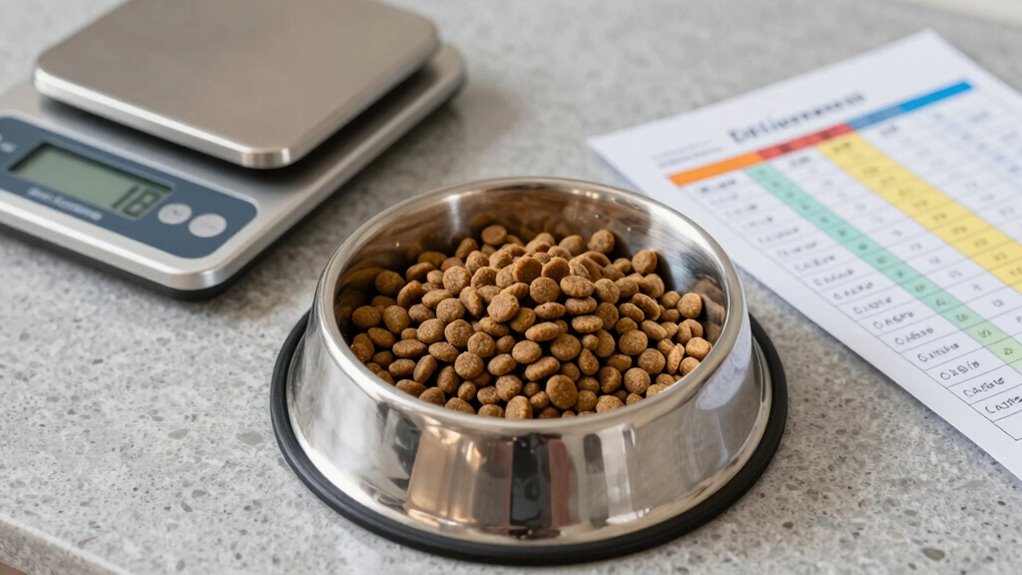
Have you ever considered what you’d do if your usual dog food suddenly became unavailable? It’s a scenario no pet owner wants to face, but preparing for it can make all the difference. When emergencies strike, your first priority is ensuring your dog’s well-being, and that starts with understanding dog nutrition and maintaining proper feeding schedules. Knowing how to adapt quickly can help keep your dog healthy and stress-free during uncertain times.
The key to an effective emergency dog feeding plan is understanding your dog’s nutritional needs. Dogs require a balanced mix of proteins, fats, carbohydrates, vitamins, and minerals to stay healthy. When regular food isn’t available, you need to find alternatives that meet these nutritional standards. This might mean using human foods that are safe for dogs, like cooked meats, rice, carrots, or sweet potatoes, but always be cautious about ingredients that could be harmful. Avoid feeding your dog anything toxic, such as onions, grapes, or chocolate, regardless of the situation. Planning ahead by researching safe substitutions ensures you’re prepared and can make nutritious choices on the fly.
Equally important is adjusting feeding schedules to match whatever food options you have. Dogs thrive on routine, so maintaining consistent feeding times helps reduce stress and keeps digestion regular. When switching foods, do so gradually over a few days, mixing small amounts of the new food with the old. This minimizes stomach upset and helps your dog adjust smoothly. In an emergency, sticking to a predictable schedule—say, feeding twice daily—can help your dog feel more secure, even if the actual food changes. Keep in mind that portion sizes may need to be slightly adjusted depending on the calorie content of the new foods you’re using. Using simple calorie math, you can estimate how much to feed based on your dog’s weight, age, and activity level, ensuring they don’t become underfed or overfed during stressful times.
Additionally, understanding veterinary nutritional guidelines can provide helpful benchmarks to ensure your adjustments meet your dog’s specific health needs. Preparing for emergencies also means knowing how to ration supplies efficiently. Measure portions accurately and avoid overfeeding, which can lead to obesity or digestive issues. If you’re using alternative foods, calculate their calorie density to match your dog’s needs and ensure they get enough energy without excess. Keeping a small stockpile of non-perishable, dog-safe foods that meet your dog’s nutritional needs can buy you vital time when supplies run low. Finally, stay calm and observant; monitor your dog’s response to any dietary changes and adjust as needed. With a clear understanding of dog nutrition and a flexible feeding schedule, you can navigate stressful days with confidence, ensuring your furry friend remains healthy and happy, no matter what unforeseen circumstances arise.
Frequently Asked Questions
How Often Should I Review My Emergency Dog Feeding Plan?
You should review your emergency dog feeding plan at least every three to six months. Regular plan review frequency helps you stay updated on your dog’s changing needs, especially if their weight, activity level, or health status shifts. Adjust your feeding schedule accordingly to ensure your dog gets proper nutrition during stressful days. Keeping your plan current guarantees you’re always prepared to handle unexpected situations effectively.
What if My Dog Refuses to Eat During Emergencies?
If your dog refuses to eat during emergencies, don’t panic. Check their overall dog appetite and look for signs of stress or illness. Try alternative feeding options like warm broth, canned dog food, or softening their regular meal. You can also offer small, frequent meals to stimulate interest. Remember, maintaining hydration is essential, so make certain they drink plenty of water while exploring these alternative feeding methods.
Can I Use Human Food for Emergency Dog Feeding?
You can use human food for emergency dog feeding, but only if you guarantee human food safety. Stick to plain, cooked meats, rice, or vegetables without seasoning, onions, or garlic. Keep emergency food storage stocked with safe options, and avoid giving your dog processed or toxic foods. Always monitor their reactions and consult your vet afterward to ensure they stay healthy during stressful times.
How Do I Adjust Calories for Puppies or Senior Dogs?
You should modify calories based on your dog’s age. For puppies, focus on puppy calorie needs, providing more calories per pound to support growth. For senior dog nutrition, reduce calorie intake to prevent weight gain and support aging joints. Always monitor your dog’s weight and energy levels, and consult your vet for personalized advice. Properly adjusting calories ensures your puppy develops healthily and your senior stays comfortable and active.
What Supplies Are Essential for an Emergency Dog Feeding Kit?
You should include essential supplies like durable dog food storage containers to keep food fresh and prevent pests. Keep a reliable supply of dog food tailored to your dog’s needs. Include a portable feeding schedule chart to ensure consistent feeding times. Additionally, pack a manual can opener if using canned food, a scoop or measuring cup, and some treats for emergencies. These supplies help sustain your dog’s nutrition during stressful situations.
Conclusion
Remember, in emergencies, staying calm and prepared is key. With a simple calorie math plan, you can keep your furry friend fed and happy during stressful days. Just like the saying goes, “It’s better to be safe than sorry.” Trust your plan, stay flexible, and your dog will get through tough times with a wagging tail. After all, a little preparation goes a long way when it comes to caring for your loyal companion.