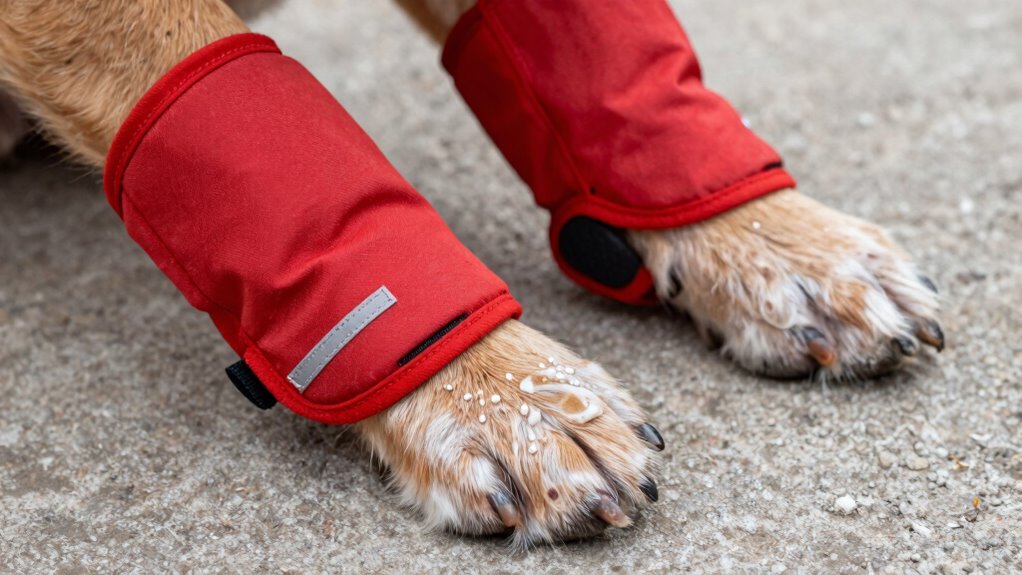

Choosing the right paw protection depends on your dog’s activity and environment. Booties are best for rugged terrain and provide durable, long-lasting protection, but they may take time for your dog to get used to. Wax products offer quick, temporary coverage against ice and salt but need frequent reapplication. Toughening treatments can enhance paw resilience but are usually supplementary. To guarantee ideal protection, weigh these options carefully—more details will help you decide what’s best for your dog’s needs.
Key Takeaways
- Durable booties are best for rugged terrain, offering long-lasting protection against sharp objects and abrasive surfaces.
- Wax products provide short-term barrier protection but require frequent reapplication, especially in wet or snowy conditions.
- Toughening treatments may strengthen paw pads but are generally supplementary; their effectiveness varies by formulation.
- Durability testing shows booties made from rubber or silicone resist wear better than wax or treatments over time.
- Choosing the right option depends on activity level, environment, and need for longevity versus convenience.
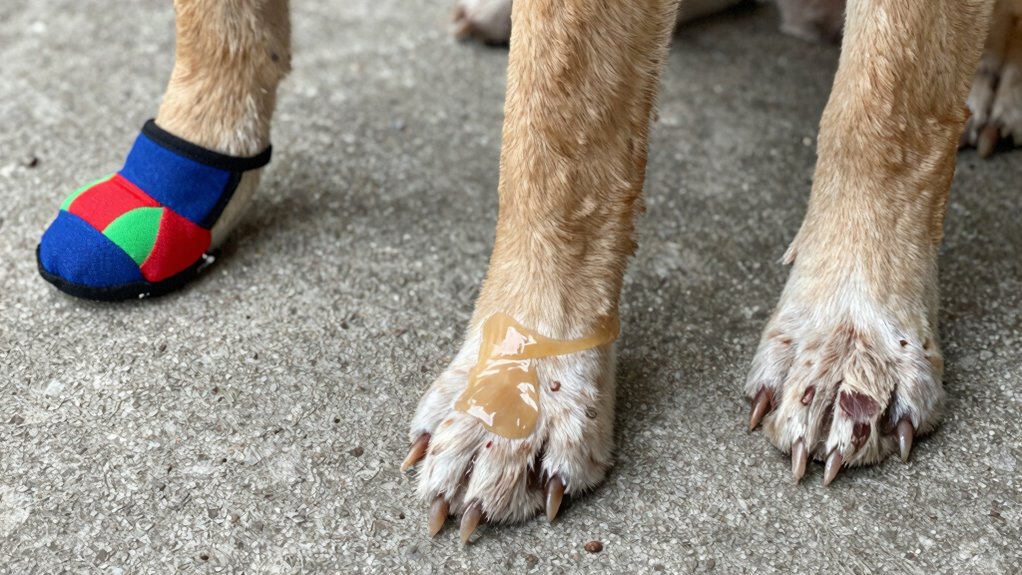
Your dog’s paws are vital for their mobility and overall well-being, especially when they’re outdoors or walking on rough surfaces. Protecting them is essential, but knowing which method truly works can be confusing. You might consider booties, wax, or toughening treatments, but understanding their effectiveness requires examining durability testing and material comparisons. When evaluating paw protection options, durability testing reveals how well each material withstands wear and tear over time. Some booties, made from rubber or silicone, pass rigorous durability tests, showing they can endure sharp rocks, hot pavement, and abrasive surfaces without falling apart. Comparing materials helps you choose options that won’t quickly deteriorate, saving you money and your dog discomfort. For instance, high-quality dog booties often feature reinforced soles and sturdy closures, making them more resilient during intense activities. On the other hand, wax products, like paw balms, are softer and designed to create a barrier against environmental hazards. While they might be effective for short-term protection against salt or ice, they don’t undergo durability testing the same way booties do, so their longevity is limited. They tend to wear off after a few walks or exposure to moisture, requiring frequent reapplication. Toughening treatments, such as sprays or paw pads infused with protective compounds, aim to strengthen paw pads over time. These treatments are usually tested through durability assessments to determine how well they resist cracking, peeling, or thinning with repeated use. Although some products claim to toughen paws effectively, the actual results vary depending on the material composition and application frequency. Comparing different formulations helps you decide which offers the best combination of flexibility, strength, and longevity. Ultimately, the choice between booties, wax, and toughening depends on your dog’s activity level, environment, and individual needs. If your dog regularly traverses rugged terrain, investing in durable, well-tested booties may be your best bet. For occasional walks on cold or icy surfaces, wax might offer sufficient short-term protection, but remember it needs frequent reapplication. Toughening treatments can complement other options but aren’t usually a standalone solution for heavy-duty outdoor adventures. By thoroughly comparing these options through durability testing and material analysis, you’ll make a more informed decision. Protecting your dog’s paws isn’t just about comfort; it’s about ensuring their safety and health during every outing. durability testing of paw protection products helps determine their effectiveness over time and ensures your dog’s paws stay safe. Choose wisely based on the environmental conditions and your dog’s activity level, and always prioritize products that have been rigorously tested for durability to keep their paws safe and healthy.
Frequently Asked Questions
How Often Should I Replace Dog Booties or Wax?
You should replace dog booties every few outings, as their lifespan depends on paw wax durability and the quality of the materials. Check for signs of wear, cracking, or looseness regularly. Paw wax, on the other hand, may need reapplication if it wears off or becomes less effective after a week or two. Prioritize your dog’s comfort and safety by inspecting and replacing gear as needed to guarantee maximum protection.
Are There Any Safety Risks With Paw Wax?
Sure, paw wax safety isn’t a secret plot to turn your dog into a walking hazard. Generally, paw wax is safe when used as directed, but over-application might cause slight irritation or ingestion hazards. Dog booties hazards are more obvious—restricting movement or causing discomfort. Always check ingredients for allergies, and consult your vet if your pup shows any unusual reactions. Safety first, even if your dog’s paws are the newest fashion statement.
Can Paw Protection Methods Cause Allergies?
Yes, paw protection methods can cause allergies if your dog has allergy triggers or skin sensitivities. Some waxes or boot materials might contain ingredients that irritate sensitive skin, leading to redness, itching, or inflammation. Always check ingredient labels and test a small area first. If your dog shows signs of an allergic reaction, discontinue use and consult your veterinarian to find hypoallergenic options that suit your pet’s needs.
Do Paw Protections Work in All Weather Conditions?
You’ll find paw protections can adapt well to different weather, but their seasonal durability varies. Booties offer excellent climate adaptability, shielding paws from ice, snow, and hot pavement. Wax provides a weather-resistant barrier, but might not last through heavy rain or mud. Toughening treatments strengthen paws overall, yet they may not withstand extreme conditions. So, choose based on your local climate and your dog’s activity for the best results.
How Do I Know if My Dog’s Paws Need Protection?
You’ll notice if your dog’s paws need protection through paw pad sensitivity, like licking or limping, especially after walks. Outdoor terrain effects, such as hot pavement, ice, or rough surfaces, can cause discomfort or injuries. If your dog shows signs of discomfort or if the terrain is harsh, consider paw protection. Regularly check their paws for cuts, cracks, or redness to make certain they’re safe and comfortable during outdoor adventures.
Conclusion
When you choose the right paw protection, you’re shielding your dog’s paws like a gentle armor against rough terrains and harsh weather. Imagine your pup’s paws as tiny shields, gliding smoothly over icy sidewalks or rocky trails, free from cracks and discomfort. Whether it’s cozy booties, nourishing wax, or toughening techniques, your decision creates a safe, confident stride. With the right protection, every adventure becomes a joyful dance across the world’s varied terrains.