
To plan your fall and winter foraging, understand the seasonal shifts in plants, mushrooms, and berries. In fall, focus on ripening berries like holly and rose hips, while winter offers opportunities to find hardy mushrooms and dormant plants. Recognize the best times for safe harvests, and learn how to identify edible versus toxic species. With proper timing and knowledge, your wild food bounty can extend deep into the colder months—discover more ways to maximize your foraging success.
Key Takeaways
- Identify and harvest seasonal edible plants, berries, and mushrooms that mature during fall and winter for optimal safety and nutrition.
- Recognize mushroom growth conditions in colder months, focusing on safe, identifiable species like chanterelles and porcini.
- Use proper safety gear and reliable identification tools to prevent poisoning from toxic look-alikes during winter foraging.
- Focus on collecting ripe berries such as holly, rose hips, and winterberries from healthy plants in uncontaminated areas.
- Practice sustainable foraging by limiting harvests and understanding plant dormancy and growth cycles for seasonal planning.
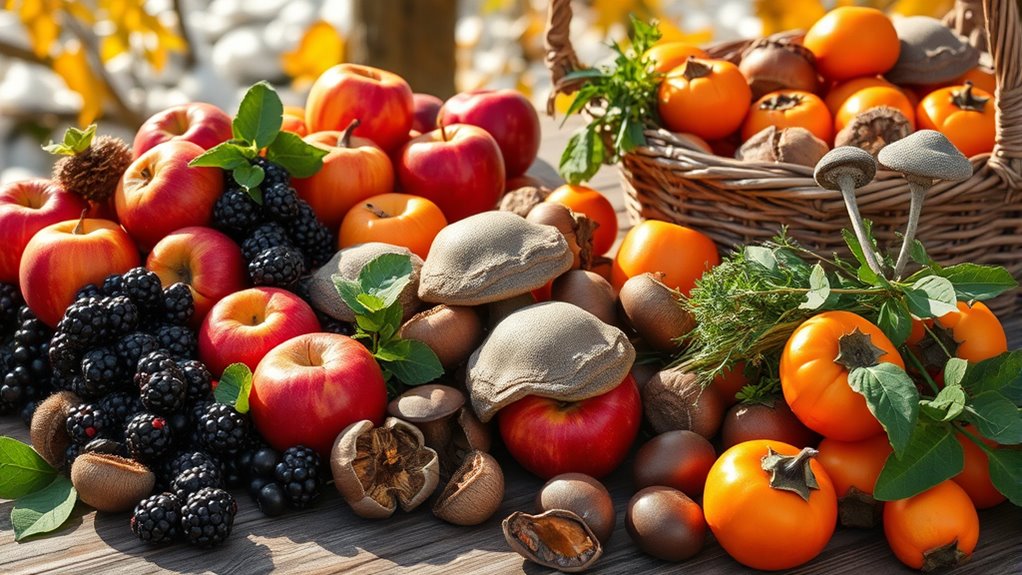
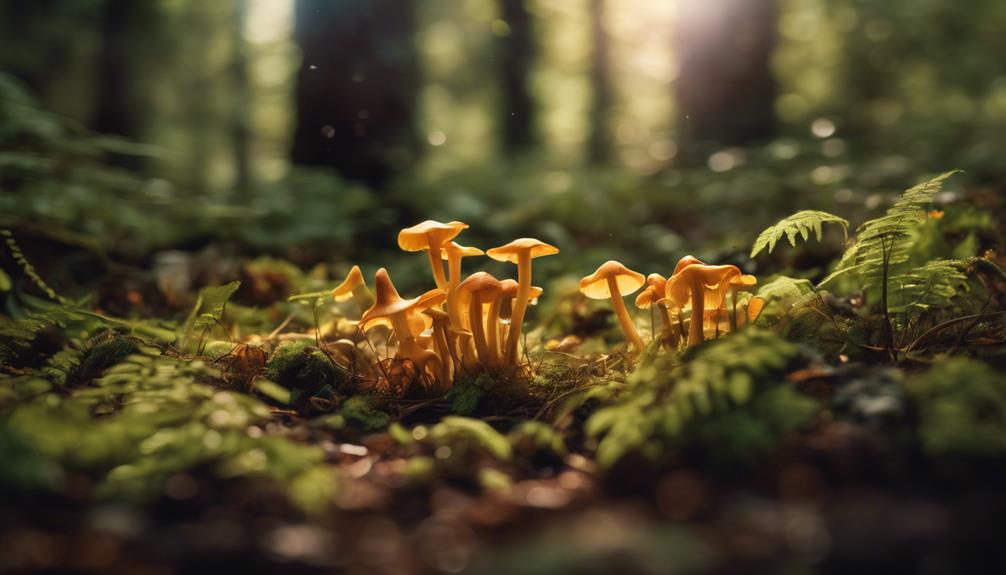
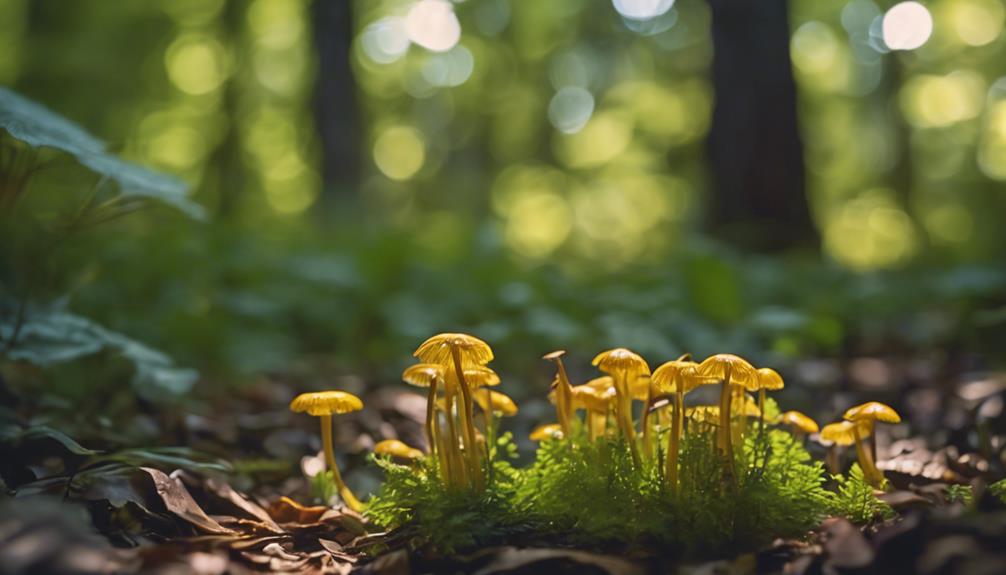
If you’re interested in wild edibles, understanding a foraging calendar is essential for safe and successful foraging. During fall and winter, your opportunities shift, but with proper knowledge, you can harvest a variety of nutritious and delicious wild foods. One key skill to develop is wild mushroom identification. As temperatures drop and humidity rises, mushrooms like chanterelles, porcini, and fairy rings appear. However, many edible mushrooms have toxic look-alikes, so it’s crucial to learn the subtle differences that distinguish safe specimens from deadly ones. You should study reliable guides, join local foraging groups, and practice careful examination of each mushroom’s shape, color, gills, and stem before harvesting. Always double-check your identifications, because misidentification can have serious health repercussions. Additionally, understanding the cost considerations of safety gear and proper identification tools can help ensure a secure foraging experience.
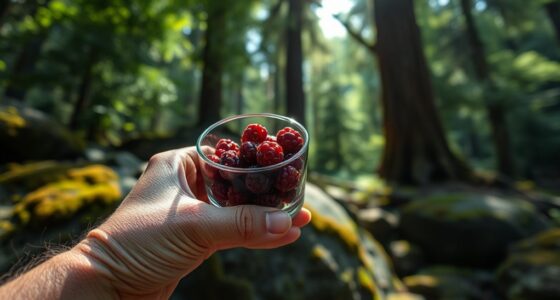
In addition to mushrooms, winter berry harvesting becomes an important activity during this season. Many wild berries, such as holly, rose hips, and winterberries, ripen late in the year, offering essential nutrients when fresh produce is scarce. These berries often grow on hardy shrubs and trees, and you can forage them even after frost sets in. When harvesting winter berries, make sure to identify the correct species—some berries are toxic or unpleasant to eat. For example, holly berries are toxic in large quantities, but rose hips are rich in vitamin C and can be used to make teas, jams, or syrups. Winterberries, which grow on deciduous holly bushes, are safe to eat and produce vibrant red clusters that brighten the winter landscape. Be mindful not to over-harvest, and always gather berries from healthy, uncontaminated plants, away from roads or polluted areas.
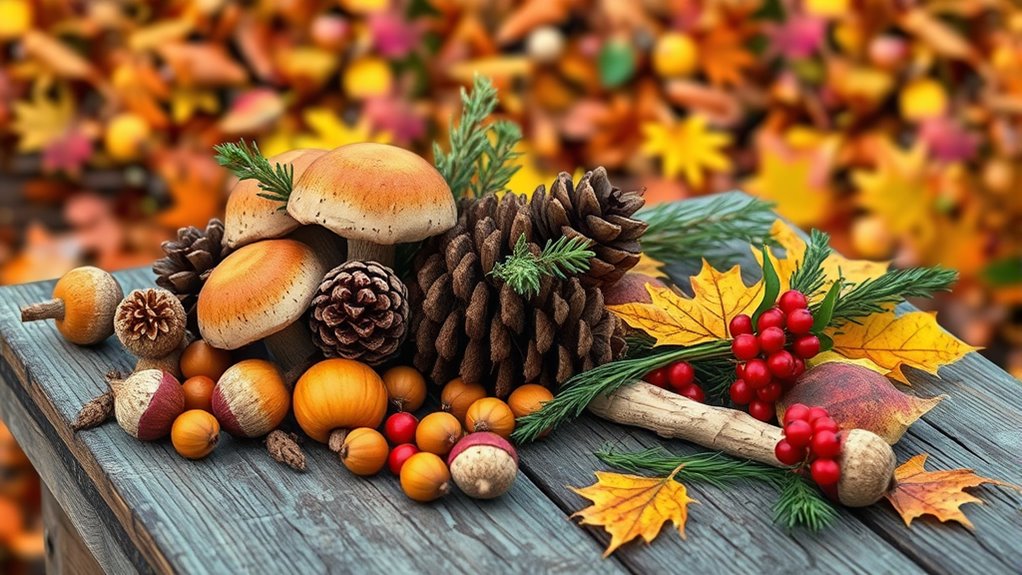
As the season progresses, you’ll notice that some plants go dormant, but many berries become more accessible and easier to identify. Keep your focus on learning the specific features of each plant and berry, including leaf shape, berry color, and growth habit. The colder months might limit some foraging opportunities, but they also present unique chances to find seasonal delights. Remember, always prioritize safety—never consume anything unless you’re completely certain of its identification. With patience and practice, your understanding of the foraging calendar will deepen, allowing you to enjoy the bounty of fall and winter while respecting nature’s rhythms. By mastering wild mushroom identification and winter berry harvesting, you can extend your foraging season and gather nourishing foods that support your health and culinary creativity.
Frequently Asked Questions
What Safety Precautions Should I Take When Foraging in Fall and Winter?
When foraging in fall and winter, you should wear proper winter gear like gloves and waterproof boots to stay warm and dry. Always identify plants carefully to avoid poison ivy and other toxic species. Use a guidebook or app for accurate identification, and avoid foraging in unfamiliar areas. Carry a first aid kit, and tell someone your plans. Stay alert, respect nature, and enjoy your safe foraging adventure.
How Do Weather Changes Affect Seasonal Foraging Availability?
Weather changes directly impact your foraging by influencing plant availability, climate impact, and plant dormancy. Cold temperatures slow growth, cause plants to go dormant, and reduce the variety you can find. Sudden frosts can damage crops, while snow cover hides edible plants. You need to adapt your foraging approach, stay alert for climate impact, and recognize when plants are dormant to guarantee safe and sustainable harvesting during fall and winter.
Are There Specific Tools Recommended for Winter Foraging?
For winter foraging, you’ll want tools and equipment like a sharp knife, pruning shears, and a sturdy basket for collecting. A good field guide or plant identification app helps with edible plant identification when resources are scarce. Consider bringing a hand lens for closer inspection and insulated gloves to stay safe and warm. These tools make winter foraging safer and more efficient, ensuring you identify and harvest edible plants correctly.
How Can I Identify Edible Plants During Winter Months?
To identify edible plants during winter, focus on plant identification skills and look for winter plant signs like bark patterns, evergreen leaves, and dormant seed heads. Use a good field guide specific to your region, and pay close attention to plant shapes, textures, and growth habits. Keep in mind that some plants, like certain roots and buds, become easier to recognize when snow cover reveals their natural cues.
What Are Sustainable Foraging Practices in Colder Seasons?
You should practice sustainable foraging during colder seasons by respecting wildlife conservation and prioritizing plant regeneration. Always take only what you need, avoid overharvesting, and leave enough for wildlife and future growth. Use selective harvesting methods, like pruning rather than uprooting plants, to ensure they thrive. Respect protected areas and seasonal restrictions, and educate yourself about local regulations to help maintain healthy ecosystems year-round.
Conclusion
So, now that you’ve mastered the seasonal foraging calendar, remember: nature’s bounty is only as reliable as your ability to ignore modern distractions. Embrace the thrill of hunting for wild food, because nothing says “I’m in tune with the earth” like scrambling through leaves to find a forgotten mushroom. Just don’t forget to tell yourself it’s sustainable—after all, who needs farmed produce when you can chase after unpredictable, sometimes-toxic wild treasures? Happy foraging!